
Albania is having a moment. Not the slow-burn kind that takes years to notice. The kind where TripAdvisor puts Ksamil in its top 10 trending destinations, Ryanair opens a base in Tirana with 33 routes, and three international hotel brands announce openings in the same year. If you have been putting Albania off, 2026 is the year it stops making sense to wait.
I have been traveling across Europe for years, and I still find it difficult to believe how few people I meet who have actually been to Albania. Greece yes, Croatia yes, Montenegro sometimes. Albania almost never. That gap is closing fast.
Is Albania Worth Visiting in 2026?
Yes. Albania offers Adriatic coastline, mountain scenery, UNESCO-listed cities, and some of the lowest costs in Europe, all without the summer crowds that have made Croatia and Greece exhausting. Visa-free access for EU, US, and UK citizens makes entry straightforward. Tourism infrastructure is improving fast, with three international hotel brands opening in 2026 alone.
The honest version: Albania is not a polished destination yet. Roads in some areas are rough. Service can be inconsistent outside main tourist spots. But that is also why it is affordable, uncrowded, and still feels like somewhere worth going. The infrastructure curve is steep right now, which means 2026 is a good window before the price gap closes.
What Is the Albanian Riviera Like?
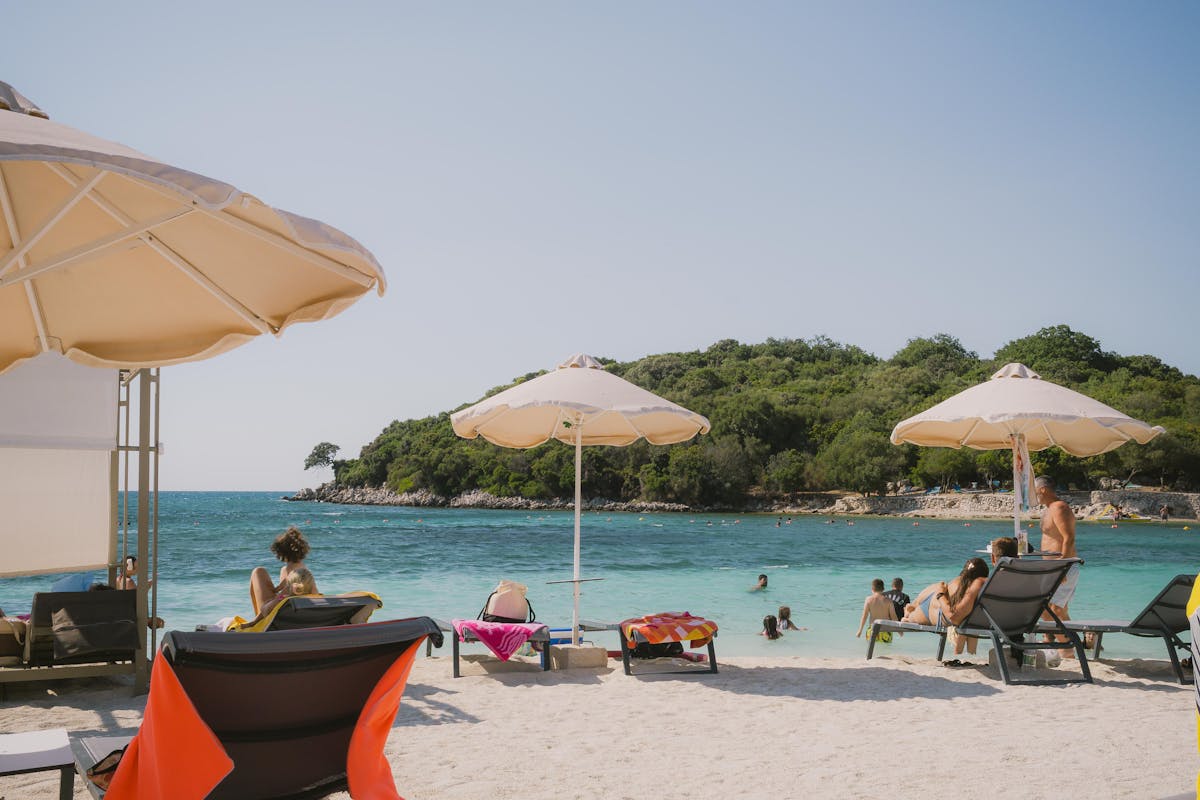
The Albanian Riviera runs along the Ionian coast from Saranda in the south to Himara and Dhermi further north. The water is clear, the beaches are less crowded than comparable spots in Croatia or Greece, and costs are significantly lower. Ksamil, near Saranda, has become the standout name, landing in TripAdvisor’s top 10 trending European destinations for summer 2026.
Ksamil gets called the “Maldives of Europe” in every travel piece right now, which sets up expectations it cannot fully meet. It is not the Maldives. What it actually is: small islands you can swim to from the shore, turquoise water that genuinely earns the comparison, and beach bars that cost half what you pay in Dubrovnik. That is a reasonable trade.
Saranda is the base most people use for the southern riviera. It is a small city with a waterfront promenade, ferry connections to Corfu (40 minutes), and enough restaurants and accommodation options to feel comfortable without being overrun. Himara and Dhermi sit further up the coast and are quieter, with long stretches of beach that still feel like they belong to the people who live there.
What New Hotels Are Opening in Albania in 2026?
Three international hotel brands are opening properties in Albania in 2026: the Green Coast MGallery on the Riviera, the Crowne Plaza Durres on the Adriatic coast, and Adorn Tirana in the capital. These openings are part of a broader European wave, with CoStar tracking 123,789 new hotel rooms opening across Europe in 2026. Albania is finally on the international brand radar.
Euronews covered these openings in April 2026, framing them as a signal of investor confidence in Albania’s tourism trajectory. That framing is accurate. International hotel brands do not commit capital to markets without doing the research. The fact that MGallery, IHG, and an independent luxury brand are all entering the same market in the same year is not a coincidence.
For travelers, this means more options at the mid-to-upper end of the market. It also means prices in those segments will be closer to European norms than the budget rates Albania is currently known for. If you want Albania at its most affordable, the window is now, not after the Crowne Plaza has been open for two seasons.
For hotels already operating in Albania: connectivity expectations are rising with the clientele. If you work in hospitality and want to understand what guests need from in-room and lobby connectivity, this post on hotel guest connectivity in 2026 covers what international travelers actually expect.
How Do You Get to Albania in 2026?
Getting to Albania is easier in 2026 than it has ever been. Ryanair opened a base at Tirana International airport with three aircraft and 33 routes, connecting Albania directly to a wide range of European cities. That base means more frequency, lower prices, and better schedule reliability than the single-route charter model that used to dominate access to Tirana.
The Ryanair base is significant. A base means aircraft stationed in Tirana overnight, not just passing through. That changes the economics of the route network. According to OAG’s new routes analysis, the 33-route network covers major hubs across Western and Central Europe. From Spain, where I live now, the options have expanded considerably in the past 12 months.
Other options: Wizz Air has been flying to Tirana for years and operates a dense route network. British Airways and Lufthansa serve Tirana through codeshares and direct seasonal routes. For the southern riviera, the Corfu ferry from Saranda is worth knowing about if you are combining Albania with Greece.
Do You Need a Visa for Albania?
EU, US, and UK citizens do not need a visa to enter Albania. You can stay up to 90 days without any pre-approval. Albania is not in the EU and is not part of the Schengen Area, so it does not count against your Schengen 90-day allowance. This makes it a useful destination if you are doing extended travel across Europe.
One thing worth knowing: Albania is not in the EU roaming zone. Your EU SIM card’s roaming plan does not cover Albania automatically. Some plans do include it, but many do not, and even those that do often apply data caps or speed restrictions. This is the same situation you find in North Macedonia, Kosovo, and most of the Western Balkans.
The practical answer is to sort your data before you travel. An eSIM for Albania means you activate it when you land, get a local data rate, and do not think about it again. No SIM swap, no hunting for a phone shop in Saranda. If you are traveling across the Balkans and need data for Albania specifically, Worldcitisim’s Albania eSIM activates automatically when you arrive. Need data for your Albania trip? Worldcitisim eSIMs activate when you land.
How Much Does Albania Cost Compared to Croatia and Greece?
Albania is significantly cheaper than both Croatia and Greece across most spending categories. Budget travelers can get by on €40-60 per day. Mid-range travel with a decent hotel, restaurant meals, and activities typically runs €80-120 per day, compared to €150-200+ in Croatia’s popular coastal spots or Greece’s island circuit.
| Category | Albania | Croatia | Greece |
|---|---|---|---|
| Budget hotel / guesthouse (per night) | €25-45 | €60-90 | €50-80 |
| Mid-range hotel (per night) | €55-90 | €120-180 | €100-160 |
| Restaurant meal (mid-range, per person) | €8-14 | €18-28 | €15-25 |
| Coffee | €1-1.50 | €2-3 | €2-3 |
| Beach bar cocktail | €4-7 | €10-16 | €9-14 |
| Day trip / boat tour | €20-40 | €50-80 | €40-70 |
| Local SIM / data (1 week) | €5-10 | EU roaming applies | EU roaming applies |
The local data cost in Albania is worth noting. Croatia and Greece are EU members, so EU roaming applies and your home plan covers data. Albania is not EU, so you are buying separately. A local SIM or eSIM for Albania costs €5-10 for a week of data, which is a manageable addition to the overall budget given what you save on everything else.
Where Should You Go in Albania?
The main areas worth knowing: Tirana (capital, base for flights, worth 1-2 days), Berat and Gjirokaster (UNESCO World Heritage cities, inland), the Albanian Riviera (Saranda, Ksamil, Himara, Dhermi), and the Accursed Mountains in the north for trekking. Most summer visitors focus on the riviera, but the interior is less crowded and equally interesting.
Tirana has changed significantly in the last decade. It is not a transit city you pass through anymore. Blloku, the former Communist party compound, is now the main bar and restaurant district. The National History Museum is worth a morning. The city is compact enough to walk and has a reasonable cafe culture. Two days is enough to feel it without rushing.
Berat and Gjirokaster are both UNESCO-listed and both genuinely worth the trip. Berat is sometimes called the “city of a thousand windows” because of the Ottoman-era houses stacked up the hillside. Gjirokaster is a fortified hilltop city in the south with a castle that overlooks the whole valley. From living in Spain, I am familiar with how crowded UNESCO sites can get in peak season. In Albania, these are not crowded. That will change, but it has not yet.
The north is for people who want to hike. The Accursed Mountains (Bjeshkët e Namuna) have a trail network including the Peaks of the Balkans route, which crosses Albania, Kosovo, and Montenegro. It is remote, the infrastructure is basic, and it is exceptional if that is what you are looking for.
What Is the Best Time to Visit Albania?
May, June, and September are the best months for the Albanian Riviera. July and August are hot, busy by Albanian standards, and the most expensive. Spring (April-May) is ideal for Tirana, Berat, and Gjirokaster. For hiking in the north, June-September works; outside those months, mountain trails can be snowbound. Winter is cold inland but mild on the coast.
The Ryanair base makes off-season travel more practical now. Before the base opened, flight options outside summer were thin and expensive. With 33 routes running year-round from Tirana, shoulder season has become a realistic option rather than a theoretical one. September in particular is the obvious answer for the coast: water is still warm, prices drop, and the summer crowds are gone.
Is English Spoken in Albania?
English is widely spoken in tourist areas, Tirana, and among younger Albanians. Italian is also common, particularly in the south and coastal areas, due to the large Albanian diaspora in Italy and Italian television being widely watched for decades. Outside tourist areas and major cities, English coverage drops, but communication for basic travel needs is rarely a problem.
Albanian itself is a standalone language, not closely related to anything else in Europe. Learning a few words is appreciated, but not necessary. Google Translate works fine and mobile data helps. Which brings it back to making sure you have data that works in Albania before you arrive.
Frequently Asked Questions: Albania Travel 2026
Is Albania safe for tourists in 2026?
Albania is generally safe for tourists. Petty theft exists, as in any tourist destination, but violent crime targeting visitors is rare. The UK Foreign Office and US State Department both rate Albania as a standard precaution destination, the same category as France or Spain. The main practical risks are traffic safety (driving standards vary) and rough road conditions in rural areas. Tirana and the coastal resorts are comfortable and well-patrolled during the tourist season.
Does my phone work in Albania?
Your phone will work for calls and texts if your carrier has international roaming. Mobile data is the issue. Albania is not in the EU roaming zone, so EU residents do not automatically get free roaming data there. US and UK plans vary by carrier. The reliable solution is an eSIM for Albania: you install it before you leave, it activates when you land, and you have local data rates from the moment you arrive. No SIM swapping, no finding a phone shop. Albania eSIM options are available here.
What currency does Albania use?
Albania uses the Albanian lek (ALL). Euros are widely accepted in tourist areas, hotels, and restaurants, often at a reasonable informal rate. ATMs are available in Tirana and major coastal towns. In smaller villages and rural areas, cash in lek is expected. It is worth withdrawing some lek on arrival, especially if you are heading to the riviera or mountain areas where card acceptance is patchy. The lek is not a freely convertible currency, so convert back before you leave or accept small losses on remaining cash.
How do I get from Tirana to the Albanian Riviera?
The drive from Tirana to Saranda takes around 3.5-4 hours on the main route via the SH4 national road. The road passes through mountain terrain and is scenic but requires attention, particularly in the sections above the riviera where it narrows. Car hire is available at Tirana airport. Alternatively, furgons (shared minibuses) run from Tirana’s main bus station to Saranda and other riviera towns, departing when full rather than on a fixed schedule. Journey time by furgon is longer but costs around €10-15.
Can I combine Albania with a trip to Greece?
Yes, and it is a natural combination. The Saranda-Corfu ferry crosses in about 40 minutes and runs multiple times daily in summer. Corfu is a 2-hour flight from most Northern European cities. You can fly into Corfu, take the ferry to Saranda, spend time on the Albanian Riviera, then travel north to Tirana and fly home, or reverse the route. Both countries are visa-free for EU, US, and UK citizens. Note that each requires its own data plan: Greece uses EU roaming, Albania does not.
What should I eat in Albania?
Albanian food is good and inexpensive. Byrek is the essential starting point: a flaky pastry filled with spinach and cheese, or meat, sold fresh from bakeries for around €1. Tavë kosi is the national dish, a baked lamb and yogurt casserole that appears on most restaurant menus. Seafood on the riviera is fresh and well-priced, particularly grilled fish and mussels. Raki, the local spirit made from grapes or mulberries, is served at the start of meals as a matter of course. Albanian olive oil and produce are excellent, and the cheese is worth seeking out.
Is Albania good for solo travel?
Albania works well for solo travelers. Albanians are known for hospitality, and the concept of besa (a code of honor around protecting guests) is genuinely present in how people treat visitors. Solo female travelers generally report feeling comfortable in tourist areas and cities. The furgon network is good for getting around without a car. Tirana has a solid hostel scene if that is your style. The one adjustment for solo travel in rural areas: things happen on local time and local terms, which requires flexibility rather than a fixed schedule.
Will Albania be more expensive in future years?
Almost certainly. The combination of TripAdvisor trending status, Ryanair route expansion, three international hotel openings, and growing coverage in major travel media is the exact pattern that preceded price rises in Montenegro, Croatia’s Dalmatian coast, and parts of Bosnia. Albania is still well behind those markets in cost terms, but the trajectory is clear. The affordable Albania that travelers are discovering in 2025 and 2026 will look different in 2028-2029. The low-cost window is real but finite.
Related Reading
- The Dual-SIM Trick: Keep Your Home Number and Get Local Data
- Do You Need Data at Airport Immigration?
- Will Google Maps Work Without Wi-Fi Abroad?
- Will Uber Work When I Land Abroad?
About the Author

Isabella Liebgott went from working in hospitality in Colombia to building connectivity solutions for travelers and hotels. She founded Worldcitisim after years of watching guests struggle with the same problem in every country. She has lived in Sweden, the Netherlands, Colombia, and Spain.