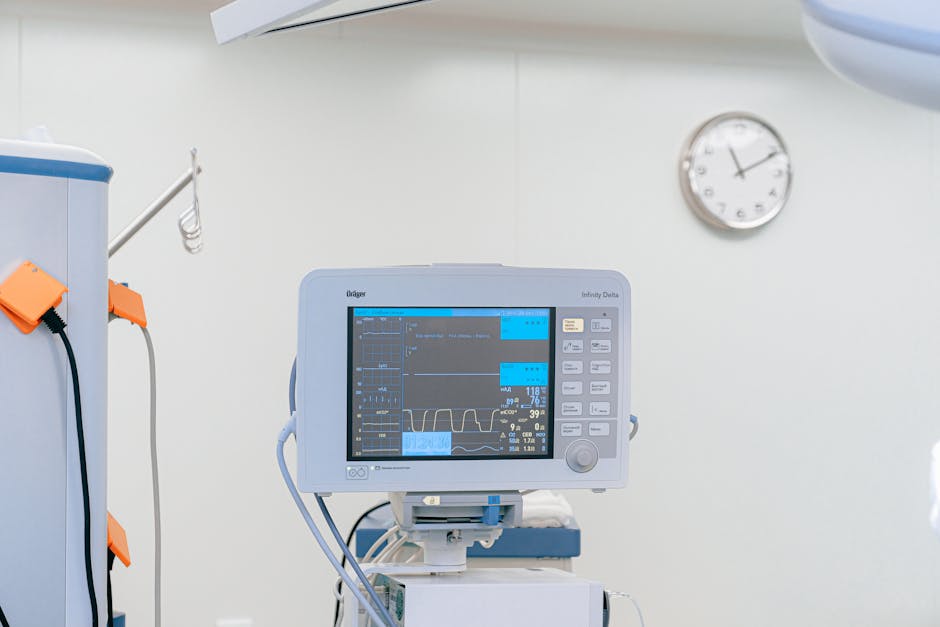
At 2am in a hotel room in Medellin, a guest who had rhinoplasty three days earlier noticed her nose was swelling more than the surgeon said it should. She needed to call the clinic. She needed to send a photo. She needed someone to tell her if this was normal or if she should go to the emergency room. Her phone had no data. The hotel wifi was down for maintenance. She sat there for 40 minutes, alone, in pain, not knowing if something was going wrong with her face.
I know this because she was staying at my hotel. In Colombia. And I was the one she came to at the front desk, asking if there was any way to get internet at 2am so she could reach her surgeon.
That was not the only time. Over seven years of running that hotel, I saw variations of the same situation over and over. People recovering from procedures — dental work, cosmetic surgery, fertility treatments, orthopedic operations — who could not reach someone when they needed to. Not because they were in a remote area. Not because the medical care was bad. Because their phone did not work.
Your Phone Is Not a Convenience During Medical Travel. It Is a Safety Tool.
On a normal vacation, your phone is nice to have. You use it for photos, maps, restaurant reviews, posting on social media. If it stops working for a few hours, you survive. You ask someone for directions. You point at a menu. It is annoying but not dangerous.
During a medical trip, your phone is something else entirely. It is your translator when the nurse speaks no English. It is your alarm for taking medication every six hours. It is your camera for documenting the surgical site so your doctor back home can see what is happening. It is your line to your family when you are scared and alone in a recovery room at night. It is your way of calling a car when you are in too much pain to walk to the street and wave down a taxi.
Take away the phone — or take away its connection — and every one of those things disappears at once.
The Moments When It Actually Matters
I am not talking about hypothetical worst-case scenarios. I am talking about things that happen regularly to medical tourists. Here are the situations I saw firsthand or heard about from guests during those seven years.
Post-surgical complication at night
Complications do not happen on a schedule. The swelling gets worse at midnight. The pain spikes at 3am. The bleeding starts again when no one is around. Your surgeon gave you a WhatsApp number to call if anything feels wrong. That number is useless without data or a working phone connection. And calling an international number on a local hotel phone, if the hotel even has one in the room, is not straightforward when you are post-surgery and panicking.
Getting emergency medication
You run out of painkillers on a Saturday night. Or the pharmacy near the hotel does not carry the specific antibiotic your surgeon prescribed. You need to find another pharmacy, figure out if they have the medication, and get there. That means Google Maps to search nearby pharmacies, Google Translate to ask if they stock the drug, and a ride-hailing app to get there because you are in no condition to walk.
Without data, you are asking the hotel front desk to make phone calls on your behalf, trying to explain a drug name in a language barrier situation. It works sometimes. It does not work reliably, and “sometimes” is not good enough when you need antibiotics after surgery.
Contacting your insurance company
Something goes wrong. Maybe the procedure had a complication and you need a second surgery. Maybe the clinic is asking for additional payment that was supposed to be covered. You need to call your insurance company, which is in another country, during their business hours, and have a conversation that involves claim numbers, policy details, and possibly uploading documents.
Insurance calls are long. 30 minutes, 45 minutes, sometimes an hour on hold. On a wifi-dependent connection, that call is going to drop. And starting over with an insurance company after getting disconnected is one of the more frustrating experiences available to humans.
Reaching your family
This is the one people do not think about until they are in it. You are in a foreign country. You just had surgery. Your mother, your partner, your sister — someone at home is waiting to hear that you are okay. And you cannot call them because the wifi in the recovery hotel is spotty and your phone has no local data.
I watched this play out so many times at my hotel. The guest who walked around the lobby at 11pm trying to find the spot where the wifi signal was strongest so she could FaceTime her husband. The guy who asked to use my personal phone to call his mother in Germany because he could not get a connection. The woman who cried at breakfast because she had not been able to talk to her kids in two days.
When you are recovering from surgery, being able to hear your family’s voice is not a nice-to-have. It affects your mental state. It affects your recovery. Isolation and anxiety after surgery are real, documented problems, and connectivity is one of the simplest things that reduces both.
Why This Is Different from a Regular Trip
On a regular trip, you can plan around bad connectivity. Go to a cafe with wifi. Walk to a spot with signal. Wait until you get back to the hotel. The consequences of not having data for a few hours are minor.
On a medical trip, you cannot plan around it. Complications are urgent. Medication schedules are fixed. Lab results arrive when they arrive. Your surgeon’s availability window is when it is, and if you miss the call because you did not have data at that moment, the next available slot might be tomorrow. After surgery, your ability to go looking for wifi — walking to a cafe, exploring a neighborhood — is limited by pain, fatigue, and medical instructions to rest.
The people I saw struggle the most were the ones who assumed connectivity would just work. They assumed the hotel wifi would be reliable. They assumed they could buy a local SIM at the airport. They assumed their home carrier’s roaming would cover them. None of those assumptions were reliable, and when they failed, they failed at exactly the wrong moment.
What Your Phone Actually Does During Recovery
Here is a list of everything a medical tourist’s phone does during a typical recovery week. Not what it could do in theory, but what I saw guests actually use their phones for, every day.
- Calling or messaging the clinic — follow-up questions, sending photos of the surgical site, confirming appointment times
- Video calls with the surgeon — post-operative check-ins, especially for patients who do not visit the clinic daily
- Translating medical instructions — prescriptions, discharge paperwork, pharmacy interactions, hospital signage
- Finding and navigating to pharmacies — often multiple pharmacies, looking for specific medications
- Calling a car — Uber, InDrive, Grab, or whatever the local app is, because walking and public transit are not realistic post-surgery
- Contacting insurance — claims, pre-authorization for additional procedures, uploading receipts and documents
- Calling family — daily check-ins, emotional support, updates on recovery progress
- Setting medication alarms and tracking recovery — many patients use health apps to track pain levels, medication schedules, and symptoms
- Accessing medical records — downloading lab results, imaging reports, and discharge summaries from the clinic portal
- Emergency contacts — having the ability to call local emergency services, the embassy, or your travel insurance emergency line at any time
Every single item on that list requires an internet connection. And most of them need to work outside the hotel — at the clinic, at the pharmacy, in the taxi, at the lab.
The Fix Is Simpler Than You Think
I am not going to turn this into a product pitch. The point of this post is simpler than that: if you are traveling abroad for a medical procedure, treat your phone’s connectivity the same way you treat your medication supply. Plan it in advance. Make sure it works before you need it. Do not leave it to chance.
An eSIM is one way to handle this. You set it up before you fly, and your phone has a local data connection from the moment you land. No SIM card store at the airport, no hunting for wifi, no depending on hotel infrastructure. It works at the clinic, at the pharmacy, in the taxi, in your hotel room at 2am when something does not feel right.
However you solve the connectivity problem, solve it before you go. Not after you land. Not after you realize the hotel wifi drops every evening. Before.
Because your phone is not your camera on a medical trip. It is the thing that keeps you safe.
If you want to plan your data for a medical trip, our medical tourism connectivity guide covers what you need by destination and procedure type. Or browse eSIM plans for Turkey, Colombia, Thailand, and Mexico.