Best eSIM for Asia in 2026 — Multi-Country Plans from €3.46
eSIM Asia — One Plan, Multiple Countries
The best eSIM for Asia handles multi-stop itineraries without you touching a settings menu. Bangkok to Hanoi to Hong Kong to Tokyo is a single trip with four countries — mobile data in Bangkok, mobile data in Hanoi, mobile data in Taipei, mobile data in Bali, all on the same plan. The Asia+ plan covers 13 countries across Southeast Asia, East Asia and the Pacific. One install before you fly, and your data follows you without a single SIM swap or roaming charge.

Photo by Khan Ishaan on Pexels
How much data do you need in Asia?
10-day plans · classic holiday. Instant QR delivery, no SIM swap.
Why Use an Asia eSIM Instead of Country Plans?
- One eSIM covers 30+ countries — no swapping plans at each border
- Works on most modern iPhones and Android devices
- Shared data pool across the entire region — use it wherever you are
- Avoid roaming charges in Asia entirely — no surprise bills when you fly from Thailand to Vietnam or on to Japan
- Perfect for multi-stop Southeast Asia trips, East Asia circuits, and backpacking routes across the continent
Buying local SIMs in Asia is actually easier than most regions — airports in Bangkok, Tokyo, and Singapore sell them at the arrivals hall. But if you're crossing four or five countries, you're still buying four or five SIMs, re-registering each time, and tracking which plan you're on. A regional eSIM eliminates all of that. You set it up once before you leave home and it handles every border crossing automatically.
Asia is also a region where mobile apps replace traditional infrastructure. In Thailand, you order food through GrabFood and Lineman. In Japan, you navigate the train system through HyperDia and Navitime. In Indonesia, Gojek and Grab are how you get around. All of these apps need data. Having a reliable data connection from the moment you land is not a nice-to-have in Asia — it is how modern travel in the region actually works.
Countries Covered
Your Asia eSIM works in all of these countries with a single data plan:
- Australia
- China
- Hong Kong
- Indonesia
- Japan
- Malaysia
- New Zealand
- Philippines
- Singapore
- South Korea
- Taiwan
- Thailand
- Vietnam
Coverage Quality Across Asia
Asia is the most diverse continent for mobile coverage — some countries have world-class 5G networks, while others are still building out 4G in rural areas. Here is what to expect:
- Japan and South Korea: Among the best mobile networks in the world. 5G is widespread in Tokyo, Osaka, Seoul, and Busan. Coverage extends to rural areas, small islands, and mountain towns. Even the Tokyo subway system has full underground coverage. These are the two easiest countries in Asia for mobile data reliability.
- Southeast Asia (Thailand, Vietnam, Indonesia, Malaysia, Philippines, Singapore): Cities and tourist areas have strong 4G coverage. Bangkok, Ho Chi Minh City, Kuala Lumpur and Singapore have excellent signal everywhere. Bali has good coverage in the tourist zones (Seminyak, Ubud, Canggu, Nusa Dua) but remote north Bali and interior villages can be patchy. The Philippines is strong in Manila and Cebu, thinner on the smaller islands.
- China, Hong Kong, Taiwan: Excellent coverage in all three. China's network is extensive — even smaller cities have 4G or 5G. Remember that China's internet restrictions (Great Firewall) affect which apps work without a VPN. Hong Kong and Taiwan have unrestricted internet with fast data speeds everywhere.
- Australia and New Zealand: Cities and coastal routes have strong coverage. The Australian Outback and New Zealand's South Island interior have limited signal between towns. Melbourne, Sydney, Auckland, and Wellington are fully covered. The Great Ocean Road, the Gold Coast, and the Queenstown area have good signal.
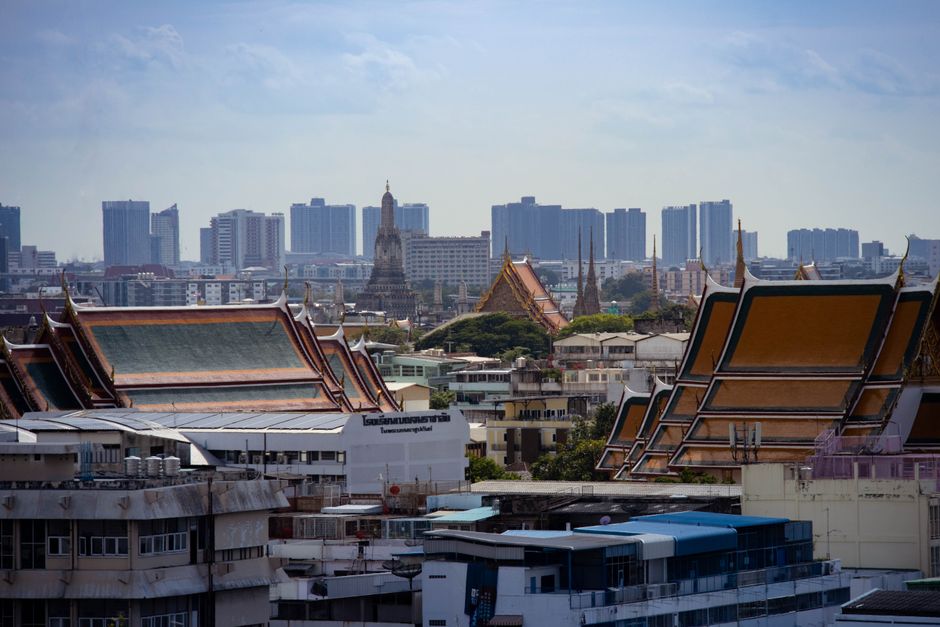
Photo by Zaonar Saizainalin on Pexels
How Does an Asia eSIM Work?
- Choose your plan — pick the data amount and duration for your Asia trip
- Receive your eSIM instantly — a QR code is sent to your email right after purchase
- Install once, use everywhere — scan the QR code at home. Your data works automatically in every covered country. Cross a border, your phone switches networks. No action needed from you.
Popular Multi-Country Routes
An Asia eSIM is especially useful for these common itineraries. Asia's budget airline networks (AirAsia, Scoot, VietJet, Cebu Pacific) make multi-country trips cheap and fast, and having data at every landing is essential for navigating airports and booking onward transport.
- Bangkok → Chiang Mai → Hanoi → Ho Chi Minh City (3-4 weeks): The Thailand and Vietnam run, by domestic flights and trains. Two countries, and your eSIM switches networks on each landing without you touching a setting. Data matters most for booking sleeper trains and intercity buses, which are largely handled through apps.
- Tokyo → Osaka → Kyoto → Seoul → Taipei → Hong Kong (3 weeks): Northeast Asia by plane and rail. The Japan Rail Pass legs between Tokyo, Osaka, and Kyoto have full coverage on the Shinkansen bullet trains. Your eSIM switches networks when you fly from Japan to South Korea to Taiwan to Hong Kong — no need to buy separate SIMs in each country. Having data in Tokyo's metro system is particularly valuable given the complexity of the network.
- Singapore → Kuala Lumpur → Penang → Koh Samui → Bali (2-3 weeks): Island and city hopping across three countries. The bus from Singapore to KL takes about five hours, and your eSIM handles the border crossing. Flights from KL to Koh Samui and then to Bali cross into Thailand and Indonesia. You need data for ferry bookings, temple navigation, and ride-sharing in every city.
- Manila → Cebu → Singapore → Kuala Lumpur (2-3 weeks): Island-hopping the Philippines then across to the peninsula. Four stops, three countries, one plan. Ferry timetables in the Philippines change often and are checked online, so data is genuinely useful rather than a convenience.
- Sydney → Auckland → Bali (3 weeks): The Pacific run. Australia and New Zealand have excellent urban coverage with long empty stretches between towns, so download offline maps before any long drive. Bali is well covered in the tourist zones.

Photo by Optical Chemist on Pexels
eSIM Plans for Asia
Plans start at €3.46 for 1 GB. Choose from 1 GB to unlimited data, with validity from 5 to 30 days. All plans include hotspot sharing. Your data pool is shared across every country in the plan — use 2 GB in Thailand and 3 GB in Vietnam from the same 5 GB plan.
For a typical three to four week Southeast Asia backpacking trip, a 5 GB or 10 GB plan covers most travelers. Ride-sharing apps (Grab, Gojek) and navigation are the heaviest data consumers — and you will use them multiple times a day in cities like Bangkok, Hanoi, and Bali. If you plan to video call home regularly or work remotely during your trip, go for 15 GB or unlimited. You can always top up from your phone if you run low, no matter which country you are in at the time.
View all eSIM plans covering Asia →
FAQs — Asia eSIM
How does a multi-country eSIM work at border crossings?
Automatically. When you cross from one country to another, your phone connects to a local network in the new country. You do not need to change settings or buy a new plan. Your data pool is shared across the entire region.
Is a regional plan cheaper than buying individual country plans?
If you visit two or more countries, usually yes — especially when you factor in the time spent buying SIMs in each country. If you're only visiting one country, a local SIM will often give you more data for less money. For multi-stop Asia trips, the regional plan is almost always the simpler and more cost-effective choice.
Which devices support eSIM?
iPhone XR and newer, Samsung Galaxy S20 and newer, Google Pixel 3 and newer, and most recent iPad Pro and iPad Air models.
Does the Asia eSIM work in China?
Yes, the plan includes China coverage. Keep in mind that China has its own internet restrictions (the Great Firewall) that affect apps like Google, WhatsApp, and Instagram. A data connection works fine, but you may need a VPN if you want to access blocked services — the same applies to any SIM or eSIM used in mainland China.
Does the Asia eSIM work in Japan's subway systems?
Yes, most major metro systems in Tokyo, Osaka, and other Japanese cities have indoor coverage. You will have data on platforms and in stations. In tunnels between stations, signal may drop briefly — the same way it does for any mobile connection.
Can I switch between countries without changing settings?
Yes. When your phone connects to a new country in the covered region, it switches networks automatically. You do not need to buy a new plan or adjust any settings. Your data balance travels with you.
Does unused data roll over when I cross into a new country?
Yes. Your data pool is shared across all covered countries. If you use 4 GB in Thailand and fly to Vietnam, your remaining balance works immediately in Vietnam with no changes needed.
Can I top up my Asia eSIM if I run out of data mid-trip?
Yes. You can purchase a new plan from your phone at any point, from anywhere in the covered region. A QR code is emailed to you and installs in a couple of minutes — no carrier store, no in-country registration process.
Is an Asia regional plan better than buying local SIMs in each country?
For multi-stop trips of three or more countries, yes. The time and effort of buying a SIM in each country adds up — and in some countries the registration process is involved. A regional eSIM covers you from the moment you land in the first country to the moment you leave the last one.
Does the Asia eSIM work on cruise ships between ports?
No. The eSIM uses land-based mobile networks only. At sea between islands or ports, you are on the ship's satellite WiFi. When the ship docks in a covered country and you go ashore, your eSIM data works again automatically.
How do I check which countries are included before I buy?
The full country list is on this page and on the plan purchase page. Before buying, check that every country on your itinerary is in the list. The plan currently covers 30+ countries across East Asia, Southeast Asia, South Asia, and the Pacific.
Does the Asia eSIM work with Grab, Gojek, and other local ride-sharing apps?
Yes. Grab operates across Southeast Asia (Thailand, Vietnam, Malaysia, Philippines, Singapore, Indonesia), and Gojek covers Indonesia. Both apps require a data connection to book rides, track drivers, and pay. Having data from the moment you land means you can book a ride from the arrivals hall instead of negotiating with taxi touts — which is the practical reality at many Asian airports.
Does the eSIM work in remote areas like the rice terraces in Bali or northern Vietnam?
Coverage in popular tourist areas like the Tegallalang rice terraces and Ubud in Bali is good. Sapa and the Ha Giang loop in northern Vietnam have coverage in the main towns but signal drops on the mountain passes between them. For remote trekking areas, download offline maps before you leave the last town with signal. The eSIM gives you the same coverage as any local SIM — it cannot create signal where towers do not exist.
Can I use the Asia eSIM for Google Maps navigation in countries with different scripts?
Yes, and this is one of the most important uses of data in Asia. In Japan, Thailand, China and other countries with non-Latin scripts, Google Maps is the difference between finding your destination and being completely lost. Street signs in Thai, Japanese, or Khmer are not readable for most travelers. Having live navigation running on your phone, with real-time directions in your language, is essential for getting around independently.
Does the Asia eSIM work in India?
No. India is not on the Asia+ plan, and neither are Cambodia, Laos, Myanmar, Nepal, Sri Lanka, Bangladesh, Mongolia, Macau or the Maldives. The plan covers thirteen countries — check the list on the plan page against your itinerary before buying.
How much data do I need for a month-long Southeast Asia trip?
For a month of active travel — Google Maps daily, Grab rides, WhatsApp, social media, and looking things up — 7 to 10 GB covers most travelers. If you are making video calls home or streaming music regularly, go for 15 GB or more. Cafe WiFi in Southeast Asia ranges from decent (Thailand, Vietnam) to unreliable on the smaller islands, so you will lean on your eSIM data more than you might expect.
Can I use the Asia eSIM for food delivery apps like GrabFood and Foodpanda?
Yes. GrabFood, Foodpanda, Gojek Food, and LINE MAN (Thailand) all work on eSIM data. These apps are the standard way to order food in Southeast Asian cities, especially if you do not speak the local language. The menus are usually in English (or at least have photos), and delivery to your hotel or hostel is fast and cheap across the region.
Does the Asia eSIM work on domestic flights within Asian countries?
The eSIM works at airports and on the ground. It does not work during the flight itself — no mobile SIM or eSIM provides in-air connectivity. Your data works at the departing airport, switches off during the flight, and reconnects when you land. For domestic flights within large countries like Indonesia, Australia or China, this means your eSIM handles both departure and arrival airports and the cities at each end. Budget airlines in Asia rarely have WiFi, so download any entertainment you need before boarding.

Photo by Onur Kaya on Pexels
Get Your Asia eSIM Today
One plan. 30+ countries. Set up before you fly.
View eSIM plans covering Asia →
Related Reading
Last updated
Are you a hotel owner in Asia?
Earn commission by offering eSIMs to your guests. No setup cost, no hardware.
Learn about the Hotel Partner Program →