
eSIM in the Balkans: Coverage, Setup & How Much Data You Need
eSIM Balkans — One Plan, Multiple Countries
The best eSIM for the Balkans handles the region's unique border density without you stopping at a phone shop. You can cross from Croatia into Bosnia and Herzegovina, into Montenegro, into Albania, and back through North Macedonia in a single road trip week. Mobile data in Dubrovnik, mobile data in Kotor, mobile data in Tirana, mobile data in Ohrid — each on a different national network, all under one plan. Most of these countries are outside the EU roaming zone, so without a dedicated regional plan, you're buying a new SIM or paying roaming charges at every border. One Balkans eSIM covers all of them from a single install.

Photo by Marian Florinel Condruz on Pexels
How much data do you need in the Balkans?
10-day plans · classic holiday. Instant QR delivery, no SIM swap.
Why Use a Balkans eSIM Instead of Country Plans?
- One eSIM covers 10+ countries — no swapping plans at each border
- Works on most modern iPhones and Android devices
- Shared data pool across the entire region — use it wherever you are
- Avoid roaming charges in the Balkans — most countries here fall outside standard EU roaming, so a dedicated regional plan is the only clean option
- Perfect for coastal drives, island hops, and overland routes through the Western Balkans
Most Balkan countries are outside the EU's free roaming zone, which means your European plan from home likely won't cover them — or will charge steep rates. A dedicated Balkans eSIM solves this. You get local network rates across the whole region without touching your main plan. Road-tripping from Split to Dubrovnik to Kotor to Tirana? One eSIM. Done.
The Balkans is one of Europe's fastest-growing travel destinations, and the infrastructure is catching up quickly. Road conditions are generally good along the coast and between capitals, but signage can be inconsistent, especially in rural areas and at border crossings. Navigation is essential — Google Maps running on mobile data will keep you on track through winding coastal roads, mountain passes, and the small border checkpoints that are not always clearly marked. Data also helps you check border wait times, find fuel stations, and communicate with accommodation hosts who may not speak English.
Countries Covered
Your Balkans eSIM works in all of these countries with a single data plan:
- Albania
- Bosnia and Herzegovina
- Bulgaria
- Croatia
- Greece
- Kosovo
- Montenegro
- North Macedonia
- Serbia
Coverage Quality Across the Balkans
Coverage across the Balkans is strong in cities and along the Adriatic coast, with some variation in mountainous interior areas. Here is what to expect by country:
- Croatia: Excellent coverage along the entire Adriatic coast from Dubrovnik to Istria. Zagreb, Split, and Dubrovnik all have fast 4G. The Dalmatian islands (Hvar, Brac, Korcula) have coverage in towns and ports. Plitvice Lakes National Park has signal near the main entrances and visitor areas.
- Montenegro: Good coverage in Kotor, Budva, Podgorica, and along the coast. The Bay of Kotor has strong signal throughout. The Durmitor National Park area has coverage in Zabljak town but gaps on hiking trails and in the Tara River canyon.
- Albania: Coverage in Tirana, Saranda, Vlora, and along the coast is good and improving rapidly. The Albanian Riviera has signal in the main beach towns. Interior areas and mountain roads (like the road to Theth or Valbona) have limited coverage. Albanian carriers have invested heavily in tourism infrastructure along the coast in recent years.
- Serbia: Belgrade has full coverage. Novi Sad, Nis, and other cities are well covered. Rural Serbia has decent coverage along main roads. The Drina Valley and Tara National Park areas have signal in towns but gaps in wilderness areas.
- Bosnia and Herzegovina: Sarajevo and Mostar have good coverage. The highway between them has consistent signal. Smaller towns and the rural interior can be patchier. The Kravice Waterfalls area has coverage at the main parking and tourist zones.
- North Macedonia: Skopje and Ohrid have strong coverage. The highways connecting them are well covered. Lake Ohrid's shoreline and the resort towns around it have reliable signal.
- Greece: Excellent coverage on the mainland and major islands. Athens, Thessaloniki, Santorini, and Crete are fully covered. Smaller islands may have lighter coverage in remote areas.
- Bulgaria: Sofia, Plovdiv, and the Black Sea coast (Varna, Sunny Beach) have strong signal. The Rila and Pirin mountain regions have coverage in resort towns and along main roads, with gaps on high-altitude hiking trails.

Photo by Alan Wang on Pexels
How Does a Balkans eSIM Work?
- Choose your plan — pick the data amount and duration for your Balkans trip
- Receive your eSIM instantly — a QR code is sent to your email right after purchase
- Install once, use everywhere — scan the QR code at home. Your data works automatically in every covered country. Cross a border, your phone switches networks. No action needed from you.
Popular Multi-Country Routes
A Balkans eSIM is especially useful for these common itineraries. The Balkans has some of the densest border crossings in Europe — you can pass through three or four countries in a single day of driving along the Adriatic coast.
- Dubrovnik → Kotor → Budva → Tirana → Ohrid (10-14 days): The Adriatic coast route crosses Croatia, Montenegro, Albania, and North Macedonia. The drive from Dubrovnik to Kotor alone crosses the Neum corridor in Bosnia. Your eSIM switches networks at each border crossing automatically. Navigation is critical on the winding coastal roads, especially the serpentine descent into Kotor and the mountain road from Albania to Ohrid.
- Belgrade → Sarajevo → Mostar → Split (10 days): Serbia through Bosnia to the Croatian coast, crossing three countries. The bus from Belgrade to Sarajevo takes about eight hours and crosses the border at night. Having data means you can confirm your hostel booking, share your location, and navigate the Sarajevo taxi situation on arrival. The day trip from Mostar to Kravice Waterfalls requires navigation on rural roads.
- Athens → Thessaloniki → Skopje → Sofia (1 week): Greece, North Macedonia, and Bulgaria in one sweep. Train and bus connections link all four cities. Your eSIM handles each border crossing. Data is useful for checking train schedules (which are not always reliable in this region), finding restaurants, and navigating the bus stations in Skopje and Sofia.
- Zagreb → Plitvice → Split → Mostar (1 week): Croatia overland into Bosnia. The road from Zagreb to Plitvice and then down to Split through the mountains benefits from live navigation, and the inland route across to Mostar crosses a border where a country SIM would stop working. Plitvice entrance tickets can be booked online, and having data lets you check availability before driving there.
eSIM Plans for the Balkans
Plans start at €4.33 for 1 GB. Choose from 1 GB to unlimited data, with validity from 5 to 30 days. All plans include hotspot sharing. Your data pool is shared across every country in the plan — use 2 GB in Croatia and 3 GB in Montenegro from the same 5 GB plan.
For a typical Balkans road trip of one to two weeks covering three to five countries, a 5 GB or 10 GB plan is the practical choice. Navigation is the biggest data consumer on a Balkans drive — the roads wind through mountains and along coastlines where wrong turns add real time to your journey. Messaging and social media add another 1-2 GB. If you plan to make video calls or stream music during the trip, go for a larger plan or unlimited. You can always top up mid-trip from your phone if you need more.
FAQs — Balkans eSIM
How does a multi-country eSIM work at border crossings?
Automatically. When you cross from one country to another, your phone connects to a local network in the new country. You do not need to change settings or buy a new plan. Your data pool is shared across the entire region.
Is a regional plan cheaper than buying individual country plans?
In the Balkans, yes — for most multi-country trips. Individual SIMs in this region require in-person purchase and sometimes passport registration. If you're visiting three or more countries in a single trip, the regional plan is cheaper and much simpler. For a single-country stay, a local SIM may give you more data per dollar. But consider the time cost: finding a carrier store in a Balkans town, dealing with setup in a language you may not speak, and repeating this process at each border. The regional eSIM eliminates all of that for a fixed, known price.
Which devices support eSIM?
iPhone XR and newer, Samsung Galaxy S20 and newer, Google Pixel 3 and newer, and most recent iPad Pro and iPad Air models.
Does my EU roaming plan cover the Balkans?
Three of the countries on this plan are EU members and covered by EU roaming — Croatia, Bulgaria and Greece. The other six — Serbia, Bosnia and Herzegovina, Montenegro, Albania, North Macedonia and Kosovo — are not EU members and typically are not covered by your home EU roaming plan. If your trip spans both, a dedicated Balkans eSIM covers all nine without the risk of unexpected charges.
Does the Balkans eSIM work in coastal areas and national parks?
Yes, in the main tourist areas along the Adriatic coast, in Plitvice, in the Bay of Kotor, and similar destinations, coverage is solid. Plitvice Lakes has signal at the main entrances, the boardwalks, and the shuttle bus areas. The Bay of Kotor has strong coverage throughout the bay and all the towns along it. Krka National Park in Croatia has coverage at the main waterfall areas. Very remote mountain areas may have limited signal — the same as any local SIM — but the tourist-facing parts of these parks are well served.
Can I switch between Balkans countries without changing any settings?
Yes. When you cross from one country to another, your phone connects to the local network in the new country automatically. No settings to change, no new plan to activate. Your data balance stays unchanged and works across all covered countries.
Does unused data carry over when I cross into a new country?
Yes. Your data pool is shared across the entire Balkans region. If you use 2 GB in Croatia and drive into Montenegro, your remaining balance continues to work immediately — nothing is reset at the border. This is one of the main advantages over individual country plans, where each plan has its own separate data pool that you may not use up before leaving.
Can I top up my Balkans eSIM if I run out of data on a road trip?
Yes. You can purchase a top-up from your phone at any point during your trip, from anywhere in the covered region. A new QR code is emailed and installs in minutes. No carrier store, no local language registration process in a border town.
Does the Balkans eSIM work on ferries between islands and the coast?
No. Mobile coverage does not extend to open water. On a ferry between Split and Hvar or the Dubrovnik islands, you will have limited or no signal at sea. When you dock on the island, coverage resumes automatically. The eSIM works on land networks only.
How much data do I need for a two-week Balkans road trip?
For two weeks covering five or six countries — Google Maps for road navigation, WhatsApp, booking accommodation on the road, checking border crossing information — 5 to 7 GB is enough for most road-trippers. Navigation is the heaviest data user on Balkans routes since roads are not always intuitive.
How do I check which countries are covered before I buy?
The full country list is on this page and on the plan purchase page. Before buying, check that every country on your itinerary is in the list. The plan covers nine countries: Albania, Bosnia and Herzegovina, Bulgaria, Croatia, Greece, Kosovo, Montenegro, North Macedonia and Serbia.
Does the Balkans eSIM work on the Albanian Riviera?
Yes. The Albanian Riviera — Saranda, Ksamil, Himara, Dhermi — has good mobile coverage in the main beach towns and along the coastal road. Signal can drop on the mountain road connecting Vlora to Saranda (the SH8), especially in the steeper sections. The main beaches and towns are covered.
Is a Balkans eSIM necessary if I already have EU roaming?
If your trip only includes the EU member states on this plan (Croatia, Bulgaria, Greece), then your EU roaming plan covers you. But if your route includes any of the non-EU countries — Serbia, Bosnia and Herzegovina, Montenegro, Albania, North Macedonia or Kosovo — your EU roaming will not apply there, and you will face roaming charges or no data at all. A Balkans eSIM covers both the EU and non-EU countries in the region with one plan.
Does the eSIM work at Balkans border crossings, which can involve long waits?
Yes. Having data at border crossings is actually one of the most practical uses. Waits can be long, especially in summer on the Croatia-Montenegro or Croatia-Bosnia borders. Data lets you check estimated wait times, entertain yourself during the wait, and communicate with your accommodation about a late arrival. The eSIM switches networks during the crossing itself — you may briefly see both countries' networks.
Can I use the Balkans eSIM for Google Maps on mountain roads?
Yes, and you should. Balkans mountain roads are winding, poorly signposted in places, and often lack guard rails. Live navigation is important for safety and for knowing what is ahead. The road from Mostar to the coast, the Durmitor ring road, and the Albanian coastal road all benefit from having navigation running. Download offline maps as backup for any sections through remote mountain areas where coverage might drop.
Does the Balkans eSIM work on the Dubrovnik city walls and historical sites?
Yes. Dubrovnik's Old Town, the city walls walk, Lokrum Island, and the cable car area all have full coverage. The same applies to Mostar's Stari Most, Kotor's Old Town, and other major historical sites in the region. Tourist areas are well covered across the Balkans. Having data at these sites lets you look up historical context, take and share photos immediately, and check opening hours for your next stop.
Can I use the Balkans eSIM for restaurant and accommodation bookings?
Yes. In the Balkans, many smaller guesthouses and apartment rentals communicate primarily through WhatsApp or Booking.com messaging. Having data lets you confirm check-in details, ask for directions, and handle last-minute accommodation changes on the road. This is especially useful in Albania and North Macedonia where not all properties have English-language websites and WhatsApp communication with the host is the standard way to coordinate your arrival.
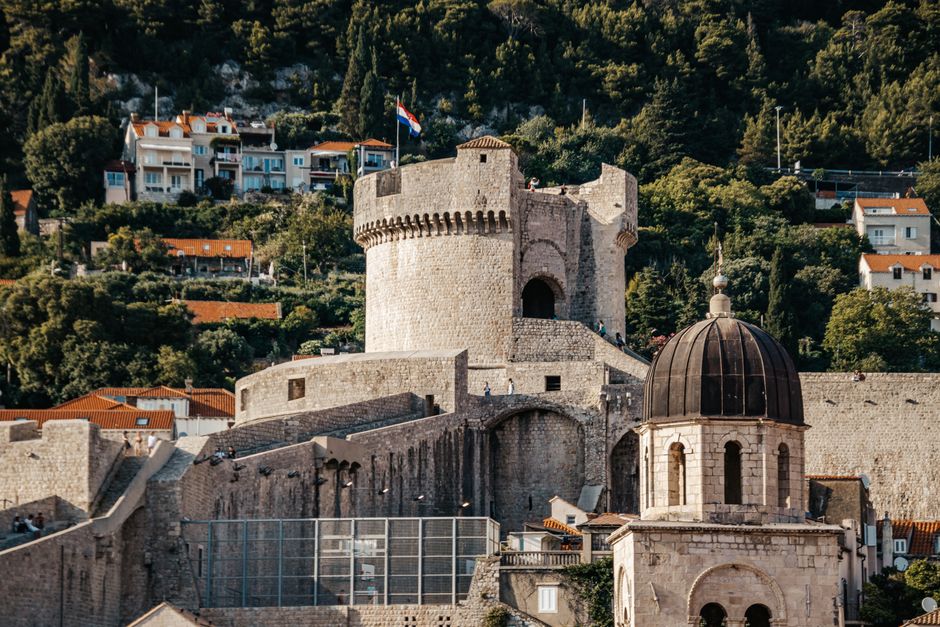
Photo by Nikola Kojevic on Pexels
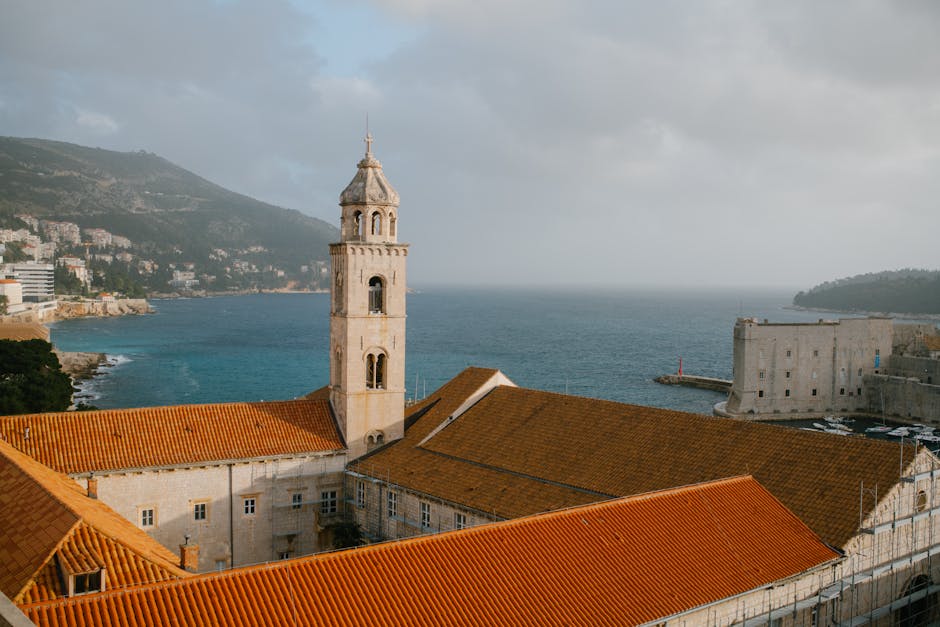
Photo by Julia Volk on Pexels
Get Your Balkans eSIM Today
One plan. 12 countries. Set up before you fly.
Related Reading
Last updated
Are you a hotel owner in the Balkans?
Earn commission by offering eSIMs to your guests. No setup cost, no hardware.
Learn about the Hotel Partner Program →