
eSIM in Chile: Coverage, Setup & How Much Data You Need
How eSIM Works in Chile
Chile is one of the longest countries on earth — Santiago and the Atacama Desert are further apart than London and Moscow. Mobile data in Santiago works from the moment you land at Arturo Merino Benítez, with Valparaíso, Torres del Paine, and the Atacama all on the same plan. A Worldcitisim eSIM keeps you connected the full length of the country. No roaming fees, no local SIM paperwork.

Photo by Nikolai Kolosov on Pexels
How much data do you need in Chile?
Every plan runs 30 days · Instant QR delivery, no SIM swap.
Why Use an eSIM in Chile?
- Instant activation — no physical SIM card needed
- Works on most modern iPhones and Android devices
- Coverage across Chile, including Santiago, Valparaiso, Atacama, and main Patagonia towns
- No roaming fees or long-term contracts
Getting a local SIM in Chile (Entel, Claro, Movistar, or WOM) requires passport registration. The process is straightforward in Santiago, but SIM card stores are sparse in the Atacama, in small Patagonian towns like Puerto Natales, and anywhere outside major cities. If your flight lands after hours, the airport kiosks at Arturo Merino Benítez charge a premium for convenience. An eSIM lets you avoid roaming charges in Chile without any of that.
Chile's geography creates a specific problem: the country is 4,300 km long but only 175 km wide on average, and most travelers cover huge distances by domestic flight or overnight bus. Each stop on the route — Santiago, Atacama, Lake District, Patagonia — might involve arriving at an airport or bus station after dark, in a town where carrier stores closed hours ago. Puerto Natales, the gateway to Torres del Paine, has limited carrier presence. San Pedro de Atacama's main street has a Claro office but hours are short and queues during peak season can be long. With an eSIM, your connectivity is sorted regardless of when or where you arrive.
Coverage and Mobile Networks in Chile
Entel has the widest 4G coverage across Chile, including rural areas. Santiago and Valparaiso have excellent urban coverage; the extreme north and south have solid coverage in towns.
- Santiago — Arturo Merino Benítez Airport, Providencia, Las Condes, Bellavista, Centro — mobile data in Santiago covers the full metro area
- Valparaíso and Viña del Mar — mobile data across both cities is consistent on 4G
- San Pedro de Atacama and the Atacama Desert towns
- Puerto Montt and the Lake District (Pucon, Villarrica)
- Puerto Natales and the Torres del Paine gateway
- Punta Arenas and Chilean Patagonia
Arturo Merino Benítez Airport (SCL) has full 4G coverage in both terminals, the international arrivals hall, and the taxi and bus pickup areas. Entel is Chile's most reliable carrier for travelers — it has the widest national reach, including coverage along the Pan-American Highway and in smaller towns where other carriers drop off. WOM is the budget carrier with strong urban coverage in Santiago and Valparaíso but weaker performance in the extreme north and south. Claro and Movistar fall in between.
In Santiago, Providencia, Las Condes, Bellavista, Lastarria, and the entire downtown have strong 4G from all carriers. The Santiago Metro has coverage at most stations, with some signal drops in deeper tunnel sections. The bus terminals (Alameda, San Borja) are fully covered.
In the Atacama, San Pedro de Atacama has 4G in the town centre. The road to the Valle de la Luna and Valle de la Muerte has coverage for the first portion, but signal weakens at the actual geological formations. The Tatio Geysers are mostly off-grid — you visit at dawn, and there is no reliable signal at 4,300 metres. Calama, the nearest city with an airport, has full coverage.
In Patagonia, Puerto Natales has solid town coverage. The road into Torres del Paine National Park has signal for roughly the first third, then it fades. Inside the park, the main ranger stations and hotels (Hotel Las Torres, Refugio Paine Grande) have WiFi; the trails themselves are mostly off-grid. Punta Arenas has full 4G coverage. The Lake District towns — Pucón, Villarrica, Puerto Varas, Puerto Montt — all have reliable signal.
On the wine route, the Colchagua Valley (Santa Cruz, the wine train route) has coverage in towns and at the main wineries. The Maipo Valley near Santiago — Concha y Toro, Viña Undurraga — has full coverage given its proximity to the capital. The Casablanca Valley between Santiago and Valparaíso has coverage along the highway and at the major wineries.

Photo by Csaba Marosi on Pexels
City Guide: Using Mobile Data in Chile's Top Cities
Santiago
Santiago is Chile's capital and transit hub — nearly every international visitor passes through. Uber operates here and is the standard way to get from the airport to your hotel (the official taxi service from SCL is also fine, but Uber gives price certainty). Google Maps is essential for navigating the Metro system and figuring out bus routes between Providencia, Bellavista, and the historic centre. WhatsApp is how you book wine tours in the Maipo Valley and confirm reservations at restaurants in Lastarria. Mobile data in Santiago also lets you check real-time air quality — smog is a seasonal issue — and decide whether to hike Cerro San Cristóbal or stay low.
Valparaíso and Viña del Mar
Valparaíso is a city of hills, street art, and confusing geography. Google Maps is the only way to navigate the cerros (hills) without getting hopelessly turned around. Uber works in both Valparaíso and Viña del Mar. WhatsApp is used for booking boat tours, confirming hostel stays, and arranging wine tastings in the Casablanca Valley between Santiago and Valparaíso. Internet for tourists in Valparaíso is especially useful for finding the funiculars (ascensores) — some are hidden in alleys that you would never find without GPS.
San Pedro de Atacama
San Pedro is a small desert town, but mobile data matters. You book stargazing tours, Valle de la Luna excursions, and Tatio Geyser trips via WhatsApp. Google Maps helps locate specific tour agencies and restaurants on the dusty main streets. Mobile data for tourists in the Atacama is your backup for checking altitude and weather conditions before high-altitude excursions — important when you are going above 4,000 metres.
Puerto Natales and Patagonia
Puerto Natales is where you prepare for Torres del Paine. WhatsApp is essential for confirming refugio (mountain hut) reservations, arranging bus transfers to the park, and renting camping gear. Google Maps helps navigate the town's one-way streets and find the equipment rental shops. Before you enter the park and lose signal, mobile data lets you download offline maps, check weather forecasts, and send your itinerary to someone back home. Internet for tourists in Puerto Natales is the last reliable connectivity before days on the trail.
How Does a Chile eSIM Work?
- Choose your plan — pick the data and duration that fits your trip to Chile
- Receive your eSIM instantly — a QR code is sent to your email right after purchase
- Install and connect — scan the QR code, follow the steps on your phone, and you are ready to go when you land
eSIM vs Local SIM Card in Chile
You could buy a local SIM card when you arrive in Chile — but here is what that actually looks like:
- Local SIM: Find an Entel or WOM store in Santiago (check opening hours — many close by 8pm), bring your passport, register in Spanish. Outside Santiago, the further south or north you go, the harder this gets. Puerto Natales has limited carrier stores. A prepaid SIM card in Chile for tourists means navigating that process — an eSIM skips it.
- eSIM: Set it up on your phone before you fly. Land in Santiago, turn on your data, done. No store, no paperwork, no queue.
An Entel SIM at the Santiago airport runs around 10,000-15,000 CLP ($10-15 USD) with a basic data package. WOM is cheaper but has weaker coverage outside major cities. Street-level stores offer better deals but require the full passport registration process — some stores also ask for a Chilean phone number for verification, which creates a circular problem for tourists. In San Pedro de Atacama, the Entel office on the main street closes at 6pm and takes a long lunch break. In Puerto Natales, carrier options are limited to a few small shops with inconsistent stock.
Chile also requires biometric registration for SIM activation — fingerprint or facial scan depending on the carrier. If the store's biometric system is down, you cannot complete the registration. This happens more often in smaller towns. With an eSIM, you avoid the entire registration process and the possibility of technical failures at the carrier store.
eSIM Plans for Chile
Plans start at €6.99 for 1 GB. Choose from 1 GB to unlimited data, with validity from 5 to 30 days. All plans include hotspot sharing so you can connect your laptop or tablet too.
FAQs — eSIM Chile
Does eSIM work in Chile?
Yes. Chile has strong 4G coverage from Entel, Claro, Movistar, and WOM. Our eSIM connects to the strongest available network. Coverage is excellent in Santiago and the main tourist circuit; remote Patagonia hiking routes are covered in towns and gaps on trails.
Can tourists use an eSIM in Chile?
Yes. No Chilean RUT, no local address, no in-person registration required. Purchase online, receive a QR code, install it before your flight.
When should I activate my Chile eSIM?
Install the eSIM profile before you leave home — takes about 3 minutes at home on WiFi. Your data does not start counting until you arrive in Chile and turn on mobile data.
Which devices support eSIM?
iPhone XR and newer, Samsung Galaxy S20 and newer, Google Pixel 3 and newer, and most flagship Android phones from 2020 onward. Check Settings > About to confirm eSIM support on your device.
Can I keep my regular phone number while using an eSIM?
Yes. Your physical SIM stays active for calls and texts from your home number. The eSIM handles your Chilean data. Both work simultaneously.
Does eSIM work in the Atacama Desert?
In San Pedro de Atacama and the main desert towns, yes — coverage is available. On remote salt flat routes and high-altitude volcano trails, coverage is limited. This applies to local Chilean SIMs equally.
Does eSIM work in Torres del Paine?
In Puerto Natales and at the main park entrance, coverage is fine. Inside the park on the W and O circuits, you are in a remote wilderness area — expect coverage at refuges and main viewpoints, with gaps on trails. No SIM type changes that.
Does the Chile eSIM work in the Lake District — Pucon and Villarrica?
Yes. Pucon, Villarrica, Puerto Montt, and the main Lake District towns all have solid 4G coverage. It is one of the better-connected regions outside Santiago, and coverage holds up well along the main tourist routes.
How much data do I need for three weeks in Chile?
For three weeks covering Santiago, Atacama, and Patagonia — maps, WhatsApp, booking on the road — 7 to 10 GB works for most travelers. Remote regions mean you may use less than expected in some stretches, so 7 GB is a reasonable middle ground.
Can I share Chile eSIM data as a hotspot?
Yes. All plans include hotspot tethering. You can connect a laptop or tablet to your phone's data, useful when accommodation WiFi is unreliable — which it often is in smaller Patagonian towns.
What happens if I run out of data in Chile?
You can purchase a top-up from your phone while still in Chile. A new QR code arrives by email and installs within minutes. No carrier store, no Spanish-language registration process.
Can I use apps like Uber or Cabify in Chile with the eSIM?
Yes. Uber and Cabify both operate in Santiago. In other cities like Valparaiso and Concepcion, availability varies — taxis remain common. All these apps need a live data connection, which the eSIM provides from landing.
Can I use WhatsApp with my Chile eSIM?
Yes. WhatsApp is widely used in Chile for restaurant reservations, tour bookings, hostel coordination, and communication with local contacts. Having it active on mobile data from the moment you land means you can start coordinating immediately — especially important if you have a tight itinerary with tours and domestic flights to arrange.
Does the eSIM work for video calls in Chile?
Yes. In Santiago, Valparaíso, and other major cities, 4G speeds are fast enough for video calls on FaceTime, Zoom, and WhatsApp Video. In Patagonia and the Atacama, video calls work in towns but quality depends on local signal strength.
Is a Chile eSIM good for remote work?
Yes. Santiago has a growing digital nomad community and reliable infrastructure. Valparaíso also has coworking spaces with a more relaxed vibe. The eSIM gives you backup data when WiFi drops. For extended stays, an unlimited plan with hotspot tethering is the right choice.
Does the eSIM work on long-distance buses in Chile?
Chile's main intercity bus companies (Turbus, Pullman, Cruz del Sur) run along the Pan-American Highway with reasonable coverage through most sections. The overnight Santiago to Atacama route has stretches without signal in the deep desert. Santiago to Valparaíso and Santiago to Pucón are well covered. Most premium buses offer onboard WiFi, but your eSIM is more reliable.
Do I need a VPN in Chile?
No. Chile does not restrict internet access. Social media, VoIP, streaming, and all major apps work normally. No VPN is necessary for standard travel use.
How much data do I need for one week in Santiago?
For a week in Santiago — Uber rides, Google Maps, WhatsApp for restaurant and wine tour bookings, social media, and light browsing — 3 to 5 GB is enough. Santiago has strong WiFi in hotels and cafes, so your mobile data supplements that. If you are working or streaming, go for 7 GB or unlimited.
Does the Chile eSIM work on Easter Island (Rapa Nui)?
Easter Island has basic mobile coverage from Entel in Hanga Roa, the main town. Coverage at the moai sites around the island is limited and unreliable. WiFi at hotels and restaurants in town is your primary connectivity. For the rest of the island, plan to be off-grid and enjoy the remoteness — it is one of the most isolated inhabited islands on earth.
Does the eSIM work on the Carretera Austral?
Chile's Carretera Austral is one of the world's great road trips, running over 1,200 km through Patagonia. Towns along the route — Coyhaique, Chaitén, Puerto Aysén — have coverage. Between towns, the highway passes through wild, unpopulated terrain with limited to no signal. Download offline maps for the full route before you start driving. Your eSIM will reconnect in each town.
What happens if I lose signal in a remote area of Chile?
Your eSIM reconnects automatically when you return to a covered area. No action needed on your part. For remote areas like the Atacama, Carretera Austral, or Torres del Paine trails, download offline maps before you head out — your data resumes the moment you are back in range.
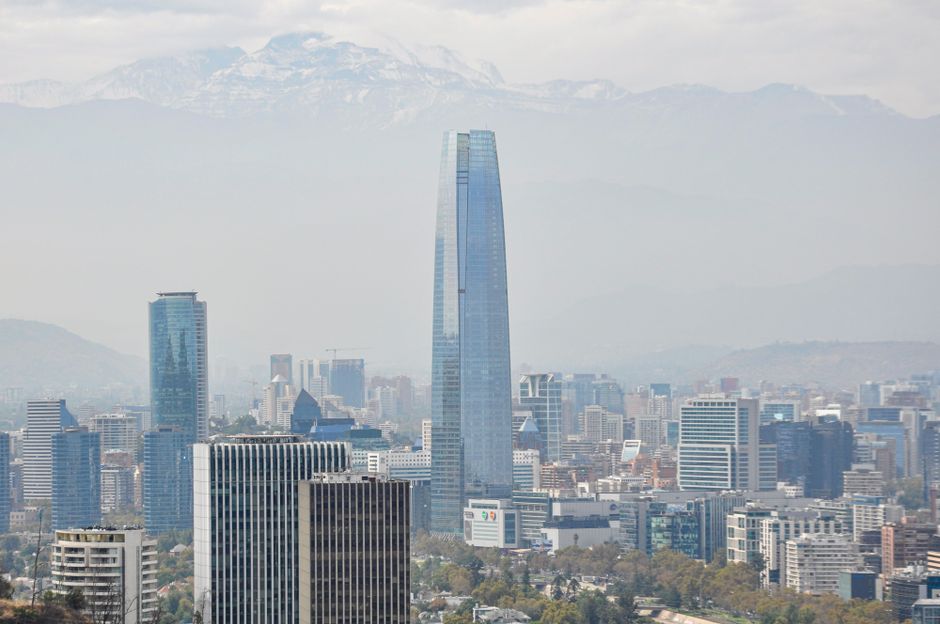
Photo by Nikolai Kolosov on Pexels
Get Your Chile eSIM Today
Set up before you fly. Land in Santiago and you are online.
Related Reading
Last updated
Are you a hotel owner in Chile?
Earn commission by offering eSIMs to your guests. No setup cost, no hardware.
Learn about the Hotel Partner Program →