
eSIM in Estonia: Coverage, Setup & How Much Data You Need
How eSIM Works in Estonia
Estonia runs on digital infrastructure better than almost anywhere in Europe — e-residency, digital government, fast public WiFi. The irony is that arriving travelers often land at Tallinn Airport with no data at all, unable to load the maps app to get to their hotel in the Old Town. Mobile data in Tallinn is among the fastest in Europe, running on 4G and expanding 5G from multiple operators. An eSIM for Estonia fixes the arrival gap before you board. Plans start at €2.59 and activate the moment you land.

Photo by Nils Rotura on Pexels
How much data do you need in Estonia?
10-day plans · classic holiday. Instant QR delivery, no SIM swap.
Why Use an eSIM in Estonia?
- Instant activation — no physical SIM card needed
- Works on most modern iPhones and Android devices
- Coverage across Estonia, including Tallinn, Tartu, Parnu, and the western islands
- No roaming fees or long-term contracts
Estonia is an EU member with EU roaming rules, but those only help EU travelers on EU plans with fair-use limits. Visitors from the US, UK, Canada, or Australia are not covered and need to avoid roaming charges in Estonia through a dedicated plan. Even for EU travelers, roaming can throttle speeds after a modest daily cap. A dedicated Estonia eSIM gives you a flat data bucket, no throttling surprises, from €2.59.
Estonia is also commonly visited as part of a Baltic itinerary — Tallinn, Riga, Vilnius in one trip. If you are doing the Baltic circuit, your phone needs to work in each country as you cross borders by bus (Lux Express is the popular option). A dedicated eSIM means clean data coverage from the moment you enter Estonia. If your trip covers all three Baltic states, check the multi-country Baltic plan at checkout — it may be simpler and cheaper than separate country plans.
Coverage and Mobile Networks in Estonia
Estonia has some of the best mobile infrastructure in Europe, with 4G LTE and 5G from Telia Eesti, Elisa, and Tele2. Coverage is strong even on the western islands of Saaremaa and Hiiumaa.
- Tallinn and the capital region — mobile data in Tallinn covers the Old Town (Vanalinn), port area, and all city districts
- Tartu and southern Estonia — mobile data in Tartu is strong across the university area and city center
- Parnu and the western coast summer resort area
- Narva and the eastern border region
- Saaremaa island and Kuressaare
- Lahemaa National Park coastal region
Estonia's small size is its advantage — with a population of 1.3 million in a country roughly the size of the Netherlands, the three carriers (Telia Eesti, Elisa, and Tele2) can cover the entire territory efficiently. Telia Eesti has the broadest coverage, including deep into the rural south and on the smaller islands. Elisa has invested heavily in 5G in Tallinn, particularly in the Rotermann Quarter, the port area, and along Viru Street. Tele2 covers all urban areas and main roads well.
The western islands — Saaremaa (Estonia's largest island) and Hiiumaa — are surprisingly well connected. Kuressaare on Saaremaa has full 4G from all carriers, and the main roads around the island have coverage. The ferry crossings from Virtsu to Muhu/Saaremaa and from Rohuküla to Hiiumaa have signal from shore-based towers for most of the crossing. Hiiumaa's main town of Kardla has reliable coverage.
Lahemaa National Park, along the northern coast east of Tallinn, has coverage at the manor houses (Palmse, Sagadi, Vihula), the fishing villages, and along the main park roads. The bog boardwalks and forest trails may have intermittent signal, but the popular visitor areas are covered. Estonia's digital culture extends to its national parks — many trailheads have QR codes for trail information, which work well with mobile data.
City Guide: Using Mobile Data in Estonia's Top Destinations
Tallinn
Tallinn's medieval Old Town (Vanalinn) is a UNESCO World Heritage site — cobblestoned streets, the Town Hall Square, the Alexander Nevsky Cathedral on Toompea Hill, and the city walls with their watchtowers. Mobile data in Tallinn is essential for navigating the Old Town's maze of streets (GPS is genuinely useful here — the narrow lanes are disorienting), for booking restaurants (Tallinn's food scene is excellent and popular places fill up), and for using the Tallinn Card app (a tourist pass for museums and transport). Bolt was founded in Estonia and works perfectly here — it is the cheapest way to get from the airport to the Old Town. The Telliskivi Creative City (a converted factory complex with restaurants, shops, and galleries) is outside the Old Town walls and requires maps to find. Tallinn's free public WiFi is good, but mobile data fills the gaps between hotspots.
Tartu
Tartu is Estonia's university city and intellectual capital — the University of Tartu (founded 1632), the Estonian National Museum, and the Town Hall Square are the main attractions. Internet for tourists in Tartu matters for finding the street art and cafes in the Supilinn (Soup Town) neighborhood, navigating to the AHHAA science center, and checking bus schedules for day trips to Otepaa (Estonia's winter sports center) or the Soomaa bog walking area. Coverage is strong across Tartu. The Tartu-Tallinn route (2.5 hours by bus or car) has continuous 4G.
Parnu
Parnu is Estonia's summer capital — a beach town on the Gulf of Riga with a wide sandy beach, a promenade, and spa hotels. Mobile data in Parnu covers the beach, the old town, and the surrounding area. In summer (June-August), Parnu fills with Estonian and Finnish tourists, and finding available restaurants and booking spa treatments benefits from having data. The Parnu-Tallinn drive (2 hours) is fully covered.
Saaremaa
Saaremaa is Estonia's largest island — accessible by ferry from the mainland via Muhu island. The main town of Kuressaare has a medieval castle and a walkable center. The island's spa culture, windmills, and juniper-covered landscapes draw visitors looking for something quieter. Mobile data on Saaremaa works well in Kuressaare and along the main roads. The Kaali meteorite crater (one of the most impressive in Europe) and Angla windmills are both reachable with working GPS. Coverage on the smaller roads can thin out, but the main tourist route around the island holds.

Photo by Margo Evardson on Pexels
How Does an Estonia eSIM Work?
- Choose your plan — pick the data and duration that fits your trip to Estonia
- Receive your eSIM instantly — a QR code is sent to your email right after purchase
- Install and connect — scan the QR code, follow the steps on your phone, and you are ready to go when you land
eSIM vs Local SIM Card in Estonia
You could buy a local SIM card when you arrive in Estonia — but here is what that actually looks like:
- Local SIM / prepaid SIM card Estonia for tourists: Find a Telia or Elisa shop (Tallinn Airport has options, but they are not always staffed at odd hours), present your passport, wait while they process it
- eSIM: Set it up before you fly. Land in Tallinn, turn on your data, done. You are on Google Maps before you reach passport control
Tallinn Airport (Lennart Meri) has a Telia kiosk in the arrivals area, usually staffed during daytime hours. An Estonian prepaid SIM with 5-10 GB costs about 5-10 EUR, with minimal registration required (Estonia's digital ID system makes this faster than most countries). In Tallinn's city center, Telia and Elisa stores are on Viru Street and in the Viru Keskus shopping center. Estonia's digital culture means the SIM purchase process is relatively smooth — but it still takes 10-15 minutes and requires being in the right place at the right time. For travelers arriving by ferry from Helsinki (a popular 2-hour day trip route) or by bus from Riga, there is no SIM kiosk at the port or bus station. An eSIM works the moment you enter Estonian territory, regardless of how you arrive.
eSIM Plans for Estonia
Plans start at €2.59 for 1 GB. Choose from 1 GB to unlimited data, with validity from 5 to 30 days. All plans include hotspot sharing so you can connect your laptop or tablet too.
FAQs — eSIM Estonia
Does eSIM work in Estonia?
Yes. Estonia has excellent 4G LTE and 5G coverage from Telia Eesti, Elisa, and Tele2 across cities, towns, and most rural areas. Even the western islands of Saaremaa and Hiiumaa are well covered.
Can tourists use an eSIM in Estonia?
Yes. No Estonian ID or local registration is needed for a Worldcitisim eSIM. Buy online, scan the QR code, done.
When should I activate my Estonia eSIM?
Install the eSIM before you travel. It activates automatically when you land in Estonia and switch on mobile data. The validity period starts from first use.
Which devices support eSIM?
iPhone XR and newer, Samsung Galaxy S20 and newer, Google Pixel 3 and newer, and most recent flagship Android phones. Check your Settings under Mobile Data or SIM to confirm eSIM support.
Can I keep my regular phone number while using an eSIM?
Yes. Your physical SIM card remains active for calls and texts. The eSIM handles data. Both run simultaneously.
Can I use one eSIM to cover Estonia, Latvia, and Lithuania?
Worldcitisim offers regional Baltic plans that cover all three Baltic states. If your trip takes you through Tallinn, Riga, and Vilnius, the multi-country Baltic plan may be better value than three separate country plans. Check options at checkout.
Is there mobile coverage in Lahemaa National Park?
Yes. Estonia's national parks are generally well covered because the country's small size means towers cover rural areas effectively. Lahemaa has reliable coverage in the main visitor areas along the coast.
Does the eSIM work on Saaremaa island?
Yes. Saaremaa is Estonia's largest island and has reliable 4G coverage in Kuressaare and the main towns. Even smaller villages on the island are generally covered, which is one of the benefits of Estonia's unusually strong rural network infrastructure.
How much data do I need for a week in Estonia?
For a week of navigation, messaging, and light streaming, 3-5 GB covers most travelers comfortably. Estonia is compact — Tallinn, Tartu, Parnu, and Saaremaa are all within a few hours of each other — so you will not be running maps for hours on end.
Can I use my Estonia eSIM for Google Maps in the Old Town?
Yes. Tallinn's Old Town (Vanalinn) has full 4G coverage and good 5G in many areas. GPS and Maps work well for navigating the medieval streets. Download an offline Tallinn map too if you want to save data and avoid battery drain from constant map refreshes.
Does the Estonia eSIM work for video calls?
Yes. Estonia's mobile infrastructure is among the best in Europe. WhatsApp, FaceTime, Zoom, and Teams all work well in Tallinn and other cities. On Saaremaa and in rural areas, 4G speeds are generally sufficient for video. Budget 300-700 MB per hour for video calling.
Can I top up my Estonia eSIM?
Yes. Purchase an additional plan from Worldcitisim and install it on your device. Most phones support multiple eSIM profiles. For Baltic circuit trips, a regional plan that covers all three countries is simpler.
Is Estonia eSIM good for remote work?
Very much so. Estonia is one of the most digitally advanced countries in the world, and mobile infrastructure reflects this. Tallinn has excellent 4G and 5G speeds, and the hotspot feature lets you work from your laptop anywhere. Many digital nomads and e-residents base themselves here. The combination of strong mobile data and widespread public WiFi makes Estonia one of the best countries in Europe for remote work.
What happens if I lose signal?
Signal loss in Estonia is rare — the country is small and well-covered. Brief drops happen in dense forests, on bog boardwalks deep in Soomaa or Lahemaa, and occasionally on the ferry crossings. Your phone reconnects quickly.
Does the eSIM work on the Helsinki-Tallinn ferry?
Your eSIM connects to Estonian networks as the ferry approaches Tallinn. At sea in the middle of the Gulf of Finland, the ferry uses maritime coverage. Once within range of Estonian shore towers (roughly the last 30-45 minutes of the crossing), your phone picks up Estonian 4G. In practice, you have data before docking.
Does the eSIM work on cruise ships in Tallinn?
Cruise ships docked at Tallinn's Old City Harbour connect to Estonian land networks. Coverage in the port area is excellent. At sea on the Baltic, the ship uses satellite networks not covered by your eSIM.
Can I use Google Maps offline with an eSIM?
Yes. Download the Estonia offline map over WiFi. Use eSIM data for live updates in cities and the offline map for the islands and national parks. Estonia's small size means the entire offline map is a quick download.
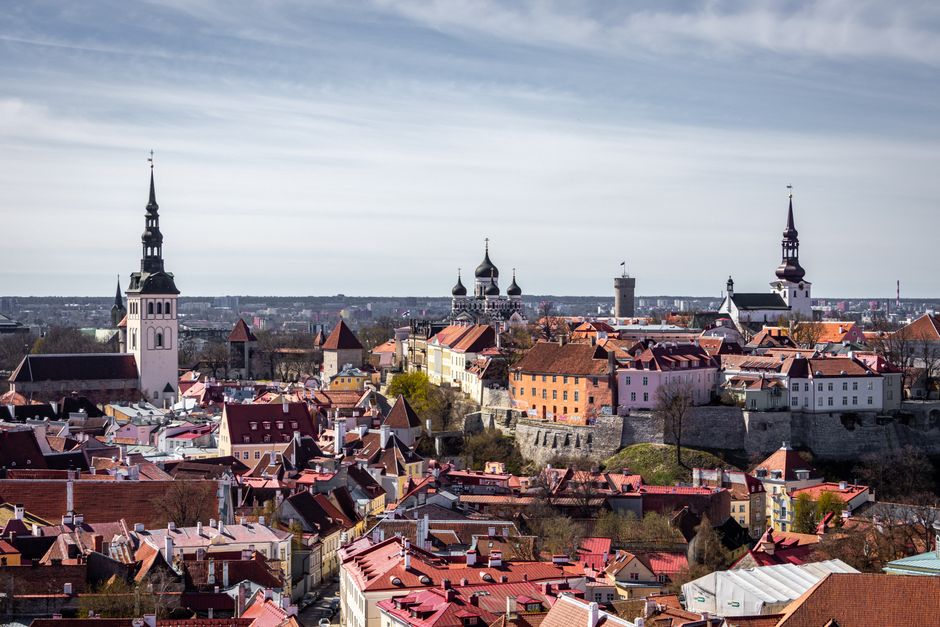
Photo by Vish Pix on Pexels
Get Your Estonia eSIM Today
Set up before you fly. Land in Tallinn and you are online.
Related Reading
Last updated
Are you a hotel owner in Estonia?
Earn commission by offering eSIMs to your guests. No setup cost, no hardware.
Learn about the Hotel Partner Program →