
eSIM in Germany: Coverage, Setup & How Much Data You Need
How eSIM Works in Germany
Germany has strong 4G LTE coverage across the country, with 5G expanding rapidly in Berlin, Munich, Hamburg, and Frankfurt. Whether you need mobile data in Berlin for the museums and neighbourhoods, in Munich for Oktoberfest and the surrounding Alps, or in Frankfurt as a transit hub — no roaming fees, no slow queues at airport phone shops. A Worldcitisim eSIM is ready on your phone before you board — land at Frankfurt Airport or Berlin Brandenburg, switch on data, and go. Plans from €2.59.
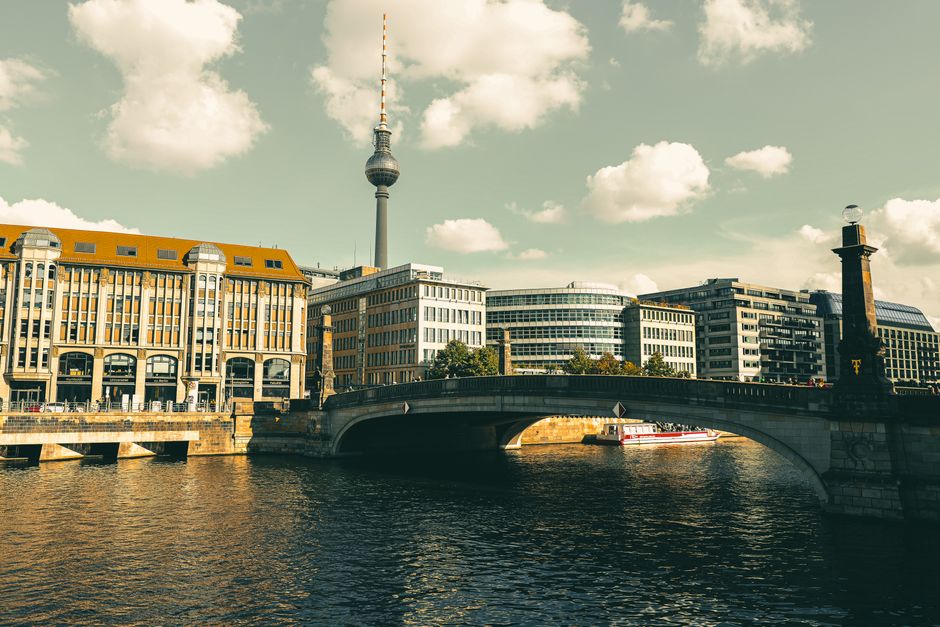
Photo by Mohammed Shaheen on Pexels
How much data do you need in Germany?
10-day plans · classic holiday. Instant QR delivery, no SIM swap.
Why Use an eSIM in Germany?
- Instant activation — no physical SIM card needed
- Works on most modern iPhones and Android devices
- Coverage across Germany, including Berlin, Munich, Hamburg, Frankfurt, and tourist areas
- No roaming fees or long-term contracts
Germany's SIM card registration rules are stricter than most European countries. Buying a prepaid SIM locally requires in-person ID verification — meaning you cannot buy one online in advance, and the airport process can be slow. An eSIM avoids all of this and lets you avoid roaming charges in Germany from the moment you land. You buy it from home, install it on your phone, and it is waiting for you when you land.
Germany requires video-ident or in-store identity verification for every prepaid SIM activation. This is a legal requirement, not just a store policy. It means you cannot simply grab a SIM card from a vending machine and start using it — even if you can buy the physical card, activation involves showing your passport to a live agent or via video call. This process can take 20 minutes or more and occasionally fails for non-German passports. An eSIM bought before you fly completely avoids this German-specific headache.
Coverage and Mobile Networks in Germany
Telekom, Vodafone, and O2 provide Germany's main network infrastructure. 4G is available across the country, with strong coverage in cities and along major travel corridors.
- Berlin and Brandenburg — mobile data in Berlin from the airport through every neighbourhood
- Munich, Nuremberg, and Bavaria
- Hamburg and the north coast
- Frankfurt, Cologne, and the Rhineland
- The Rhine Valley and Moselle wine region
- The Black Forest and Baden-Württemberg
Frankfurt Airport (FRA) has full 4G coverage in both terminals, including the long-distance train station underneath. Berlin Brandenburg Airport (BER) has strong 4G throughout — your eSIM connects the moment you turn off airplane mode. Munich Airport also has full coverage in both terminals and on the S-Bahn platform to the city center.
Telekom (T-Mobile) has the widest overall coverage in Germany, including better rural and autobahn performance. Vodafone is strong in urban areas and along main highways. O2 is competitive in cities but historically weaker in rural eastern Germany, though this gap has narrowed. Along the Rhine Valley, Moselle wine region, and Bavaria's Romantic Road, 4G coverage is solid in towns and on main roads. In the Black Forest and Bavarian Alps, coverage is reliable in resort towns like Freiburg, Garmisch-Partenkirchen, and Berchtesgaden, with thinner signal on remote mountain trails.
Germany's autobahn network has good 4G coverage for navigation and streaming. The ICE high-speed rail network between Berlin, Hamburg, Munich, Frankfurt, and Cologne has improved significantly — most of the journey has working 4G, with drops in tunnels and some rural stretches through Thuringia and Saxony.
The North Sea and Baltic coast resort islands — Sylt, Rügen, Usedom — have solid coverage in their main towns and beaches. Dresden and Leipzig in Saxony have strong 4G. The Moselle and Rhine river cruise routes have coverage from the riverbanks for most stretches. Neuschwanstein Castle and the surrounding Allgäu area have coverage at the parking areas, bus stops, and the castle approach — useful for checking tour times and return transport.
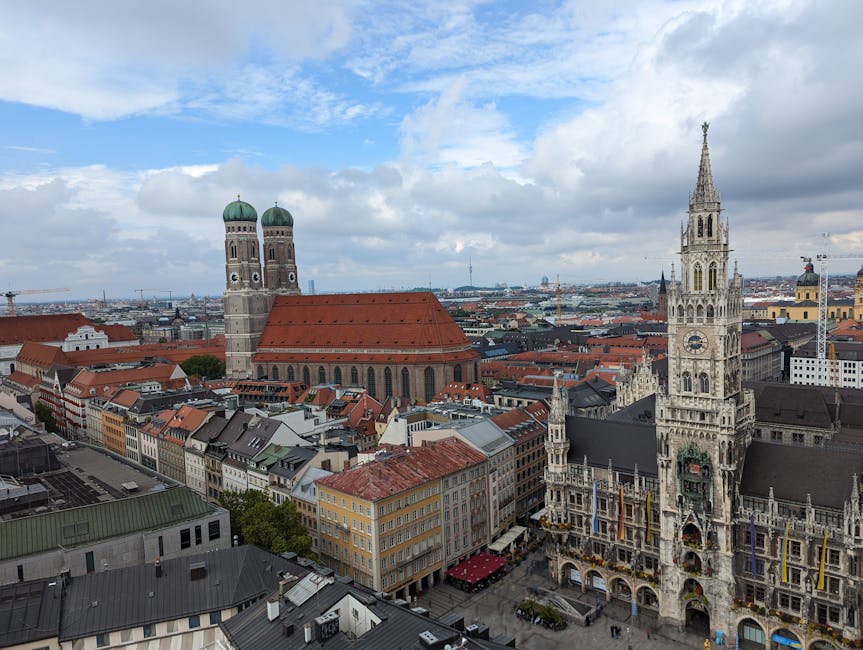
Photo by Prakhyath DESHPANDE on Pexels
City Guide: Using Mobile Data in Germany's Top Cities
Berlin
Mobile data in Berlin is how you navigate one of Europe's most spread-out capitals. The city is massive — getting from Mitte to Kreuzberg to Charlottenburg involves U-Bahn, S-Bahn, and tram transfers that you need the BVG app or Google Maps to figure out. You also need data for booking tickets to Museum Island and the Pergamon Museum, finding the best street food in Neukölln, and using ride apps like Bolt and Free Now. Berlin's U-Bahn has 4G coverage in stations and on most above-ground sections. Underground tunnel coverage is improving but still has gaps on older lines.
Munich
Internet for tourists in Munich is essential, especially during Oktoberfest when the city is overwhelmed with visitors. You need Google Maps to navigate between beer halls, the English Garden, and Marienplatz. The MVV transport app helps with S-Bahn and U-Bahn routes. If you are heading to Neuschwanstein Castle or the Bavarian Alps for a day trip, mobile data keeps you connected on the regional trains and for navigation once you arrive. Munich's public transport has good 4G coverage throughout.
Hamburg
Hamburg's harbour and canal neighborhoods are spread across a large area. Mobile data in Hamburg helps you navigate the Speicherstadt warehouse district, check ferry schedules on the Elbe, find restaurants in the St. Pauli area, and explore the HafenCity waterfront. The HVV transport app is useful for the U-Bahn and bus network. Coverage across the city is excellent.
Frankfurt
Frankfurt is a major transit hub — many travelers pass through on connecting flights or train journeys. Mobile data in Frankfurt is useful for navigating the Hauptbahnhof (main train station), finding restaurants in the Sachsenhausen cider district, and checking departure boards for Deutsche Bahn connections. If you have a layover, the airport has full 4G for booking onward transport or checking into your next hotel.
Cologne and the Rhineland
Cologne's cathedral dominates the skyline, but the city has much more — the old town brewery halls, the chocolate museum, and the vibrant Belgian Quarter for dining and nightlife. Mobile data in Cologne helps you navigate between the Dom and the ring streets, use the KVB transit app for trams and buses, and find the brewery restaurants (Brauhäuser) that are tucked into side streets. Coverage is excellent. If you are taking a Rhine river cruise from Cologne to Koblenz, data helps with checking embarkation points and booking last-minute excursions at port stops along the way.
How Does a Germany eSIM Work?
- Choose your plan — pick the data and duration that fits your trip to Germany
- Receive your eSIM instantly — a QR code is sent to your email right after purchase
- Install and connect — scan the QR code, follow the steps on your phone, and you are ready to go when you land
eSIM vs Local SIM Card in Germany
You could buy a prepaid SIM card in Germany for tourists when you arrive — but here is what that actually looks like:
- Local SIM: Find a store (often closed at airports after hours), bring your passport, complete German ID verification in person, wait in line, hope your phone is unlocked
- eSIM: Set it up on your phone before you fly. Land in Berlin or Munich, turn on your data, done. No store, no paperwork, no ID verification
A prepaid SIM in Germany costs 10-25 EUR depending on the carrier and data allowance. The catch is the mandatory video-ident or in-store ID verification — this takes 15-30 minutes and sometimes fails for non-EU passports. At Frankfurt Airport, there are Telekom and Vodafone counters in Terminal 1 arrivals, but they have limited hours and long lines during peak times. At Berlin Brandenburg, options are smaller. In smaller cities and at regional airports like Düsseldorf or Stuttgart, your best bet is finding a store downtown, which means navigating an unknown city without data first. An eSIM removes the entire process. Two minutes of setup at home, and you are connected the second you land.
Data Usage Tips for Germany
Germany is a big country with long drives and multi-city itineraries, so data adds up over a trip. Google Maps navigation uses about 5 MB per hour — light even on a long autobahn drive. Scrolling Instagram at a Munich beer garden uses roughly 100 MB per hour. Video calls for work meetings run about 300 MB per hour. Streaming music while driving the Romantic Road uses about 70 MB per hour. Streaming video at your hotel uses about 1 GB per hour on standard quality.
A typical sightseeing day in Berlin or Munich — transit apps, maps, messaging, restaurant lookups, and photo uploads — uses about 500 MB to 1 GB. A road trip day with hours of navigation running, plus restaurant checks and evening browsing, might hit 1.5 GB. Business travelers at trade fairs in Frankfurt or Hannover doing email and video calls should budget 2-3 GB per day. For a ten-day trip across multiple German cities, a 10-15 GB plan gives you comfortable room.
eSIM Plans for Germany
Plans start at €2.59 for 1 GB. Choose from 1 GB to unlimited data, with validity from 5 to 30 days. All plans include hotspot sharing so you can connect your laptop or tablet too.
FAQs — eSIM Germany
Does eSIM work in Germany?
Yes. Germany has 4G LTE coverage in all major cities and most rural areas, with 5G growing fast in Berlin, Munich, Hamburg, Frankfurt, and Cologne. Worldcitisim eSIMs connect to local German networks automatically.
Can tourists use an eSIM in Germany?
Yes. Unlike a local German SIM card, which requires in-person ID registration, an eSIM from Worldcitisim needs no German address, ID verification, or local paperwork. You buy it online, install it, done.
When should I activate my Germany eSIM?
Install the eSIM profile on your phone before you fly, at home on WiFi. The plan activates when you arrive in Germany and turn on mobile data. No action needed at the airport.
Which devices support eSIM?
iPhone XR and newer (including all iPhone 15 and 16 models), Samsung Galaxy S20 and newer, Google Pixel 3 and newer, and most recent iPad Pro and iPad Air models. Check your device settings under Mobile Data or Carrier to confirm eSIM support.
Can I keep my regular phone number while using an eSIM?
Yes. Your physical SIM stays active for calls and texts. The eSIM handles data. Both run at the same time.
Does the eSIM work during Oktoberfest and large events in Munich?
Yes — though like any network, peak crowd events can create congestion. During Oktoberfest, networks in Munich can slow during peak evening hours at the fairground. This affects all operators equally. Outside the Theresienwiese area, speeds are normal.
Does the eSIM work on German trains (Deutsche Bahn)?
Coverage along major rail corridors is generally good, though signal drops in tunnels and some rural stretches. ICE high-speed routes between major cities have improved significantly. You will have connectivity for most of a long journey, with occasional gaps in more remote sections.
Can I use my eSIM for Google Maps and navigation in Germany?
Yes. Google Maps works well across Germany's city and highway networks. If you are driving in rural Bavaria or eastern Germany, downloading an offline map before you go is a good backup for areas where signal is thinner.
Does the eSIM work if I travel to multiple German cities?
Yes. The eSIM works across all of Germany — there are no regional restrictions. Berlin, Munich, Hamburg, Frankfurt, Cologne, Dresden — one plan covers them all. You do not need a separate plan per city or region.
Can I share my eSIM data as a hotspot in Germany?
Yes. Personal hotspot works normally. It is a straightforward way to get a laptop or tablet online without needing a separate data plan. Bear in mind that hotspot use drains data faster than phone-only use.
How long does the eSIM stay active after purchase?
Validity depends on the specific plan you choose. Most plans are active for 7, 15, or 30 days from the moment the data starts. If you buy in advance, the clock typically starts on first use, not on purchase. Check the plan details when you buy.
Does the Germany eSIM work for video calls and remote work?
Yes. Germany's 4G and 5G speeds in Berlin, Munich, Hamburg, and Frankfurt handle Zoom, Teams, and Google Meet without issues. If you are attending a trade fair or business meeting and need data for presentations, file sharing, or video calls outside the venue, the eSIM covers it. Budget a 15 GB or unlimited plan for full workdays.
Can I top up my Germany eSIM if I run out of data?
Yes. Purchase a new plan from the Worldcitisim dashboard and it activates on your phone in minutes. No new QR code needed in most cases. If you are on a longer trip through Germany — say a two-week road trip along the Romantic Road and Rhine Valley — start with a bigger plan to avoid interruptions.
What happens if I lose signal in Germany?
Your phone reconnects automatically when you return to coverage. Germany has good overall coverage, but brief signal drops happen in underground parking, some old buildings, and long tunnels on the autobahn or rail network. The eSIM stays active and reconnects without any manual action from you.
Does the eSIM work on cruise ships near Germany?
Not at sea. But when docked at Hamburg or Kiel — the two main cruise ports — your eSIM connects to German 4G and works normally. Use port time to catch up on messages and maps.
What is the difference between 4G and 5G coverage in Germany?
4G covers most of Germany — cities, highways, and most towns. 5G is available in Berlin, Munich, Hamburg, Frankfurt, Cologne, and Düsseldorf, mainly in central areas. 5G gives faster speeds but 4G handles all tourist needs perfectly. Your eSIM connects to the fastest available network automatically.
Is the Germany eSIM good for Christmas market season?
Yes. German Christmas markets in Nuremberg, Cologne, Dresden, and Munich draw huge crowds from late November through December. Having mobile data lets you navigate between market locations, check opening times, and share photos. Network congestion at the busiest markets during peak evening hours is possible — the same applies to any German SIM.
Does the eSIM work on the Rhine and Moselle river cruise routes?
Yes. The Rhine Valley between Koblenz and Rüdesheim and the Moselle wine region between Trier and Koblenz have strong 4G from the riverbanks. Most river cruise passengers have signal at the main stops — Bacharach, St. Goar, Bernkastel-Kues, Cochem — and for much of the sailing between them. The castles, vineyards, and towns along the route are all well within coverage.
Does the eSIM work at Neuschwanstein Castle?
Yes. Neuschwanstein Castle near Füssen in Bavaria has 4G coverage at the parking area, the bus stop, the Marienbrücke viewpoint, and the castle approach. Timed-entry tickets must be booked online in advance, and data helps with confirming your time slot and navigating from the parking area to the shuttle bus or walking route. The drive from Munich to Neuschwanstein (about 2 hours on the A7 and B17) has reliable coverage throughout.
Does the eSIM work in Dresden and Saxony?
Yes. Dresden has strong 4G coverage across the Altstadt, the Frauenkirche area, and the Zwinger palace complex. Leipzig, about 100 km northwest, also has excellent coverage. The Saxon Switzerland National Park — famous for its sandstone rock pillars and the Bastei Bridge viewpoint — has coverage at the main viewpoints and parking areas. On the forest trails deeper into the park, signal can be intermittent.
What is the best time to install my eSIM before traveling to Germany?
Install it the day before your flight while you are on home WiFi. The whole process takes about two minutes. Once the profile is on your phone, it stays there and activates automatically when you land in Germany and switch on mobile data. Do not wait until you are at the airport gate — do it calmly at home.
Get Your Germany eSIM Today
Set up before you fly. Land in Berlin or Munich and you are online.
Related Reading
Last updated
Are you a hotel owner in Germany?
Earn commission by offering eSIMs to your guests. No setup cost, no hardware.
Learn about the Hotel Partner Program →