
eSIM in Mexico: Coverage, Setup & How Much Data You Need
How eSIM Works in Mexico
Mexico has 4G coverage across its main travel corridor — Mexico City, Cancún, Playa del Carmen, Oaxaca, Tulum, and the Pacific coast. Mobile data in Mexico City works from the moment you land at Benito Juarez, with Cancún, Guadalajara, and the Riviera Maya all on the same plan. A Worldcitisim eSIM means you step off the plane and your maps, messages, and bookings work immediately. No roaming fees, no hunting for a SIM store at the airport.

Photo by Fernando Paleta on Pexels
How much data do you need in Mexico?
Every plan runs 30 days · Instant QR delivery, no SIM swap.
Why Use an eSIM in Mexico?
- Instant activation — no physical SIM card needed
- Works on most modern iPhones and Android devices
- Coverage across Mexico, including Mexico City, Cancun, Oaxaca, and the Yucatan Peninsula
- No roaming fees or long-term contracts
Local SIM cards in Mexico require passport registration and are available through Telcel, AT&T Mexico, or Movistar. Airport kiosks at Benito Juarez (CDMX) and Cancun International exist but charge a premium. In smaller towns — Oaxaca's Sierra Norte, the jungle roads of Chiapas, or remote Yucatan cenote towns — finding a carrier store can take most of a morning. An eSIM lets you avoid roaming fees in Mexico from the moment you arrive, without any of that friction.
There is also the Oxxo factor. Thousands of Oxxo convenience stores sell Telcel SIM cards, but the activation process requires a Mexican phone number for verification — which you do not have as a tourist. Some clerks will use their own number to activate it, but this is unreliable and can lead to your SIM being deactivated later. Telcel stores in malls close by 9pm and are not open on some holidays. If you land on a Sunday evening or during Semana Santa, getting a SIM on arrival day is not guaranteed. An eSIM installed before departure removes all of these variables.
Coverage and Mobile Networks in Mexico
Telcel dominates Mexico's 4G network with the widest national reach, including rural areas. Coverage is excellent across all major tourist zones.
- Mexico City (CDMX) — Benito Juarez Airport, Centro Histórico, Roma, Condesa, Polanco — mobile data in Mexico City covers all main districts
- Cancún and the Hotel Zone — mobile data in Cancún and the Riviera Maya is reliable throughout
- Riviera Maya — Playa del Carmen, Tulum, Akumal
- Oaxaca city and the Central Valleys
- Los Cabos and the Baja Peninsula
- Guadalajara, Puerto Vallarta, and western Mexico
Benito Juarez International Airport (AICM) in Mexico City has full 4G coverage in both Terminal 1 and Terminal 2, including arrival halls and taxi pickup areas. The new Felipe Angeles Airport (AIFA) north of the city also has full coverage, though fewer international flights use it. Telcel is the dominant carrier with the widest reach — it covers highway routes between cities, smaller towns in the Yucatan, and even parts of the Baja desert. AT&T Mexico has improved significantly and is competitive in CDMX, Guadalajara, and Monterrey, but Telcel still wins in rural areas and the south.
In the Yucatan Peninsula, Cancún International Airport has strong 4G across all terminals. The Hotel Zone strip in Cancún is fully covered. Playa del Carmen and Tulum both have reliable signal in town and along the beach road. Between Tulum and the Sian Ka'an Biosphere Reserve, signal weakens. Cenotes along the highway between Playa del Carmen and Tulum usually have coverage at their entrances but not underground. Chichén Itzá has coverage at the main site and parking areas. Mérida, the Yucatan's capital, has full urban 4G coverage.
In Oaxaca, the city itself has strong 4G. The Hierve el Agua waterfalls and Mitla ruins are covered. The Sierra Norte mountain villages have limited signal — some villages like Cuajimoloyas have basic 3G, while others are off-grid. Chiapas is similar: San Cristóbal de las Casas and Palenque town have good coverage, but jungle roads between ruins sites can be patchy.
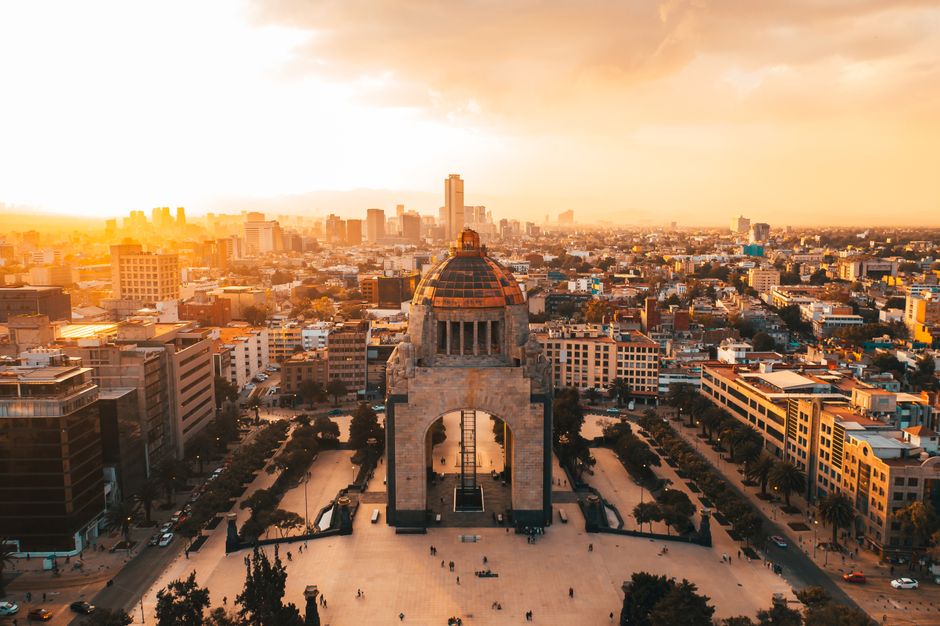
Photo by Mikhail Nilov on Pexels
City Guide: Using Mobile Data in Mexico's Top Cities
Mexico City (CDMX)
Mexico City is massive and mobile data is not optional. Uber is the standard way to get around — safer and more predictable than street taxis. Google Maps is essential for navigating the Metro, Metrobús, and the sprawl between neighbourhoods like Roma, Condesa, Coyoacán, and the Centro Histórico. WhatsApp is how you book mezcal tastings, confirm Airbnb check-ins, and coordinate with friends across the city. If you are visiting Teotihuacán, having mobile data means you can arrange your return transport from the pyramids instead of being stuck negotiating with taxi drivers in the parking lot.
Cancún and the Riviera Maya
In the Hotel Zone, you might rely on resort WiFi. But the moment you leave for Playa del Carmen, a cenote, or Isla Mujeres, you need your own data. Uber works in Cancún (it is cheaper than the taxi union, which has tried to ban it). In Playa del Carmen and Tulum, WhatsApp is how you book bike rentals, beach clubs, and snorkelling tours. Google Maps is critical for driving the highway between Cancún and Tulum — especially if you rented a car and are looking for specific cenote turnoffs. Mobile data in Cancún and the Riviera Maya makes independent travel much easier than depending on hotel concierge recommendations.
Oaxaca
Oaxaca is a food destination and mobile data helps you find it. Google Maps gets you to specific tlayuda stalls, mezcal bars, and market vendors that guidebooks miss. WhatsApp is how you book cooking classes, village tours to Hierve el Agua, and reserve seats at popular restaurants. If you are driving to the coast (Puerto Escondido is a 6-hour mountain road), offline maps are essential for the twisting Sierra Madre routes, but mobile data for tourists in Oaxaca keeps you connected in town and at major stops along the way.
Guadalajara and Puerto Vallarta
Guadalajara is Mexico's second-largest city and a major digital nomad hub. Uber and DiDi both operate here. Puerto Vallarta's Malecón and Zona Romántica are fully covered, and you will need data to book water taxis to Yelapa and the southern beaches. WhatsApp is the booking tool for boat tours and fishing trips. Mobile data in Puerto Vallarta also matters for checking surf reports if you are heading to Sayulita or Punta de Mita.
How Does a Mexico eSIM Work?
- Choose your plan — pick the data and duration that fits your trip to Mexico
- Receive your eSIM instantly — a QR code is sent to your email right after purchase
- Install and connect — scan the QR code, follow the steps on your phone, and you are ready to go when you land
eSIM vs Local SIM Card in Mexico
You could buy a local SIM card when you arrive in Mexico — but here is what that actually looks like:
- Local SIM: Find a Telcel or AT&T Mexico store (often closed at airports after evening arrivals), bring your passport, register in Spanish, wait in line, hope your phone is unlocked. Oxxo stores sell Telcel SIMs but setup requires a Mexican phone number to verify. A prepaid SIM card in Mexico for tourists takes time that an eSIM eliminates.
- eSIM: Set it up on your phone before you fly. Land in Mexico City or Cancun, turn on your data, done. No store, no paperwork, no wasted time.
A Telcel SIM at the airport runs around 200-350 MXN ($12-20 USD) for a basic data package. Street-level Telcel stores sell the same SIM for less, but the registration process includes a passport scan, address input (some stores accept your hotel address, others want a Mexican one), and a verification step. AT&T Mexico stores are less common than Telcel. If you are arriving in Cancún and heading straight to Playa del Carmen or Tulum, there is no carrier store waiting for you at the bus station.
Mexico also has phone theft concerns in some areas — CDMX, Guadalajara, and busy tourist spots. Sorting out a SIM card in a crowded Oxxo or on a busy street means having your phone out and visible. With an eSIM, you handle the setup at home, and your phone is connected and in your pocket the moment you step outside the airport.
eSIM Plans for Mexico
Plans start at €6.99 for 1 GB. Choose from 1 GB to unlimited data, with validity from 5 to 30 days. All plans include hotspot sharing so you can connect your laptop or tablet too.
FAQs — eSIM Mexico
Does eSIM work in Mexico?
Yes. Mexico has strong 4G coverage from Telcel, AT&T Mexico, and Movistar. Our eSIM connects to the strongest available network in each area. Coverage is excellent in all major tourist zones and cities.
Can tourists use an eSIM in Mexico?
Yes. No Mexican ID, no local address, no in-person registration required. You buy online, receive a QR code by email, and scan it on your phone before you travel.
When should I activate my Mexico eSIM?
Install the eSIM profile on your phone before you fly — takes about 3 minutes at home on WiFi. Your data does not start counting until you arrive in Mexico and turn it on.
Which devices support eSIM?
iPhone XR and newer, Samsung Galaxy S20 and newer, Google Pixel 3 and newer, and most flagship Android phones from 2020 onward. Go to Settings > General > About and look for "Available SIM" or "eSIM" to check.
Can I keep my regular phone number while using an eSIM?
Yes. Your physical SIM stays active for calls and texts from your home number. The eSIM handles your Mexican data. Both work simultaneously.
Does eSIM work in Tulum and remote Yucatan towns?
Tulum has solid 4G coverage throughout the town and beach road. More remote cenote towns and jungle roads have patchy coverage — true of all SIM types. The main Yucatan tourist circuit (Merida, Valladolid, Chichen Itza, Tulum) is well covered.
Does eSIM work on the Mexico City Metro?
Coverage on the CDMX Metro varies by line and station. Above ground and at major stations it is fine. In deeper tunnels, any data connection becomes unreliable.
Does the Mexico eSIM work in Tulum and the Riviera Maya?
Yes. Tulum, Playa del Carmen, Akumal, and the Riviera Maya corridor have solid 4G coverage. More remote cenote roads and jungle paths between towns may have weaker signal, but the main beach and town areas are well covered.
How much data do I need for two weeks in Mexico?
For two weeks of typical travel use — Google Maps, WhatsApp, Uber, booking things on the road — 5 to 7 GB covers most travelers. If you are streaming video or working remotely, go for 10 GB or unlimited.
Can I use Uber and other apps in Mexico with the eSIM?
Yes. Uber operates in Mexico City, Cancun, Guadalajara, and other major cities. In cities where Uber is restricted, Cabify and InDrive are alternatives. All of these apps need a live data connection to work, which is exactly what the eSIM provides.
Can I use the eSIM on long-distance buses across Mexico?
Coverage on the main intercity bus routes (ADO, ETN, Primera Plus) is generally good through populated areas and towns. Remote stretches of highway between cities will have patchy signal — the same as any SIM. For most bus journeys between major tourist destinations, you will have a usable connection for most of the ride.
Can I share Mexico eSIM data as a hotspot?
Yes. All plans include hotspot sharing. You can connect your laptop or tablet to your phone's data. This is useful when you are working from a cafe or accommodation with unreliable WiFi.
Can I use WhatsApp with my Mexico eSIM?
Yes. WhatsApp is the default communication tool across Mexico. Restaurants, tour operators, Airbnb hosts, and shuttle services all use WhatsApp for bookings and confirmations. Having it active on mobile data from the moment you land means you can coordinate everything immediately instead of waiting to find WiFi.
Is a Mexico eSIM good for remote work?
Yes. Mexico City, Playa del Carmen, Oaxaca, and Puerto Vallarta are all popular remote work destinations. The eSIM gives you a reliable data backup when cafe or coworking WiFi drops. Unlimited plans with hotspot are the right choice if you are working for an extended stay.
Do I need a VPN in Mexico?
No. Mexico does not block websites, social media, or VoIP services. All major apps work normally. Some streaming services may show Mexican content libraries instead of your home library — a VPN can change that, but it is not required for basic use.
Does the eSIM work in Chiapas and San Cristóbal de las Casas?
San Cristóbal has solid 4G coverage in town. Palenque town is covered. The jungle roads between Palenque and Bonampak have limited signal. Agua Azul and Misol-Ha waterfalls have some coverage at main access points. Southern Chiapas is one of the more remote parts of Mexico, so expect gaps between towns on any SIM type.
What happens if I lose signal in a remote area of Mexico?
Your eSIM will automatically reconnect when you return to a covered area. There is nothing you need to do — just move back toward a town or main road and your data resumes. Download offline maps for remote areas like the Sierra Norte, Copper Canyon, or jungle roads before you head out.
Can I top up my Mexico eSIM if I run out of data?
Yes. Purchase additional data from your phone at any time. A new QR code arrives by email and installs in about two minutes. No store visit needed, no registration process. Your new data activates immediately.
How much data do I need for one week in Mexico City?
For a week in CDMX — Uber rides, Google Maps navigation, WhatsApp for restaurant and tour bookings, social media, and light browsing — 3 to 5 GB is enough for most people. Mexico City has strong WiFi at cafes and hotels, so your mobile data supplements that. If you are working remotely or streaming, go for 7 GB or unlimited.
Does the eSIM work in the Copper Canyon (Barrancas del Cobre)?
In Creel and the main towns along the Chepe train route, basic coverage is available. The canyon depths and remote Tarahumara villages have limited to no signal. The train itself passes through spectacular but remote mountain terrain with intermittent coverage. Download your maps and entertainment before boarding the Chepe. In towns along the route, your eSIM will reconnect.
Does the eSIM work in Puerto Escondido and the Oaxacan coast?
Yes. Puerto Escondido town, Zicatela beach, and the main surf area all have 4G coverage. Mazunte, Zipolite, and the smaller beach towns along the Oaxacan coast have basic coverage in the village centres. The mountain road between Oaxaca city and the coast has gaps, but the coastal towns themselves are covered.

Photo by Fernando Paleta on Pexels
Get Your Mexico eSIM Today
Set up before you fly. Land in Mexico City or Cancun and you are online.
Related Reading
Last updated
Are you a hotel owner in Mexico?
Earn commission by offering eSIMs to your guests. No setup cost, no hardware.
Learn about the Hotel Partner Program →