
eSIM in the Netherlands: Coverage, Setup & How Much Data You Need
How eSIM Works in the Netherlands
The Netherlands has some of the fastest and most reliable mobile networks in Europe. 4G is everywhere, and 5G coverage in Amsterdam, Rotterdam, The Hague, and Utrecht is already strong. Whether you need mobile data in Amsterdam for the canal ring and museums, in Rotterdam for the architecture and port, or in The Hague for work or parliament — no roaming fees, no shop stop at Schiphol. A Worldcitisim eSIM is set up before you board, active when you arrive. Plans from €2.59.
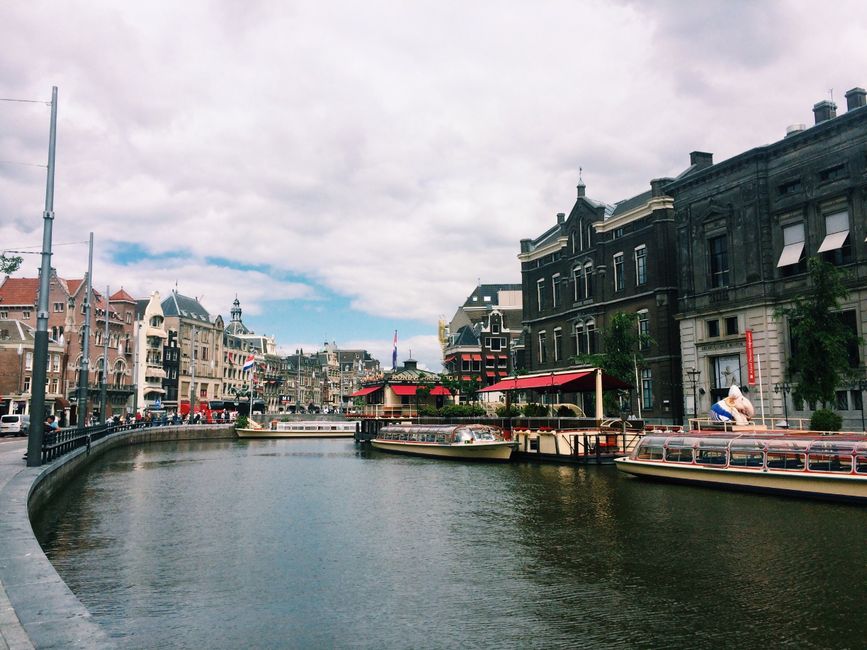
Photo by Marichka Dmytrieva on Pexels
How much data do you need in the Netherlands?
10-day plans · classic holiday. Instant QR delivery, no SIM swap.
Why Use an eSIM in the Netherlands?
- Instant activation — no physical SIM card needed
- Works on most modern iPhones and Android devices
- Coverage across the Netherlands, including Amsterdam, Rotterdam, The Hague, Utrecht, and tourist areas
- No roaming fees or long-term contracts
Schiphol is a massive transit hub. Millions of travelers pass through every year, many of them connecting on tight schedules. If you are heading straight to Amsterdam city center on the train from the airport, you do not have time to stop at a phone shop. An eSIM you set up at home means you are on Google Maps and messaging your hotel before you reach the platform — and you avoid roaming charges in the Netherlands from your first minute on the ground.
The Netherlands is also one of Europe's most digitally connected countries — almost everything runs through apps. Train tickets through the NS app, bike rentals through Swapfiets or OV-fiets, museum tickets through online booking. Without data, you are constantly looking for WiFi hotspots. An eSIM means you have always-on connectivity for all of it, from the moment you step off the train at Amsterdam Centraal.
Coverage and Mobile Networks in the Netherlands
KPN, T-Mobile Netherlands, and Vodafone provide excellent coverage across the Netherlands. The country's high population density means network investment is strong even in smaller towns.
- Amsterdam, including the canal ring and Jordaan district — mobile data in Amsterdam from Schiphol to the museum quarter
- Rotterdam and the port region
- The Hague and the coast
- Utrecht and the central Netherlands
- Eindhoven, Tilburg, and the Brabant region
- The Hoge Veluwe National Park and Texel island
Amsterdam Schiphol Airport has full 4G and 5G coverage throughout the terminal, including the NS train platforms below. Your eSIM connects before you leave the arrivals hall. Rotterdam The Hague Airport and Eindhoven Airport also have reliable coverage.
KPN has the widest coverage in the Netherlands, including rural areas and the Wadden Islands. T-Mobile Netherlands is strong in cities and along highways. Vodafone covers urban areas well. The country is flat, densely populated, and small — which means excellent network coverage almost everywhere. Even in nature reserves like the Hoge Veluwe and along the coastal dunes, 4G coverage is solid. The Wadden Islands (Texel, Terschelling, Ameland) have good coverage in towns and popular beaches.
NS trains between all major cities have strong 4G coverage. The Randstad corridor — Amsterdam, Rotterdam, The Hague, Utrecht — is one of the best-connected rail networks in Europe.
The Bollenstreek tulip region between Leiden and Haarlem has solid coverage — important during Keukenhof season when thousands of visitors need navigation and parking data simultaneously. The Giethoorn village area in Overijssel has 4G coverage for navigation and boat rental bookings. The cities of Maastricht, Groningen, and Nijmegen all have strong coverage. The Dutch motorway network (A1, A2, A4, A12) has excellent signal for the entire length. Amsterdam's GVB metro, tram, and ferry network has coverage throughout, including underground sections.
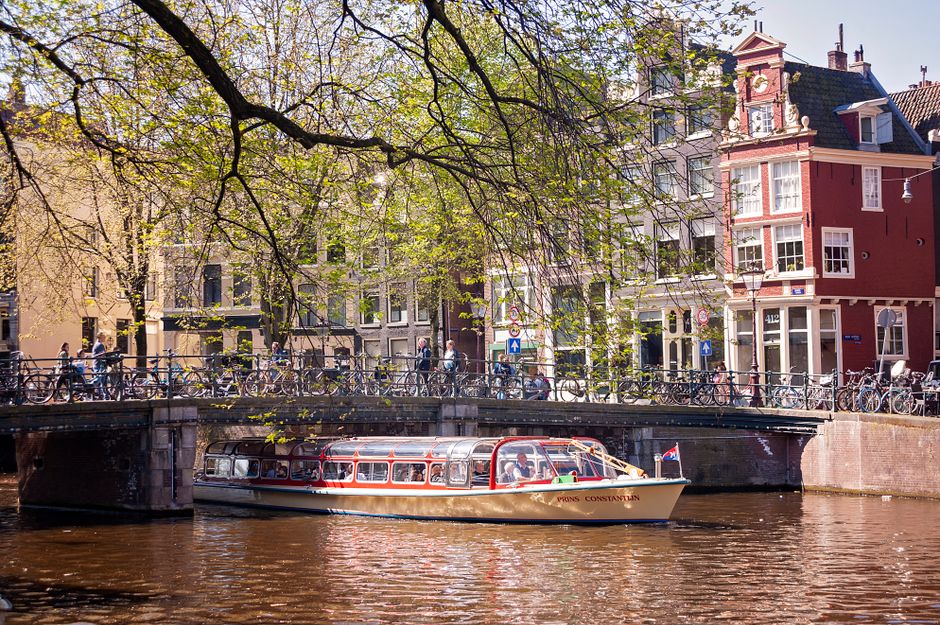
Photo by Marcelo Verfe on Pexels
City Guide: Using Mobile Data in the Netherlands
Amsterdam
Mobile data in Amsterdam is essential for navigating the canal ring, which is beautiful but disorienting — streets curve and bridges multiply, and without GPS you will walk in circles. You need data for the GVB tram and metro app, for Google Maps bike navigation (this is a cycling city), for booking timed-entry tickets at the Anne Frank House, Rijksmuseum, and Van Gogh Museum, and for finding restaurants in the Jordaan and De Pijp neighborhoods. Coverage across Amsterdam is excellent, including underground in the Metro stations.
Rotterdam
Internet for tourists in Rotterdam centers around architecture and the harbor. You need maps to navigate between the Cube Houses, Markthal, and Erasmus Bridge. The Rotterdam water taxi and RET transit app both need data. Rotterdam's food scene — the Fenix Food Factory and Markthal — benefits from online reviews. Coverage is strong across the entire city.
The Hague
The Hague mixes government buildings, international courts, and seaside neighborhoods. Mobile data helps you navigate between the Binnenhof, Mauritshuis museum, and the Scheveningen beach area. Coverage is comprehensive throughout the city and coast.
Utrecht
Utrecht is compact but its canal-side streets and underground shopping center (Hoog Catharijne) benefit from mobile navigation. Data is useful for finding restaurants along the Oudegracht canal, checking Dom Tower tour times, and exploring the university quarter.
Haarlem and Leiden
Both Haarlem and Leiden make excellent day trips from Amsterdam — each about 15 minutes by train. Mobile data helps you navigate Haarlem's old town around the Grote Markt and find the Frans Hals Museum, and in Leiden you need data for navigating the university district, the botanical gardens, and the canal network. During tulip season, Keukenhof is between these two cities, and mobile data is essential for parking navigation, the garden app, and finding nearby tulip fields for photos. Coverage in both cities is excellent.
How Does a Netherlands eSIM Work?
- Choose your plan — pick the data and duration that fits your trip to the Netherlands
- Receive your eSIM instantly — a QR code is sent to your email right after purchase
- Install and connect — scan the QR code, follow the steps on your phone, and you are ready to go when you land
eSIM vs Local SIM Card in the Netherlands
You could buy a prepaid SIM card in the Netherlands for tourists when you arrive — but here is what that actually looks like:
- Local SIM: Find a store (often closed or busy at Schiphol), bring your passport, compare Dutch prepaid plans on the fly, wait in line, hope your phone is unlocked
- eSIM: Set it up on your phone before you fly. Land at Schiphol, turn on your data, done. No store, no paperwork, no wasted time
A Dutch prepaid SIM from KPN, T-Mobile, or Lebara costs 10-20 EUR. Dutch regulations require ID verification for prepaid SIM purchases — you need your passport and the process takes 10-15 minutes. Schiphol has a few shops selling SIM cards in the arrivals hall, but they can be busy during peak transatlantic arrival windows and the options are not always well signposted. If you arrive on the red-eye from the US and just want to get on the first NS train to Amsterdam Centraal, stopping for a SIM feels like a waste of your first hour in the country.
In Amsterdam, KPN and T-Mobile stores are on Kalverstraat and near Dam Square. In Rotterdam, try the Koopgoot shopping area. In The Hague and Utrecht, there are stores in the main shopping streets and malls. But most close by 18:00 and have reduced hours on Sundays. In smaller cities like Haarlem, Leiden, and Delft, options are limited to a single shop or two. The Netherlands is small enough that most visitors do not plan extra time for SIM shopping — they just want to get on the train and start exploring. An eSIM installed before your flight means zero time wasted at Schiphol.
Data Usage Tips for the Netherlands
The Netherlands is a connected country and you will rely on your phone for nearly everything — cycling navigation, train tickets, museum bookings, and bike rental apps. Google Maps navigation uses about 5 MB per hour. Scrolling Instagram from a canal bridge uses roughly 100 MB per hour. Video calls run about 300 MB per hour. Streaming music while cycling to Haarlem uses about 70 MB per hour. Streaming video at your hotel takes about 1 GB per hour.
A typical day in Amsterdam — GVB transit app, Google Maps cycling routes, messaging, restaurant reservations, and photo uploads — uses about 500 MB to 1 GB. A day trip to Keukenhof or Giethoorn with GPS navigation adds roughly the same. If you are booking bike rentals, buying NS train tickets, and using delivery apps, add another 200-300 MB. For a long weekend in the Netherlands, a 3-5 GB plan covers most tourists comfortably. Remote workers should budget 2-3 GB per day for video calls and file sharing.
eSIM Plans for the Netherlands
Plans start at €2.59 for 1 GB. Choose from 1 GB to unlimited data, with validity from 5 to 30 days. All plans include hotspot sharing so you can connect your laptop or tablet too.
View all Netherlands eSIM plans →
FAQs — eSIM Netherlands
Does eSIM work in the Netherlands?
Yes. The Netherlands has excellent 4G LTE coverage nationwide and strong 5G in Amsterdam, Rotterdam, The Hague, and Utrecht. Worldcitisim eSIMs connect automatically to local Dutch networks.
Can tourists use an eSIM in the Netherlands?
Yes. No Dutch address or BSN (citizen service number) required. You buy it online from home, install the QR code, and connect when you land.
When should I activate my Netherlands eSIM?
Install the eSIM profile at home before your flight. The data plan activates when you arrive in the Netherlands and turn on mobile data. Nothing to do at Schiphol — just walk out and go.
Which devices support eSIM?
iPhone XR and newer (including all iPhone 15 and 16 models), Samsung Galaxy S20 and newer, Google Pixel 3 and newer, and most recent iPad Pro and iPad Air models. Check your device settings under Mobile Data or Carrier to confirm eSIM support.
Can I keep my regular phone number while using an eSIM?
Yes. Your physical SIM stays active for calls and texts. The eSIM handles data. Both work simultaneously on your phone.
Does the eSIM work while cycling between Dutch cities?
Yes. The Netherlands has excellent network coverage along cycling routes and in rural areas between cities. On the major cycle paths connecting Amsterdam, Utrecht, and Haarlem you will have consistent 4G signal throughout.
Does the eSIM cover Texel and the other Wadden Islands?
Coverage on Texel is solid in the main towns and beaches. The smaller Wadden Islands (Vlieland, Terschelling, Ameland) have 4G in settled areas, with weaker signal in nature reserves and dunes. For the main tourist areas, connectivity is reliable.
Does the eSIM work on NS trains across the Netherlands?
Yes. The NS intercity and regional rail network is well covered — you will have 4G for most journeys. Some short rural sections and tunnels in the Randstad may drop signal briefly, but on the main routes between Amsterdam, Rotterdam, Utrecht, and The Hague, data is reliable throughout.
Is my data secure when using an eSIM in the Netherlands?
Yes. An eSIM connects to a local 4G or 5G network just like a physical SIM card — there is no shared public network involved. For sensitive work, a VPN adds an extra layer, but the eSIM connection itself is as secure as any mobile data connection.
Can I use the eSIM for Google Maps while cycling?
Yes. This is probably the main use case. Coverage on Dutch cycling routes is excellent, and Google Maps navigation works well in offline mode too if you download the map of the Netherlands before you leave home. Both approaches work fine.
Do I need to turn off data roaming on my regular SIM while in the Netherlands?
You should turn off data roaming on your home SIM and set the eSIM as the default for mobile data. Otherwise your phone might use your home plan by mistake, potentially incurring roaming charges depending on your carrier. It takes about 30 seconds to switch in your phone settings.
How much data do I need for a long weekend in Amsterdam?
For a 3-4 day trip with Google Maps, Instagram, messaging, and restaurant lookups — 3-5 GB is enough. Amsterdam has good free WiFi in many cafes and museums, which stretches your plan. If you are working remotely or streaming, budget 10 GB.
Is the Netherlands eSIM good for remote work?
Yes. The Netherlands has some of the fastest mobile internet in Europe. Amsterdam, Rotterdam, and The Hague all have strong 5G coverage. Video calls, file uploads, and screen sharing work without issues on 4G or 5G. Budget 15 GB or unlimited for full work days.
Can I top up my Netherlands eSIM?
Yes. Purchase an additional plan from the Worldcitisim dashboard and it activates in minutes. No new QR code needed.
Does the eSIM work for Keukenhof and tulip season visits?
Yes. Keukenhof and the Bollenstreek (tulip region) between Leiden and Haarlem have strong 4G coverage. You will want data for navigation and for the Keukenhof app, which helps you navigate the gardens. Coverage along the road from Amsterdam is solid throughout.
What is the difference between 4G and 5G in the Netherlands?
4G covers essentially all of the Netherlands. 5G is live in Amsterdam, Rotterdam, The Hague, Utrecht, and Eindhoven. The Netherlands was one of the first European countries to roll out broad 5G. Your eSIM connects to the fastest available network automatically.
Does the eSIM work on boats through the Amsterdam canals?
Yes. The canals are right in the city center with strong 4G and 5G from all carriers. Canal cruises, water taxis, and self-drive boats all have coverage throughout. Your eSIM works perfectly while on the water.
Does the eSIM work at Giethoorn?
Yes. Giethoorn — the "Dutch Venice" with canal streets and no car access — has 4G coverage throughout the village and surrounding area. You will need data for navigating to the parking areas (the village is reached by a short walk from the car park), booking boat rentals, and finding restaurants along the canals. The drive from Amsterdam to Giethoorn (about 90 minutes on the A6) has continuous coverage.
What is the best time to install my eSIM before traveling to the Netherlands?
Install it the day before you fly while you are at home on WiFi. It takes about two minutes. The profile saves to your phone and activates when you land at Schiphol and switch on mobile data. Since many travelers head straight to the NS train platform below the airport, you want your eSIM ready before you arrive — not scrambling to set it up on the platform.
Can I use my eSIM for contactless payments in the Netherlands?
The eSIM provides data, not payment functionality — but having data means Apple Pay and Google Pay work normally, since they require a network connection for transactions. The Netherlands is almost entirely cashless, so keeping your phone online for contactless payments is important.
Does the eSIM work in Maastricht?
Yes. Maastricht — in the far south of the Netherlands, almost surrounded by Belgium and Germany — has strong 4G coverage. The city is known for the Vrijthof square, the Bonnefanten Museum, and the Boekhandel Dominicanen (a bookshop in a former church). Near the borders, your phone may occasionally pick up Belgian or German signals, but having a Netherlands eSIM keeps your data on Dutch rates. The drive from Amsterdam to Maastricht (about 210 km on the A2) has excellent coverage the full length.
Does the eSIM work for the NS train ticket app?
Yes. The NS (Dutch Railways) app is how most travelers buy and display train tickets in the Netherlands. It needs data to purchase tickets, load QR codes for the conductor, and check real-time departure boards. Your eSIM keeps the NS app functional at every station and on every train. This matters because NS ticket machines at smaller stations are sometimes out of service, and the app is the reliable backup.
Get Your Netherlands eSIM Today
Set up before you fly. Land at Schiphol and you are online.
Related Reading
Last updated
Are you a hotel owner in the Netherlands?
Earn commission by offering eSIMs to your guests. No setup cost, no hardware.
Learn about the Hotel Partner Program →