
eSIM in Poland: Coverage, Setup & How Much Data You Need
How eSIM Works in Poland
Poland has strong 4G LTE coverage across Warsaw, Krakow, Gdansk, and Wroclaw, with 5G expanding rapidly in the major cities. Whether you need mobile data in Warsaw for the old town and metro, in Krakow for the Rynek Glowny and day trips to Auschwitz, or in Gdansk for the waterfront and amber shops — no roaming charges, no tracking down a T-Mobile Poland kiosk. With a Worldcitisim eSIM, you set it up before you leave and your data is working before you find your bag.
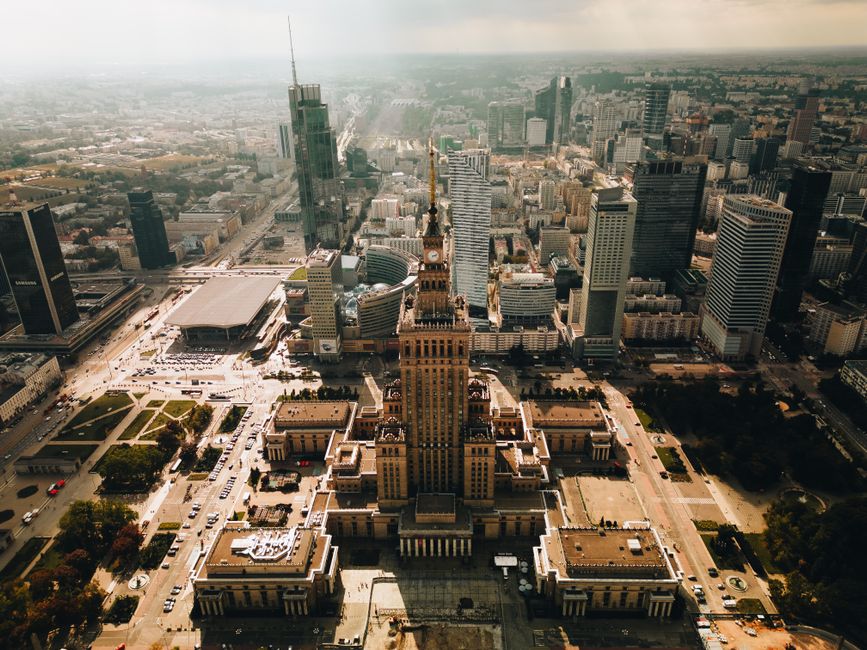
Photo by urtimud.89 on Pexels
How much data do you need in Poland?
10-day plans · classic holiday. Instant QR delivery, no SIM swap.
Why Use an eSIM in Poland?
- Instant activation — no physical SIM card needed
- Works on most modern iPhones and Android devices
- Coverage across Poland, including Warsaw, Krakow, Gdansk, Wroclaw, and tourist areas
- No roaming fees or long-term contracts
Poland is a fast-growing destination for city breaks, history trips, and business travel — and most visitors land in Warsaw or Krakow with a full itinerary and zero time to waste. The local SIM options at Polish airports are fine, but they require a short detour, a wait, and often a registration process where you hand over passport details. An eSIM removes all of that from the equation, and it is the simplest way to avoid roaming fees in Poland without any in-person process.
There is also a practical language problem. While younger Poles in the cities speak English well, the staff at carrier shops (T-Mobile, Orange, Play) do not always, and the registration forms are in Polish. If you land at Warsaw Chopin Airport after midnight, the SIM kiosks are closed anyway. If you land at Modlin Airport (used by budget airlines), there is no SIM shop at all — you are taking a bus into the city with no data unless you planned ahead. An eSIM sidesteps all of this. You set it up on your sofa, and it connects the moment your plane touches down at Chopin or Balice in Krakow.
Coverage and Mobile Networks in Poland
Poland has excellent 4G LTE coverage nationwide and rapidly expanding 5G, carried over networks including Orange Polska, T-Mobile Polska, Play, and Plus.
- Warsaw and the greater Mazovian region — mobile data in Warsaw from Chopin Airport through the old town and business district
- Krakow and the Malopolska region
- Gdansk, Gdynia, and the Tri-City area
- Wroclaw and Lower Silesia
- Poznan and Greater Poland
- The Tatra Mountains and Zakopane resort area
Poland's four main carriers — Orange Polska, T-Mobile Polska, Play, and Plus — compete aggressively, which means coverage is genuinely good even outside the big cities. Orange Polska has particularly strong rural coverage across Masuria (the lake district in the northeast) and along the eastern border regions where other carriers thin out. T-Mobile has invested heavily in 5G rollout across Warsaw's business corridors, including Mokotow, the Zlote Tarasy area, and along the Vistula embankment. Play offers solid coverage along the A1, A2, and A4 motorways that connect the major cities.
In practical terms: you will have fast, reliable 4G signal in every Polish city, along every major highway, and in the vast majority of towns. The places where signal drops are genuinely remote — deep in the Bieszczady Mountains along the Ukrainian border, or in the middle of the Bialowieza Forest. Even the Masurian Lakes, which feel remote, have reasonable 4G from Orange and T-Mobile at the main resort towns like Mikolajki and Gizycko. For the ski resorts around Zakopane, coverage is strong in the town itself and at the main Kasprowy Wierch cable car station, though it weakens on the higher Tatra ridgelines where you are hiking above the treeline.
The speed is worth noting too. Poland consistently ranks in the top tier for mobile internet speeds in Europe. In Warsaw and Krakow, 4G download speeds often exceed 50 Mbps, and 5G areas in central Warsaw regularly hit 200+ Mbps. For a traveler using maps, messaging, and the occasional video call, it is more than enough.

Photo by Przemek Lesniewski on Pexels
City Guide: Using Mobile Data in Poland's Top Cities
Warsaw
Warsaw is a city that rewards walking, but the distances between neighborhoods are real. The Old Town, Nowy Swiat, the Palace of Culture area, Praga across the river, and the Lazienki Park area are all worth visiting — and they are spread across 10+ kilometers. Mobile data in Warsaw is essential for the metro (two lines, M1 and M2, with signal at all stations), for booking Bolt or Uber (the two dominant ride apps), and for finding restaurants in the side streets off Nowy Swiat. Google Maps is reliable here, and real-time public transport schedules through the Jakdojade app work well on 4G. If you are doing business in Warsaw, the Mokotow district and the Zlote Tarasy area near Centralna station are the main commercial zones, both fully covered by 5G.
Krakow
Krakow's historic center is compact and walkable, but mobile data in Krakow is still essential for the things around the center — getting to and from Balice Airport, navigating to Kazimierz (the Jewish quarter), booking day trips to Auschwitz-Birkenau and the Wieliczka Salt Mine, and finding the right tram to Nowa Huta. The Rynek Glowny (Main Market Square) has full 4G coverage, including inside the Cloth Hall and around the Wawel Castle hill. Restaurant reservations in Krakow increasingly work through Google Maps or booking apps, and without data you are walking into places hoping for a table.
Gdansk
The Tri-City area — Gdansk, Sopot, and Gdynia — runs along the Baltic coast and is connected by the SKM commuter train. Internet for tourists in Gdansk is important for navigating between the three cities, finding the right platform at Gdansk Glowny station, and booking boat trips to Westerplatte. The Long Market and Neptune Fountain area has excellent coverage, and the waterfront restaurants along the Motlawa river all fall within strong 4G zones. In summer, Sopot's beach boardwalk and the Gdynia waterfront are packed — having data for finding a parking spot or an open restaurant makes a real difference.
Wroclaw
Wroclaw's famous bridges and islands spread the city across the Oder River, and mobile data in Wroclaw helps with crossing between the main market square, Ostrow Tumski (Cathedral Island), and the Centennial Hall area. The city is popular for weekend breaks and business conferences. Bolt and city bikes are the best way to get around, and both need mobile data. Coverage across the old town and university districts is excellent on all carriers.

Photo by V Marin on Pexels
How Does a Poland eSIM Work?
- Choose your plan — pick the data and duration that fits your trip to Poland
- Receive your eSIM instantly — a QR code is sent to your email right after purchase
- Install and connect — scan the QR code, follow the steps on your phone, and you are ready to go when you land
eSIM vs Local SIM Card in Poland
You could buy a prepaid SIM card in Poland for tourists when you arrive — but here is what that actually looks like:
- Local SIM: Find a store (often closed at airports after hours), bring your passport, deal with Polish registration paperwork, wait in line, hope your phone is unlocked
- eSIM: Set it up on your phone before you fly. Land in Warsaw or Krakow, turn on your data, done. No store, no paperwork, no wasted time
Polish SIM registration rules require a passport and a form. At Warsaw Chopin Airport, T-Mobile and Orange have small kiosks in the arrivals hall, but they are staffed during business hours only — flights arriving after 22:00 or before 07:00 find them closed. At Krakow Balice Airport, there is a small news and SIM kiosk near arrivals, but selection is limited and the pricing is worse than what you would find at a city-center carrier store. In the city, Orange and Play stores are common on main streets, but expect a 15-30 minute wait during busy periods, and the registration process requires filling out a form with your passport number, address (even a hotel address works), and a signature. A Polish prepaid SIM with 10 GB of data typically costs 25-40 PLN (about 6-10 EUR), which is cheap — but the time cost of finding the store, waiting, and registering is real. An eSIM costs a similar amount and takes two minutes from your sofa.
eSIM Plans for Poland
Plans start at €3.46 for 1 GB. Choose from 1 GB to unlimited data, with validity from 5 to 30 days. All plans include hotspot sharing so you can connect your laptop or tablet too.
FAQs — eSIM Poland
Does eSIM work in Poland?
Yes. Poland has reliable 4G LTE coverage across the country, with 5G active in Warsaw, Krakow, Gdansk, and Wroclaw. Worldcitisim eSIMs connect to local networks automatically.
Can tourists use an eSIM in Poland?
Yes. No Polish ID or local address required. You buy online, install the QR code, and go.
When should I activate my Poland eSIM?
Install the eSIM profile on your phone before you fly — takes a couple of minutes at home on WiFi. The data plan activates automatically when you land in Poland and turn your mobile data on.
Which devices support eSIM?
iPhone XR and newer (including all iPhone 15 and 16 models), Samsung Galaxy S20 and newer, Google Pixel 3 and newer, and most recent iPad Pro and iPad Air models. Check your device settings under Mobile Data or Carrier to confirm eSIM support.
Can I keep my regular phone number while using an eSIM?
Yes. Your physical SIM stays active for calls and texts from your home number. The eSIM handles your data. Both run at the same time on your phone.
Does eSIM work in Zakopane and the Tatra Mountains?
Yes, in and around Zakopane town and most of the main hiking trail access points. Deep in the mountain valleys, signal can drop — but anywhere you have people, you have coverage. The same applies to any Polish SIM.
Does eSIM work for visiting Auschwitz-Birkenau from Krakow?
Yes. Oswiecim, where the memorial site is located, has solid 4G coverage. The route from Krakow and the site itself are fully covered, so navigation apps and transport booking work without issue.
Does eSIM work in Gdansk and along the Baltic coast?
Yes. Gdansk, Sopot, Gdynia, and the Baltic coastal resorts all have solid 4G. The Tri-City area is one of Poland's best-connected regions. Coverage holds well along the coastal road and at the popular beach towns in summer.
Can I use my eSIM for Google Maps while driving in Poland?
Yes. Navigation apps work well throughout Poland on 4G. On motorways, main roads, and in cities, signal is consistent. In very rural areas, load your maps before leaving a town to have the route cached offline, just in case.
What happens if I run out of data in Poland?
Your connection stops — no unexpected charges. You can pick up an additional data plan through the Worldcitisim dashboard, or use hotel WiFi while you sort it. Poland has good free WiFi coverage in cafes, restaurants, and most hostels and hotels.
How much data do I need for a week in Poland?
A week in Poland with daily navigation between cities, messaging apps, social media, and occasional restaurant searches typically uses 3-5 GB. If you are doing video calls or uploading photos regularly, go for 5-10 GB. Poland has good WiFi in most cafes and hotels, which helps stretch your data if you use it for heavier tasks.
Does the Poland eSIM work for video calls?
Yes. Poland's 4G and 5G networks handle WhatsApp calls, FaceTime, Zoom, and Teams without issues in cities and main towns. Video calls use around 300-700 MB per hour depending on quality. In remote areas with weaker signal, switch to audio-only calls for a more stable connection.
Can I top up my eSIM if I run out of data?
Yes. You can purchase an additional Worldcitisim plan and install it alongside your existing profile. Most modern phones support multiple eSIM profiles, so adding more data takes a few minutes. Alternatively, buy a larger plan upfront if you expect heavy usage.
What is the difference between 4G and 5G coverage in Poland?
4G LTE covers essentially all of Poland — cities, towns, highways, and most rural areas. 5G is available in central Warsaw, parts of Krakow, Gdansk, Wroclaw, Poznan, and Lodz, but it is still expanding. For most travel use — maps, messaging, browsing — 4G is more than fast enough. 5G matters mainly for heavy video streaming or remote work with large file transfers.
Is Poland eSIM good for remote work?
Yes. Poland has some of the fastest mobile internet in Europe. In Warsaw and Krakow, 4G download speeds regularly exceed 50 Mbps, and 5G areas hit 200+ Mbps. Video conferencing, cloud file access, and email all work well. The hotspot feature on Worldcitisim plans lets you connect your laptop too, so if your hotel or Airbnb WiFi is slow, your phone becomes a reliable backup.
Does the eSIM work on cruise ships near Poland?
Cruise ships in port at Gdynia or Gdansk will pick up Polish land-based networks, so your eSIM works while docked. Once at sea on the Baltic, the ship switches to maritime satellite networks which are not covered by your eSIM. Use ship WiFi at sea, and your eSIM in port.
Can I use Google Maps offline with an eSIM in Poland?
Yes, and it is a good strategy. Download the offline map for Poland (or specific regions) before your trip via WiFi. Then use your eSIM data for real-time traffic and transit updates while keeping overall data usage low. Google Maps offline mode shows routes and points of interest even without signal — the eSIM data adds live elements on top.
What happens if I lose signal in Poland?
In most of Poland, signal loss is rare and brief — usually in tunnels, deep forests, or remote mountain valleys. When you move back into coverage, your phone reconnects automatically. No data is lost and no extra charges apply. If you are heading into the Bieszczady Mountains or deep Bialowieza Forest, download offline maps as a precaution.
Photo by V Marin on Pexels
Get Your Poland eSIM Today
Set up before you fly. Land in Warsaw or Krakow and you are online.
Related Reading
Last updated
Are you a hotel owner in Poland?
Earn commission by offering eSIMs to your guests. No setup cost, no hardware.
Learn about the Hotel Partner Program →