
eSIM in Serbia: Coverage, Setup & How Much Data You Need
How eSIM Works in Serbia
Serbia draws visitors to Belgrade's riverfront nightlife, Novi Sad during Exit Festival, the gorges of Djerdap National Park, and monasteries across the Serbian countryside. It is a country worth exploring beyond the capital, and mobile data matters the moment you step off the plane at Nikola Tesla Airport. Mobile data in Belgrade is excellent — 5G is active in central districts and 4G covers the entire metropolitan area. A Serbia eSIM gives you that coverage from day one — no roaming fees, no waiting for a SIM.
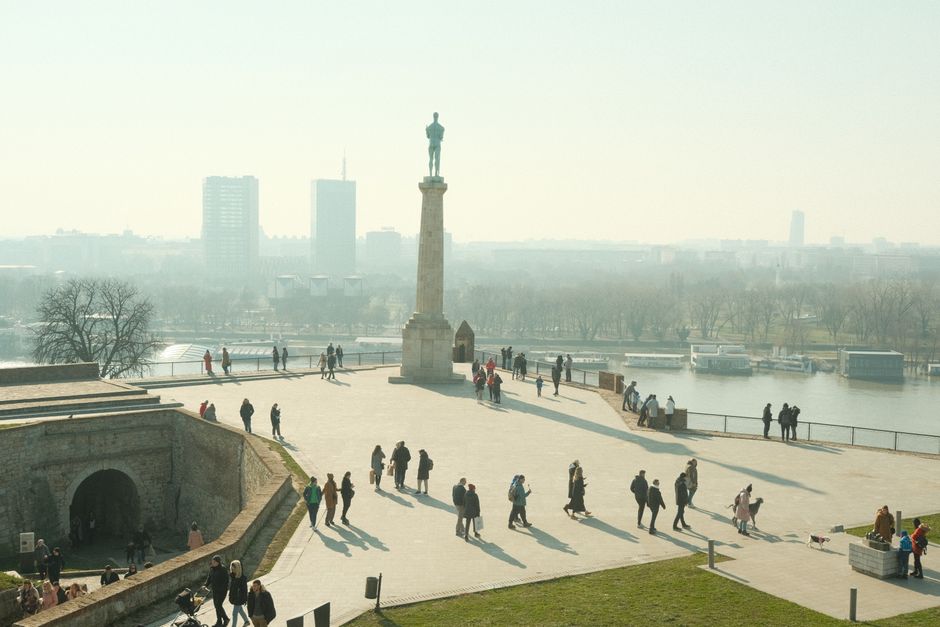
Photo by Mikkel Kvist on Pexels
How much data do you need in Serbia?
10-day plans · classic holiday. Instant QR delivery, no SIM swap.
Why Use an eSIM in Serbia?
- Instant activation — no physical SIM card needed
- Works on most modern iPhones and Android devices
- Coverage across Serbia, including Belgrade, Novi Sad, Nis, and tourist regions
- No roaming fees or long-term contracts
Serbia is not in the EU, which means EU roaming protections do not apply here. Travelers coming from Germany, France, or Spain often get an unpleasant surprise when their roaming bill arrives. Choosing an eSIM is the simplest way to avoid roaming charges in Serbia — flat rate, known cost, done before you board.
This matters more in Serbia than in many other countries because Serbia is a non-EU island surrounded by EU and EU-candidate countries. Travelers often arrive from Hungary, Romania, or Croatia — where EU roaming was working fine — and suddenly face full international roaming charges the moment they cross the border. Some carriers do not even have roaming agreements with Serbian networks, meaning your data simply stops working. A Serbia eSIM eliminates this shock. You install it before your trip, and it connects to Telekom Srbija, A1, or Yettel the moment you enter Serbia, whether by plane, train, or road from a neighboring country.
Coverage and Mobile Networks in Serbia
Serbia has 4G coverage from three main operators — Telekom Srbija, A1 Serbia, and Yettel — across cities and main travel corridors. 5G is active in Belgrade and expanding.
- Belgrade and the wider capital region — mobile data in Belgrade runs on 5G in central districts and 4G throughout
- Novi Sad and Vojvodina province — mobile data in Novi Sad covers the fortress area, city center, and resort zones
- Nis and southern Serbia
- Kopaonik ski resort and surrounding mountains
- Djerdap National Park and the Iron Gates gorge
- Zlatibor mountain resort area
Telekom Srbija is the largest carrier with the broadest rural coverage, particularly strong in central and southern Serbia along the E75 motorway corridor. A1 Serbia has good urban presence and covers the Vojvodina flatlands (the agricultural north) well. Yettel focuses on city coverage and main highways. All three provide overlapping 4G in Belgrade, Novi Sad, Nis, Kragujevac, and Subotica.
Belgrade's 5G rollout from Telekom Srbija covers the Republic Square area, Knez Mihailova pedestrian street, the Sava waterfront development (Belgrade Waterfront), and the New Belgrade business district across the river. The Ada Ciganlija lake (Belgrade's urban beach) has strong coverage from all carriers during the summer season.
Along the main driving routes: the E75 (Belgrade to Nis to the North Macedonian border) has continuous 4G. The E70 (Belgrade to Novi Sad and toward the Hungarian border) is similarly well covered. The scenic drive along the Danube through the Djerdap gorge has coverage in towns like Golubac, Donji Milanovac, and at the Djerdap Dam, but signal can drop in the deeper canyon sections between towns. The mountain resorts of Kopaonik and Zlatibor both have strong 4G in the resort areas, and Tara National Park has coverage along the main roads and at the Drina River viewpoints.
City Guide: Using Mobile Data in Serbia's Top Cities
Belgrade
Belgrade is a city that lives on its rivers — the confluence of the Sava and Danube defines the layout. The Kalemegdan Fortress, Knez Mihailova shopping street, the Skadarlija bohemian quarter, and the Sava Waterfront are all on the Sava side. New Belgrade across the river has the business towers and shopping malls. Mobile data in Belgrade is essential for CarGo (the local ride app, similar to Uber), for finding the hidden speakeasy bars that Belgrade is famous for, and for navigating the extensive tram and bus network. Google Maps works well here, and real-time transit data is available for most routes. The nightlife scene — river barges (splavovi) along the Sava, clubs in the warehouse district — is famously hard to find without a phone. Many places do not have visible signage and rely entirely on Google Maps or Instagram for directions.
Novi Sad
Novi Sad is Serbia's second city, sitting on the Danube in the Vojvodina province. The Petrovaradin Fortress (home to Exit Festival every July) dominates the city. Internet for tourists in Novi Sad matters for navigating between the fortress and the city center across the bridge, finding restaurants on Zmaj Jovina street, and checking the schedule at the Serbian National Theatre. During Exit Festival, mobile data is critical — tens of thousands of people converge on the fortress, and paper maps or pre-downloaded guides cannot replace real-time information about set times, stage locations, and meetup points. All three carriers provide coverage, though network congestion during the festival is real — everyone is online at once.
Nis
Nis is the largest city in southern Serbia and a crossroads for travel to North Macedonia, Bulgaria, and Kosovo. The Skull Tower (Cele Kula), Nis Fortress, and the Mediana Roman palace are the main sights. Mobile data in Nis covers the entire city and the nearby Nisava river area. Nis is also a base for day trips to the Djerdap gorge (3 hours north) and the Vranje area in the south. Having data for navigation is particularly important in southern Serbia, where road signage is less reliable and smaller towns are not always easy to find.
Subotica
Subotica sits near the Hungarian border in Vojvodina and has a distinct Art Nouveau character — the City Hall and the Synagogue are among the most beautiful buildings in the Balkans. Mobile data in Subotica helps with navigating the city (it is not large but the Art Nouveau buildings are spread out) and with the nearby Palic Lake resort area. If you are crossing the border to or from Hungary, having a Serbia eSIM active means you have data the moment you enter Serbian territory without waiting for your EU roaming to switch off and a Serbian connection to engage.

Photo by Boris Hamer on Pexels
How Does a Serbia eSIM Work?
- Choose your plan — pick the data and duration that fits your trip to Serbia
- Receive your eSIM instantly — a QR code is sent to your email right after purchase
- Install and connect — scan the QR code, follow the steps on your phone, and you are ready to go when you land
eSIM vs Local SIM Card in Serbia
You could buy a local SIM card when you arrive in Serbia — but here is what that actually looks like:
- Local SIM / prepaid SIM card Serbia for tourists: Find a store (often closed at airports after hours), bring your passport, deal with Serbian registration paperwork, wait in line, hope your phone is unlocked
- eSIM: Set it up on your phone before you fly. Land in Belgrade, turn on your data, done. No store, no paperwork, no wasted time
At Nikola Tesla Airport in Belgrade, there is a small Yettel kiosk and sometimes a Telekom Srbija representative in the arrivals hall. Availability depends on your arrival time — late-night flights from Istanbul, Vienna, or Zurich may find them closed. A Serbian prepaid SIM with 10 GB costs about 800-1,500 RSD (roughly 7-13 EUR), and registration requires your passport and filling out a form. In Belgrade city center, carrier stores are on Knez Mihailova and the surrounding streets, but weekend hours are limited and the registration process takes 15-20 minutes. The language barrier is less of an issue in Belgrade (many staff speak English) but becomes real in smaller cities like Nis, Kragujevac, or Subotica. An eSIM saves you the detour and the paperwork for roughly the same cost.
eSIM Plans for Serbia
Plans start at €4.33 for 1 GB. Choose from 1 GB to unlimited data, with validity from 5 to 30 days. All plans include hotspot sharing so you can connect your laptop or tablet too.
FAQs — eSIM Serbia
Does eSIM work in Serbia?
Yes. Serbia has good 4G LTE coverage from Telekom Srbija, A1, and Yettel across cities, highways, and popular tourist destinations. Belgrade has 5G in central areas.
Can tourists use an eSIM in Serbia?
Yes. No Serbian ID or local registration is needed to activate a Worldcitisim eSIM. You purchase online, scan the QR code, and you are connected.
When should I activate my Serbia eSIM?
Install the eSIM on your phone before you travel. It activates automatically when you land in Serbia and turn on mobile data. Your plan duration begins from first use.
Which devices support eSIM?
iPhone XR and newer, Samsung Galaxy S20 and newer, Google Pixel 3 and newer, and most current flagship Android phones. Check your Settings app under Mobile Data or SIM to confirm eSIM compatibility.
Can I keep my regular phone number while using an eSIM?
Yes. Your physical SIM stays active for calls and texts. The eSIM runs alongside it for data only. You keep your home number the whole trip.
Does Serbia use EU roaming rules?
No. Serbia is not a member of the European Union, so EU free roaming does not apply. Roaming charges from your home carrier can be very high. Using a local eSIM is one of the most practical ways to avoid them.
Is there mobile coverage at Kopaonik or Zlatibor?
Yes. Both Kopaonik and Zlatibor are developed mountain resorts with reliable 4G coverage in the resort areas. Signal may drop on backcountry trails. Download maps offline as a backup.
Does the eSIM work in Novi Sad during the EXIT Festival?
Yes. Novi Sad has solid 4G coverage from all three Serbian operators. During EXIT Festival at Petrovaradin Fortress, networks can be congested with tens of thousands of people online at once — this is a network load issue, not an eSIM issue. It affects all carriers equally. Download set times and maps before entering the festival site.
Is Serbia included in European eSIM plans?
Serbia is not in the EU and is not covered by most standard "Europe" eSIM plans, which typically include EU member states. For Serbia, you need either a Serbia-specific plan or a Balkans regional plan that explicitly lists Serbia. Check coverage details carefully before purchasing a multi-country plan.
Can I use my eSIM for Google Maps while driving in Serbia?
Yes. Google Maps works well on a Serbia eSIM. Serbian roads are reasonably well mapped, though some rural areas in the south and east may have less detail. For longer drives, downloading the offline map for Serbia in advance is a good backup.
How much data do I need for a week in Serbia?
For a week of navigation between Belgrade, Novi Sad, and regional destinations, daily messaging, and social media, 3-5 GB is comfortable. If you are driving long distances and using maps continuously, or streaming, go for 5-10 GB. Belgrade has WiFi in most cafes and restaurants.
Does the Serbia eSIM work for video calls?
Yes. Belgrade's 4G and 5G networks handle WhatsApp, FaceTime, Zoom, and Teams without issues. In other cities and towns, 4G is reliable for voice and video calls. Budget 300-700 MB per hour for video calling depending on quality settings.
Can I top up my Serbia eSIM?
Yes. Purchase an additional plan from Worldcitisim and install it on your device. Most phones support multiple eSIM profiles. For longer Serbia trips, a bigger plan upfront is often simpler.
Is Serbia eSIM good for remote work?
Yes. Belgrade has become a popular digital nomad base, partly because internet infrastructure is strong and cost of living is low. Mobile data speeds on 4G and 5G support video conferencing and cloud work. The hotspot feature lets you tether your laptop. For remote workers spending weeks in Serbia, a larger data plan or unlimited option works well.
What happens if I lose signal in Serbia?
Signal drops are uncommon in populated areas. They occur in the deeper sections of the Djerdap gorge, remote mountain valleys in the Dinaric Alps, and some rural stretches in southern Serbia. Your phone reconnects when you move back into coverage. Download offline maps for scenic drives through the gorges and mountains.
Does the eSIM work on cruise ships near Serbia?
Danube river cruises passing through Serbia connect to Serbian land networks along the river. Coverage along the Serbian Danube — from Apatin in the north through Novi Sad, Belgrade, and the Djerdap gorge — is generally good from shore. In the narrowest canyon sections, coverage may drop briefly.
Can I use Google Maps offline with an eSIM?
Yes. Download the Serbia offline map over WiFi before your trip. Use your eSIM for real-time traffic in cities and the offline map as backup in rural areas. This is especially useful for the Djerdap National Park drive and mountain roads to Kopaonik.
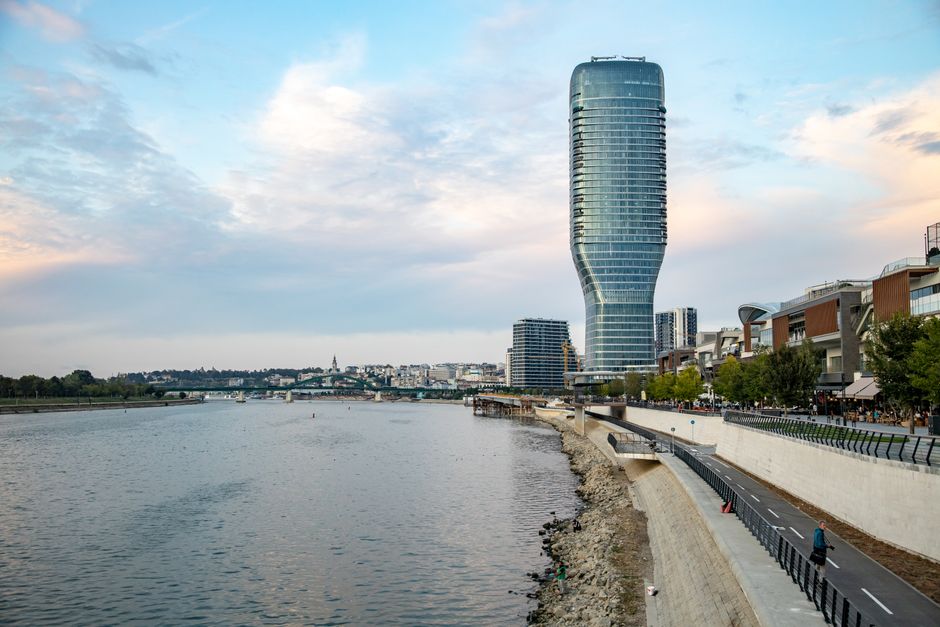
Photo by Boris Hamer on Pexels
Get Your Serbia eSIM Today
Set up before you fly. Land in Belgrade and you are online.
Related Reading
Last updated
Are you a hotel owner in Serbia?
Earn commission by offering eSIMs to your guests. No setup cost, no hardware.
Learn about the Hotel Partner Program →