
eSIM in Vietnam: Coverage, Setup & How Much Data You Need
How eSIM Works in Vietnam
Vietnam is a long country — Hanoi in the north, Da Nang and Hoi An in the middle, Ho Chi Minh City in the south — and getting between them often means overnight trains, domestic flights, or long bus rides. You need data that works the whole way. Mobile data in Hanoi is ready from the moment you land at Noi Bai, with Ho Chi Minh City, Da Nang, and Hoi An all on the same plan. Get an eSIM for Vietnam from €4.33 and stay connected from the moment you land, whether you are navigating Hanoi's Old Quarter or booking a Ha Long Bay cruise from the road.

Photo by Toan Van on Pexels
How much data do you need in Vietnam?
10-day plans · classic holiday. Instant QR delivery, no SIM swap.
Why Use an eSIM in Vietnam?
- Instant activation — no physical SIM card needed
- Works on most modern iPhones and Android devices
- Coverage across Vietnam, including Hanoi, Ho Chi Minh City, Da Nang, Hoi An, and tourist areas
- No roaming fees or long-term contracts
Vietnam's local SIM market is cheap but the process is more involved than it sounds. You need your passport, the SIM has to be registered in your name, and sometimes activation takes a few hours. If you arrive late at night or fly into a smaller airport, you may not find a carrier counter at all. Grab is essential in every Vietnamese city — without it you are negotiating with motorbike taxis who may or may not know where your hotel is. Having your eSIM set up before departure means you avoid roaming charges in Vietnam and you are booking Grabs the moment you clear customs, not standing on the pavement trying to connect to airport WiFi.
Vietnam's SIM registration has become stricter, and enforcement varies by shop and city. Some travelers report activation delays of several hours, and others have been turned away entirely at non-airport shops for not having the right documents. At smaller airports like Phu Quoc, Da Lat, or Hue, carrier counters may not exist. The language barrier at Vietnamese carrier shops is significant — most staff speak limited English and the plans are displayed in Vietnamese. An eSIM avoids every part of this process.
Coverage and Mobile Networks in Vietnam
Vietnam's mobile infrastructure is reliable in cities and main tourist corridors, with growing coverage on rural and coastal routes.
- Hanoi and the Red River Delta region — mobile data in Hanoi covers the Old Quarter, Hoan Kiem, West Lake, and the full urban area. Noi Bai International Airport (HAN) has full 4G from the moment you land.
- Ho Chi Minh City and the Mekong Delta — mobile data in Ho Chi Minh City is strong across all main districts including District 1, District 3, Phu Nhuan, and the Tan Son Nhat Airport (SGN) corridor. Signal extends into the Mekong Delta towns of Can Tho and My Tho.
- Da Nang and the central coast — Da Nang International Airport (DAD), My Khe Beach, the Marble Mountains, and Ba Na Hills all have reliable coverage.
- Hoi An and Hue historic towns — the Ancient Town, An Bang Beach, and the surrounding countryside areas have good 4G.
- Ha Long Bay and Quang Ninh province — Bai Chay (the cruise departure area) has coverage. On the bay itself, signal drops on longer cruises further from shore.
- Sapa and northern mountain routes — Sapa town has 4G, with patchy coverage on trekking routes to remote villages. Ha Giang town has coverage but the loop road is inconsistent.
Vietnam's main carriers — Viettel, Mobifone, and Vinaphone — together provide good 4G LTE coverage across the country's main tourism corridor from Hanoi to Ho Chi Minh City. Viettel has the widest reach, especially in rural and mountain areas. The coastal highway and the main train route both have generally consistent coverage through populated areas. However, Vietnam's network quality drops noticeably outside major cities and the main tourist trail. The Ha Giang Loop — increasingly popular with motorbike travelers — has stretches with no signal. Remote parts of the Central Highlands and the far southern Mekong islands also have limited coverage. For the routes most tourists travel, the coverage is solid.
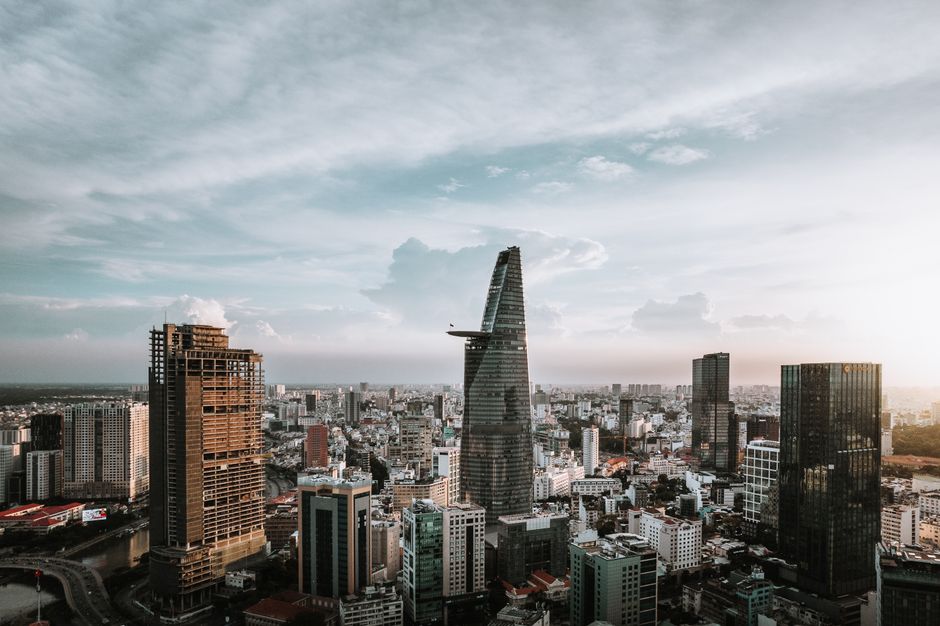
Photo by Ben on Pexels
City Guide: Using Mobile Data in Vietnam's Top Cities
Hanoi
Hanoi's Old Quarter is a grid of narrow streets named after the goods they historically sold — Silk Street, Silver Street, Tin Street — and getting lost in them is part of the experience, but getting back to your hotel requires Google Maps. Mobile data in Hanoi is essential for Grab (both GrabCar and GrabBike), which is the only reliable way to get around without the stress of negotiating with xe om (motorbike taxi) drivers. You need data for booking Ha Long Bay tours from local operators, for using Google Translate at pho restaurants where menus are in Vietnamese, and for checking IRCTC-equivalent booking sites for overnight trains south. Hoan Kiem Lake, the Temple of Literature, and the Ho Chi Minh Mausoleum are all walkable from the Old Quarter — but finding good banh mi and egg coffee spots between them relies on Google Maps reviews.
Ho Chi Minh City (Saigon)
Saigon is big, loud, and operates at motorbike speed. Mobile data in Ho Chi Minh City is critical for Grab — you will use it for every trip — and for Google Maps to navigate the numbered district system (District 1 is the center, District 7 is the expat area, Thu Duc is the new tech district). The Ben Thanh Market area, Bui Vien backpacker street, and the War Remnants Museum are all in District 1. For day trips to the Cu Chi Tunnels or the Mekong Delta, you will be booking and coordinating through apps on your phone.
Da Nang and Hoi An
Da Nang's My Khe Beach, the Dragon Bridge, and the Marble Mountains are spread along the coast. Internet for tourists in Da Nang is useful for Grab rides between the beach and city center and for checking the Ba Na Hills cable car schedule. Hoi An is 30 minutes south and is walkable in the Ancient Town area, but getting between Hoi An and Da Nang means Grab or a rented motorbike, both of which need maps. Hoi An's tailors — one of the main reasons people visit — are best found and reviewed using Google Maps and TripAdvisor, which need data.
Sapa
Sapa is the main base for trekking in northern Vietnam. Mobile data in Sapa town is reliable for booking guides, homestays, and checking weather conditions before a trek. Signal drops once you head into the valleys and remote villages. For coordinating with your guide, checking pick-up points, and sharing photos from the terraces, the town coverage is sufficient.
How Does a Vietnam eSIM Work?
- Choose your plan — pick the data and duration that fits your trip to Vietnam
- Receive your eSIM instantly — a QR code is sent to your email right after purchase
- Install and connect — scan the QR code, follow the steps on your phone, and you are ready to go when you land
eSIM vs Local SIM Card in Vietnam
You could buy a local SIM card when you arrive in Vietnam — but here is what that actually looks like:
- Local SIM: A prepaid SIM card in Vietnam for tourists from Viettel, Vietnamobile, or Mobifone is inexpensive and widely available — but requires passport registration, and the SIM must be activated by a staff member. Airport counters are available at major hubs, but they can have long queues after international arrivals. If you land at a smaller airport or arrive late, you may need to wait until the next morning to sort it out. Some shops in tourist areas sell SIMs informally, but these may not be properly registered and can be deactivated by the carrier without warning. The activation process itself sometimes requires a phone call or SMS verification in Vietnamese, which creates an awkward loop for tourists.
- eSIM: Set it up on your phone before you fly. Land in Hanoi or Ho Chi Minh City, turn on your data, done. No store, no paperwork, no wasted time.
eSIM Plans for Vietnam
Plans start at €4.33 for 1 GB. Choose from 1 GB to unlimited data, with validity from 5 to 30 days. All plans include hotspot sharing so you can connect your laptop or tablet too.
FAQs — eSIM Vietnam
Does eSIM work in Vietnam?
Yes. Vietnam has 4G LTE coverage through Viettel, Mobifone, and Vinaphone. Our eSIM plans use these networks and work well across the main cities and tourist routes. Coverage is strong in urban areas and along the main coastal corridor. Rural mountainous areas in the far north can be patchy but the main tourist spots like Sapa and Ha Giang have usable signal.
Can tourists use an eSIM in Vietnam?
Yes. No Vietnamese ID or local address required. You buy the eSIM online before your trip and scan the QR code on your phone. No in-country registration needed.
When should I activate my Vietnam eSIM?
Scan and install the QR code before you leave home — you need WiFi for that step. Your data plan activates when you land and connect to a Vietnamese carrier. You do not need to open an app or enter a code on arrival.
Which devices support eSIM?
iPhone XR and newer, Samsung Galaxy S20 and newer, Google Pixel 3 and newer, and most recent iPad models. Most phones bought from 2020 onward support eSIM — check Settings under Mobile Data or Carrier to confirm yours does.
Can I keep my regular phone number while using an eSIM?
Yes. Your physical SIM card stays in your phone and your home number stays active for calls and texts. The eSIM runs data independently. Both work at the same time.
Does the eSIM work on the overnight train between Hanoi and Da Nang or Saigon?
Coverage on the Reunification Express train route is generally good through populated areas and towns. You will get signal drops in tunnels and through some remote sections, but for most of the journey you will have a usable connection. Good for messaging, light streaming, and keeping navigation running between stops.
Can I use the eSIM to book Ha Long Bay cruises or tours while on the road?
Yes. With a working data connection you can use booking platforms like GetYourGuide, Klook, or direct cruise websites to compare and book Ha Long Bay cruises at any point during your trip. Prices can actually be better when you are already in Hanoi rather than booking from home months in advance — you need a reliable connection to negotiate and book quickly when you find a good deal.
Does the Vietnam eSIM work in Sapa and the northern highlands?
Yes. Sapa town and the main trekking base areas have 4G coverage. On longer trekking routes into more remote villages, coverage becomes patchy. For the base town, booking guides and homestays, and staying in contact, coverage in Sapa is adequate.
How much data do I need for three weeks in Vietnam?
For three weeks traveling the full country — Hanoi to Ho Chi Minh City — with Grab rides, maps, WhatsApp, and some light streaming, 7 to 10 GB is a comfortable amount. The north-to-south journey involves a lot of transit time where data use adds up.
Can I use Grab throughout Vietnam with the eSIM?
Yes. Grab operates in Hanoi, Ho Chi Minh City, Da Nang, and most major Vietnamese cities. It is the safest and most transparent way to book motorbike taxis (GrabBike) and cars. Both require a live data connection, which the eSIM provides from landing.
Can I share Vietnam eSIM data as a hotspot?
Yes. All plans include hotspot tethering. On overnight sleeper trains or buses between cities, connecting a laptop to your eSIM hotspot is a practical option when you want to work or stream during long journeys.
What happens if I run out of data in Vietnam?
You can purchase a top-up from your phone while still in Vietnam. A new QR code is emailed to you and installs in minutes. No carrier store, no registration process — relevant since local SIM activation in Vietnam can take hours.
Does the eSIM work on overnight buses in Vietnam?
Vietnam's sleeper buses cover long routes like Hanoi to Ninh Binh, Da Nang to Hoi An, and Ho Chi Minh City to Da Lat. Coverage along these routes is generally good through populated areas, with drops in mountain passes — particularly on the Da Lat route through the Central Highlands. For messaging and checking your route, signal is available for most of the journey.
Can I use Google Translate in Vietnam with the eSIM?
Yes. Google Translate works well with Vietnamese and is particularly useful for restaurant menus, street signs, and communicating at local shops where English is limited. The camera mode lets you point your phone at Vietnamese text and see a live translation. This uses very little data per translation and is one of the most useful tools for Vietnam travel.
Does the eSIM work on the Ha Giang Loop?
Ha Giang town has 4G coverage, but the loop itself — the popular multi-day motorbike route through the northern mountains — has significant stretches without signal. Some towns along the loop (Dong Van, Meo Vac) have coverage, but the mountain passes and remote sections between them do not. Download offline maps before starting the loop.
Can I use the eSIM for Phu Quoc Island?
Yes. Phu Quoc has 4G coverage across the main resort areas, Duong Dong town, and the Long Beach strip. The island is well-developed for tourism and mobile coverage is reliable in all the main areas. Remote beaches on the north end have weaker signal.
Do I need a VPN with my eSIM in Vietnam?
No. Vietnam does not block Google, WhatsApp, Instagram, or Gmail. All Western apps and services work normally. Some Vietnamese news and political sites may be restricted, but nothing that affects tourist use.
Can I use the eSIM for booking the Reunification Express train tickets?
Yes. The Reunification Express — Vietnam's main north-south train — can be booked through the Vietnam Railways website (dsvn.vn) or through third-party apps like Baolau and 12Go Asia. All of these need a data connection. Booking from your phone while in Vietnam lets you check availability for specific berth types (soft sleeper, hard sleeper) and book last-minute tickets, which are often available even when third-party sites show sold out.
How does Vietnam's mobile coverage compare to Thailand?
Vietnam's urban coverage is comparable to Thailand — Hanoi, Ho Chi Minh City, and Da Nang all have strong, fast 4G. The difference shows in rural areas: Vietnam's northern mountains and the Central Highlands have more coverage gaps than Thailand's tourist routes. The main Vietnam coastal corridor from Hanoi to Ho Chi Minh City is well covered. For the standard tourist route, the experience is similar to Thailand.
Can I use the eSIM at night markets in Vietnam?
Yes. Vietnam's night markets — Hanoi Night Market on Hang Dao Street, Ben Thanh Night Market in Saigon, Hoi An Night Market — all have full 4G coverage. Data is useful at markets for checking prices (to avoid overpaying), for Google Translate at stalls where English is limited, and for Google Maps to find specific stall sections. Vietnamese markets are large and easy to get turned around in, especially at night.

Photo by Kirandeep Singh Walia on Pexels
Get Your Vietnam eSIM Today
Set up before you fly. Land in Hanoi and you are online.
Related Reading
Last updated
Are you a hotel owner in Vietnam?
Earn commission by offering eSIMs to your guests. No setup cost, no hardware.
Learn about the Hotel Partner Program →