
eSIM in Bulgaria: Coverage, Setup & How Much Data You Need
How eSIM Works in Bulgaria
Bulgaria has solid 4G LTE coverage in Sofia, Plovdiv, Varna, and Burgas, with good signal in the Black Sea coast resorts and main mountain areas. With a Worldcitisim eSIM, you set it up at home, land at Sofia Airport or fly direct to Varna or Burgas, and your data is on as you step off the plane. Mobile data in Sofia is fast and consistent across the city, including the metro and main tourist districts. No roaming fees, no Vivacom shop, no Bulgarian paperwork when you just want to get to your hotel.

Photo by Uiliam Nornberg on Pexels
How much data do you need in Bulgaria?
10-day plans · classic holiday. Instant QR delivery, no SIM swap.
Why Use an eSIM in Bulgaria?
- Instant activation — no physical SIM card needed
- Works on most modern iPhones and Android devices
- Coverage across Bulgaria, including Sofia, Plovdiv, Varna, and tourist areas
- No roaming fees or long-term contracts
Bulgaria draws two types of visitor in roughly equal numbers: city and culture travelers heading to Sofia and Plovdiv, and beach visitors to the Black Sea resorts like Sunny Beach, Golden Sands, and Sozopol. Both groups land at different airports and have different itineraries, but both need data from the moment they arrive. Using an eSIM means you avoid roaming charges in Bulgaria rather than discovering your carrier's international rate on day one. An eSIM set up before you fly covers both scenarios without any extra step on arrival.
Bulgaria is also in the EU, but that only partially helps with roaming. EU roaming rules protect EU residents on EU carrier plans, but fair-use data caps mean heavy users still get throttled or charged extra. Visitors from the US, UK, Canada, or Australia have no EU roaming benefit at all — their carriers charge international rates that can hit 10-15 USD per GB or more. Getting a local SIM at Sofia Airport is possible, but the kiosks at arrivals are small, sometimes unstaffed in the evening, and require passport registration. At Varna and Burgas airports (where most Black Sea tourists land), SIM options are even more limited. An eSIM bought before the flight avoids all of this.
Coverage and Mobile Networks in Bulgaria
Bulgaria has reliable 4G LTE coverage across urban areas and the main tourist regions, carried over networks including Vivacom, A1 Bulgaria, and Yettel Bulgaria.
- Sofia and the greater Sofia region — mobile data in Sofia covers the metro, center, and surrounding suburbs
- Plovdiv and the Thracian Plain — mobile data in Plovdiv is strong throughout the old town and new districts
- Varna and the northern Black Sea coast
- Burgas and the southern Black Sea coast
- Bansko and the Pirin Mountain ski region
- Sunny Beach, Golden Sands, and the resort coast
Bulgaria's three carriers — Vivacom (the former state telecom, largest network), A1 Bulgaria (strong urban coverage), and Yettel Bulgaria (formerly Telenor, solid along highways) — compete across the country. Vivacom has the best rural reach, which matters if you are driving through the Rhodope Mountains or visiting the Thracian tombs near Kazanlak. A1 has invested in 5G in Sofia's city center, along Vitosha Boulevard and around the NDK cultural palace. Yettel covers the Black Sea coast well, including the resort strips and the roads between Varna and Burgas.
On the Black Sea coast specifically: the resort towns from Golden Sands in the north to Sozopol in the south have strong 4G coverage. Sunny Beach, Nessebar (the UNESCO-listed old town on a peninsula), and the party strip at Golden Sands are all comprehensively covered by all three carriers. Even the quieter beaches south of Burgas — Primorsko, Kiten, Sinemorets near the Turkish border — have working 4G from Vivacom and A1.
In the mountains, Bansko ski resort has excellent coverage in the town and on the main ski slopes accessible from the gondola. Borovets and Pamporovo ski areas are similarly well covered in the resort zones. The Rila Monastery area has signal at the monastery complex and the parking area, but hiking trails into the Rila Mountains above lose coverage at higher altitudes. The Pirin National Park trails are mixed — popular routes like the one to the Banderishka Polyana have coverage, while remote backcountry trails do not.
City Guide: Using Mobile Data in Bulgaria's Top Cities
Sofia
Sofia is a walkable city in the center, but getting between the main attractions — Alexander Nevsky Cathedral, Vitosha Boulevard shopping, the Boyana Church (UNESCO), and the Vitosha Mountain trailheads — requires the metro or a Bolt ride. Mobile data in Sofia powers the metro system navigation (two lines, with signal at all stations), Bolt (dominant over taxis here), and finding restaurants in the side streets off Vitosha Boulevard. Google Maps works well in Sofia, and the real-time public transport info is reliable. The food market at the Central Hali and the cafes around the mineral water fountain are all in strong 4G zones. If you are heading up Vitosha Mountain (the city's ski and hiking mountain, accessible by bus from the center), coverage holds at the Aleko resort and main trailheads.
Plovdiv
Plovdiv is Bulgaria's second city and European Capital of Culture 2019. The old town sits on three hills with Roman ruins, colorful Revival-era houses, and the ancient amphitheater still used for concerts. Internet for tourists in Plovdiv is useful for navigating the steep, cobblestoned old town streets (harder to walk than they look), finding the Kapana creative district (a maze of narrow lanes), and checking opening hours at the Roman Stadium and Ethnographic Museum. Plovdiv's Kapana district has dozens of small restaurants and bars that turn over frequently — Google Maps is the most reliable way to check what is open. Coverage is strong across the entire city.
Varna
Varna is the main city on Bulgaria's northern Black Sea coast. The Sea Garden (a massive beachfront park), the archaeological museum, and the Roman Thermae are the main draws. Mobile data in Varna covers the beach, the port area, and the entire city. From Varna, most tourists visit Golden Sands (15 minutes north by bus or taxi), the Aladzha Monastery (rock-cut, in a forest 15 km north), and the Stone Forest near Pobiti Kamani. All of these require navigation. Bolt works in Varna and is cheaper than the beach resort taxis that prey on tourists.
Burgas
Burgas is the gateway to the southern Black Sea coast — Sozopol, Nessebar, Sunny Beach, and the Strandzha nature area. The city itself has a pleasant sea garden and beach, but most visitors use it as a transit point. Mobile data in Burgas is essential for getting from the airport to the coast (the airport is 15 km from the center), booking accommodation in Sozopol or Nessebar, and navigating the coastal road south toward Sinemorets. Bus schedules along the coast are irregular and often not posted online in English — having data to check real-time options makes a big difference.
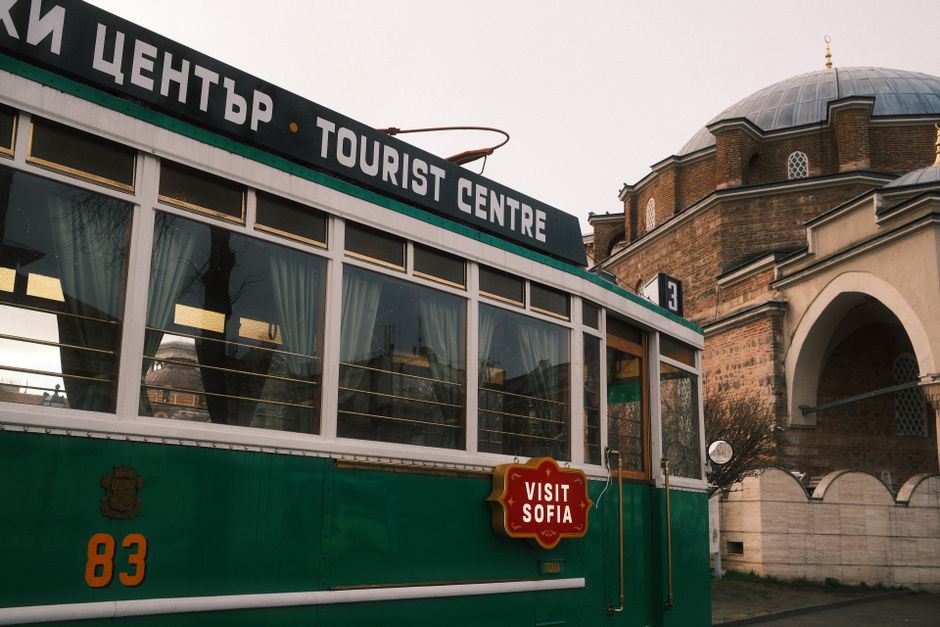
Photo by Eftim Futekov on Pexels
How Does a Bulgaria eSIM Work?
- Choose your plan — pick the data and duration that fits your trip to Bulgaria
- Receive your eSIM instantly — a QR code is sent to your email right after purchase
- Install and connect — scan the QR code, follow the steps on your phone, and you are ready to go when you land
eSIM vs Local SIM Card in Bulgaria
You could buy a local SIM card when you arrive in Bulgaria — but here is what that actually looks like:
- Local SIM / prepaid SIM card Bulgaria for tourists: Find a store (often closed at airports after hours or located outside the terminal), bring your passport, deal with Bulgarian-language forms, wait in line, hope your phone is unlocked
- eSIM: Set it up on your phone before you fly. Land in Sofia, Varna, or Burgas, turn on your data, done. No store, no paperwork, no wasted time
At Sofia Airport, A1 and Vivacom have kiosks near arrivals. During business hours, buying a SIM takes about 15 minutes with passport registration. A basic tourist SIM with 10-20 GB costs about 10-15 BGN (5-8 EUR) — Bulgaria has cheap data. At Varna Airport, options are more limited and the kiosk may not be staffed on late charter flights. At Burgas Airport, the situation is similar. In the city, A1 and Vivacom stores are on main shopping streets, but staff do not always speak English and the registration paperwork is in Bulgarian. For beach resort visitors arriving on charter flights at odd hours, finding a SIM can mean waiting until the next day. An eSIM avoids all of this — same price range, no wait, no forms.
eSIM Plans for Bulgaria
Plans start at €2.59 for 1 GB. Choose from 1 GB to unlimited data, with validity from 5 to 30 days. All plans include hotspot sharing so you can connect your laptop or tablet too.
View all Bulgaria eSIM plans →
FAQs — eSIM Bulgaria
Does eSIM work in Bulgaria?
Yes. Bulgaria has reliable 4G LTE coverage across its main cities and tourist destinations. Worldcitisim eSIMs connect to local networks automatically.
Can tourists use an eSIM in Bulgaria?
Yes. No Bulgarian ID or local address required. You buy online, install the QR code, and go.
When should I activate my Bulgaria eSIM?
Install the eSIM profile on your phone before you fly — takes a couple of minutes at home on WiFi. The data plan activates automatically when you land in Bulgaria and turn your mobile data on.
Which devices support eSIM?
iPhone XR and newer (including all iPhone 15 and 16 models), Samsung Galaxy S20 and newer, Google Pixel 3 and newer, and most recent iPad Pro and iPad Air models. Check your device settings under Mobile Data or Carrier to confirm eSIM support.
Can I keep my regular phone number while using an eSIM?
Yes. Your physical SIM stays active for calls and texts from your home number. The eSIM handles your data. Both run at the same time on your phone.
Does eSIM work at Black Sea resorts like Sunny Beach and Golden Sands?
Yes. The Black Sea resort strip from Varna down to Burgas has solid 4G coverage throughout. Sunny Beach, Golden Sands, Sozopol, and Nessebar all have strong signal in the resort areas and beaches.
Does eSIM work in Bansko and the Bulgarian ski resorts?
Yes. Bansko has good 4G coverage in the town and on the main ski slopes. Borovets and Pamporovo also have reasonable coverage in the resort areas. Signal can thin out on remote pistes, but anywhere you are likely to eat or stay is covered.
Does eSIM work in Sofia and the main Bulgarian cities?
Yes. Sofia, Plovdiv, and Varna all have strong 4G coverage. Sofia's metro has signal at stations. The main cities are well-served and you will have no issues with navigation, messaging, or calls.
Does eSIM work in the Rila Monastery area?
Coverage around Rila Monastery itself is reasonable — the monastery gets a lot of visitors and has mobile signal in the main area. The hiking trails up into the Rila Mountains above the monastery get progressively weaker. Download offline maps before heading up the trails.
Can I use my eSIM for WhatsApp calls while traveling in Bulgaria?
Yes. WhatsApp voice and video calls work fine over 4G in cities and main tourist areas. In mountain or rural areas with weaker signal, voice calls hold better than video. Stick to audio calls if you are somewhere with one or two bars.
How much data do I need for a week in Bulgaria?
For a week of navigation, messaging, social media, and restaurant searches, 3-5 GB covers most travelers. If you are splitting time between Sofia and the coast with daily driving, go for 5 GB. The Black Sea resorts have WiFi in most hotels and restaurants, which helps stretch your plan.
Can I top up my Bulgaria eSIM if I run out?
Yes. Buy an additional Worldcitisim plan and install it on your device. Most modern phones support multiple eSIM profiles. You can also start with a larger plan if you expect heavy data use during your trip.
Is Bulgaria eSIM good for remote work?
Yes. Bulgaria has solid 4G speeds in cities, and Sofia in particular is popular with digital nomads. The hotspot feature lets you tether your laptop. For extended remote work, a 5-10 GB plan gives you comfortable headroom for video calls and cloud work alongside daily travel use.
What is the difference between 4G and 5G coverage in Bulgaria?
4G LTE covers all cities, towns, and main tourist areas across Bulgaria. 5G is still limited, currently concentrated in central Sofia with gradual expansion to Plovdiv and the coastal cities. For travel purposes — maps, messaging, browsing, social media — 4G handles everything you need.
Does the eSIM work on cruise ships near Bulgaria?
Ships docked at Varna or Burgas ports will connect to Bulgarian land-based networks. At sea on the Black Sea, the ship switches to satellite networks not covered by your eSIM. Use your eSIM data in port and at coastal destinations, and ship WiFi when at sea.
What happens if I lose signal in Bulgaria?
Signal drops are rare in populated areas. They happen in the Rhodope and Rila mountain interiors, deep Pirin backcountry, and some rural stretches between villages. Your phone reconnects automatically when you return to coverage. No charges accumulate during outages. Download offline maps for mountain drives.
Can I use Google Maps offline with an eSIM?
Yes. Download the Bulgaria offline map over WiFi before your trip. Use your eSIM for live traffic and transit updates in cities, and the offline map as backup in areas with weaker coverage. This works well for the mountain roads and rural Thrace region.

Photo by Valentin on Pexels
Get Your Bulgaria eSIM Today
Set up before you fly. Land in Sofia, Varna, or Burgas and you are online.
Related Reading
Last updated
Are you a hotel owner in Bulgaria?
Earn commission by offering eSIMs to your guests. No setup cost, no hardware.
Learn about the Hotel Partner Program →