
eSIM in Croatia: Coverage, Setup & How Much Data You Need
How eSIM Works in Croatia
Croatia has solid 4G LTE coverage from Zagreb down through Split and Dubrovnik, and decent signal on most of the Dalmatian coast islands. Whether you need mobile data in Dubrovnik for the old city walls, in Split for the Diocletian's Palace neighbourhood, or in Hvar for island navigation — no roaming charges, no lining up at a Hrvatska Pošta counter. With a Worldcitisim eSIM, you set it up before you leave home and your data is running before you step outside arrivals.
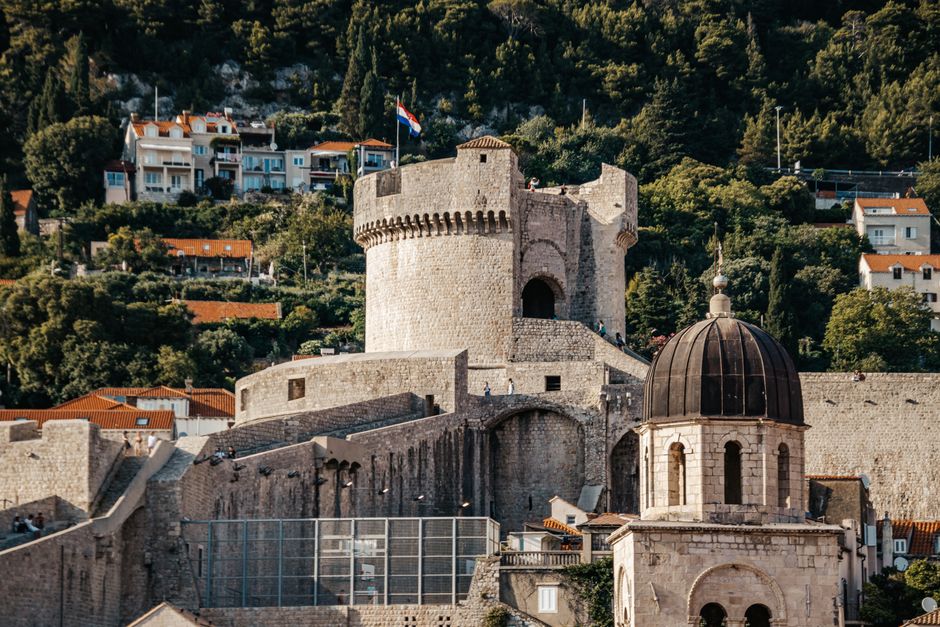
Photo by Nikola Kojević on Pexels
How much data do you need in Croatia?
10-day plans · classic holiday. Instant QR delivery, no SIM swap.
Why Use an eSIM in Croatia?
- Instant activation — no physical SIM card needed
- Works on most modern iPhones and Android devices
- Coverage across Croatia, including Zagreb, Split, Dubrovnik, and tourist areas
- No roaming fees or long-term contracts
Croatia is one of Europe's most visited summer destinations, and the airport SIM situation reflects that. Split airport in peak July and August is chaotic. Kiosks sell out, queues are long, and if you land late in the evening the whole thing is closed. On the islands, finding a working SIM shop in a small village is a coin flip. An eSIM removes every one of those problems — you avoid roaming fees in Croatia from the moment you land, without any stop along the way.
Croatia also joined the Schengen Area in 2023, but that does not help with SIM cards — you still need to register at a store with your passport to buy one. Split and Dubrovnik airports are small and the SIM kiosks are tiny with limited stock in peak season. If you are heading straight to the ferry for Hvar, Brač, or Vis, there is no time for SIM shopping — the ferry will not wait. On the islands themselves, phone shops are rare and often closed outside summer hours. An eSIM means you land, grab your bags, and head straight to the ferry with working GPS and messaging.
Coverage and Mobile Networks in Croatia
Croatia has reliable 4G LTE coverage across its main cities and coastal regions, carried over networks including HT (T-Mobile Croatia), A1, and Telemach.
- Zagreb and the greater capital region
- Split and the central Dalmatian coast — mobile data in Split from the ferry terminal through the old city
- Dubrovnik and southern Dalmatia
- Rijeka and the Kvarner Gulf
- Hvar, Brač, Korčula, and the major Dalmatian islands
- Istria peninsula, including Pula and Rovinj
Split Airport has 4G coverage in the terminal and taxi rank. Dubrovnik Airport has coverage throughout. Zagreb Airport has strong 4G in all areas. Your eSIM connects the moment you turn off airplane mode.
HT (T-Mobile Croatia) has the widest coverage footprint, especially along the coast and on the islands. A1 Croatia is competitive in cities and resort areas. Telemach covers main urban areas. The Dalmatian coast from Zadar through Split to Dubrovnik has strong 4G along the entire Jadranska Magistrala (coastal highway). On the islands, Hvar Town, Bol on Brač, Korčula Town, and Vis Town all have solid 4G. Interior parts of smaller islands may have weaker signal. The Istria peninsula — Pula, Rovinj, Poreč — has comprehensive coverage.
Plitvice Lakes National Park has coverage at the main entrances and walkways. The Krka waterfalls area is also covered. Zagreb and inland Croatia have reliable 4G along main highways.
Split Airport (SPU) has 4G in the terminal, taxi rank, and bus stop area. The bus from the airport to Split city center (about 30 minutes) has coverage for the entire ride. Dubrovnik Airport (DBV) has 4G throughout arrivals and the shuttle bus pickup area. Zagreb Airport (ZAG) has strong coverage in all terminal areas and on the bus route into the city center. For ferry arrivals, the Split ferry port has strong 4G at the terminal and along the Riva promenade. The Jadrolinija terminals at all major ports — Split, Dubrovnik, Zadar, Stari Grad on Hvar — have reliable signal for checking boat schedules and confirming transfers.
The Zadar area — a growing tourist hub on the northern Dalmatian coast — has strong 4G in the old town and along the Riva. Makarska, between Split and Dubrovnik, has good coverage along the Riviera beaches. The island of Mljet, south of Korčula, has coverage in the main villages though the national park interior is patchier. For most island-hopping itineraries along the Dalmatian coast, your eSIM will have signal at every port, harbor, and town center.

Photo by Marian Florinel Condruz on Pexels
City Guide: Using Mobile Data in Croatia's Top Destinations
Dubrovnik
Mobile data in Dubrovnik is essential for navigating the old town (which looks completely different from Google Maps satellite view), finding restaurants away from the Stradun tourist strip, checking Jadrolinija ferry schedules, and booking Game of Thrones walking tours. The old city is compact but its stone alleyways and staircases are disorienting without GPS. Coverage inside the city walls is strong.
Split
Internet for tourists in Split revolves around the Diocletian's Palace area, ferry schedules to the islands, and the restaurant scene in the Varoš neighborhood. You need data for the Jadrolinija ferry app, Google Maps navigation through the narrow streets, and ride apps. Coverage in Split is excellent.
Hvar and the Islands
Mobile data on Hvar is about boat tour bookings, restaurant reservations (Hvar Town's best restaurants book out in summer), and navigating scooter rides around the island. Coverage in Hvar Town and Stari Grad is strong. On Brač (Bol), Korčula, and Vis, the main towns have reliable signal.
Istria (Pula, Rovinj, Poreč)
The Istrian peninsula is Croatia's foodie region. Mobile data helps you find truffle restaurants near Motovun, navigate the hilltop villages, check Pula Arena event schedules, and explore Rovinj's colorful waterfront. Coverage across Istria is comprehensive.
Zadar
Zadar is a growing alternative to Dubrovnik and Split — smaller, less crowded, and with its own character. The Sea Organ and Sun Salutation installations on the waterfront are the famous attractions, but the real draw is the old town peninsula with its Roman ruins, churches, and local restaurants. Mobile data in Zadar helps you navigate the compact old town, check ferry schedules to the Kornati Islands and Dugi Otok, and find the markets and food spots that locals use. Coverage in Zadar is strong. From Zadar, data keeps you connected for day trips to Plitvice Lakes (about 90 minutes by car) and Krka National Park (about an hour).
How Does a Croatia eSIM Work?
- Choose your plan — pick the data and duration that fits your trip to Croatia
- Receive your eSIM instantly — a QR code is sent to your email right after purchase
- Install and connect — scan the QR code, follow the steps on your phone, and you are ready to go when you land
eSIM vs Local SIM Card in Croatia
You could buy a prepaid SIM card in Croatia for tourists when you arrive — but here is what that actually looks like:
- Local SIM: Find a store (often closed at airports after hours), bring your passport, deal with Croatian paperwork, wait in line, hope your phone is unlocked
- eSIM: Set it up on your phone before you fly. Land in Split or Zagreb, turn on your data, done. No store, no paperwork, no wasted time
Since Croatia joined the eurozone in 2023, a Croatian prepaid SIM from HT or A1 costs 5-10 EUR. You need your passport for registration and the process takes 10-15 minutes. Split Airport has a small kiosk in arrivals that is often understaffed or sold out in peak summer — July and August queues are long. Dubrovnik Airport has limited options with similar peak-season pressure. Zagreb Airport has slightly more, but outside business hours everything closes.
On the islands — Hvar, Brač, Korčula, Vis — there are almost no phone shops. Hvar Town has a small A1 point of sale, but stock is limited and hours are unpredictable. On Vis and the smaller islands, there is nothing. If you are arriving by ferry from Italy (Ancona to Split, Bari to Dubrovnik), there is no SIM buying opportunity at all on the water. An eSIM installed before your trip means you step off the ferry or plane already connected — no queue, no passport handover, no wasted morning in peak season.
Data Usage Tips for Croatia
Croatia is a destination where data adds up fast — ferry schedules, island navigation, restaurant bookings, and constant photo uploads from the Adriatic coast. Google Maps navigation uses about 5 MB per hour. Scrolling Instagram from a beach in Hvar burns through roughly 100 MB per hour. Video calls on Zoom or FaceTime use about 300 MB per hour. Streaming music while walking the Dubrovnik walls uses roughly 70 MB per hour. Streaming Netflix at your hotel takes about 1 GB per hour on standard quality.
A typical day of island-hopping — checking ferry apps, navigating between towns, messaging, and uploading photos — uses 500 MB to 1 GB. If you are renting a boat and checking sea conditions or weather apps regularly, add another 200-300 MB. For a week-long coastal trip, plan for about 1 GB per day as a comfortable baseline. The Jadrolinija ferry app, Google Maps for driving the Jadranska Magistrala, and booking apps for restaurant reservations in peak season all rely on live data.
eSIM Plans for Croatia
Plans start at €2.59 for 1 GB. Choose from 1 GB to unlimited data, with validity from 5 to 30 days. All plans include hotspot sharing so you can connect your laptop or tablet too.
FAQs — eSIM Croatia
Does eSIM work in Croatia?
Yes. Croatia has reliable 4G LTE coverage across the mainland and major tourist areas, with 5G rolling out in Zagreb and Split. Worldcitisim eSIMs connect to local networks automatically.
Can tourists use an eSIM in Croatia?
Yes. No Croatian ID or local address required. You buy online, install the QR code, and go. Your passport stays in your bag.
When should I activate my Croatia eSIM?
Install the eSIM profile on your phone before you fly — this takes a couple of minutes at home on WiFi. The data plan activates automatically when you land in Croatia and turn your mobile data on.
Which devices support eSIM?
iPhone XR and newer (including all iPhone 15 and 16 models), Samsung Galaxy S20 and newer, Google Pixel 3 and newer, and most recent iPad Pro and iPad Air models. Check your device settings under Mobile Data or Carrier to confirm eSIM support.
Can I keep my regular phone number while using an eSIM?
Yes. Your physical SIM stays active for calls and texts from your home number. The eSIM handles your data. Both run at the same time on your phone.
Will my eSIM work on the Croatian islands?
Yes, on most of the major Dalmatian islands including Hvar, Brač, Korčula, and Vis. Signal is strong in town centers and harbor areas. In remote inland parts of smaller islands, coverage can be patchy — the same as with any local SIM.
Does eSIM work along the Dalmatian coast driving route?
Yes. The main coastal road (Jadranska Magistrala) has good coverage throughout. You will have data in Split, Makarska, Ploče, and all the way down to Dubrovnik.
Does eSIM work on Jadrolinija ferries between the islands?
Signal on the ferries depends on how far from shore you are. On shorter crossings — Split to Brač or Hvar — you will have decent coverage for most of the trip. On longer routes like Split to Vis, expect some drop in the middle. WhatsApp works for most of the journey, video calls less reliably.
How much data do I need for 7 days in Croatia?
A week of typical travel — Google Maps, Instagram, messaging, and occasional browsing — runs about 2–3 GB. If you are uploading a lot of photos or using video calls daily, plan for 5 GB. Most visitors find the 10 GB plan covers them comfortably with room to spare.
Can I share my Croatia eSIM data as a hotspot?
Yes. Personal hotspot works with Worldcitisim eSIMs, so you can share your connection with a laptop or tablet if needed. Worth doing if you are traveling with someone whose device does not support eSIM.
Is the Croatia eSIM good for remote work?
Yes. Croatia is a popular digital nomad destination — Split, Dubrovnik, and Zagreb all have strong 4G. Video calls work well from cities and coastal towns. Budget 15 GB for work trips. Many remote workers use Croatia's coast in summer, and an eSIM provides reliable data at cafes, beaches, and coworking spaces.
Can I top up my Croatia eSIM?
Yes. Purchase an additional plan from the Worldcitisim dashboard. It activates in minutes. Useful if you decide to extend your island-hopping — Croatia tends to make people stay longer than planned.
Does the eSIM work at Plitvice Lakes National Park?
Yes. The park entrances, main boardwalks, and visitor facilities have 4G coverage. Deep in the park on some of the longer hiking loops, signal may thin. But for navigation, photos, and checking shuttle bus schedules, data works at the main areas.
What is the difference between 4G and 5G in Croatia?
4G covers Croatia's cities, coast, and islands well. 5G is rolling out in Zagreb and Split. Both handle tourist needs. Your eSIM picks the fastest available network automatically.
Can I use Google Maps offline in Croatia?
Yes. Download maps of the Dalmatian coast, the islands you plan to visit, and Istria before your trip. Use your eSIM for live ferry schedules and navigation, and offline maps as backup for island interiors and remote stretches.
How much data do I need for 14 days in Croatia?
Two weeks covering Split, Dubrovnik, and island-hopping typically uses 10-15 GB. The ferry schedules, coastal driving navigation, and restaurant bookings add up across multiple islands. If you are uploading photos and videos daily, go for 20 GB or unlimited. Croatia makes you use your phone more than most destinations because so much is logistics-dependent — ferries, boats, transfers.
Can I use Google Maps and navigation with my eSIM in Croatia?
Yes. Google Maps works well throughout Croatia for driving the coastal highway, navigating island roads, and walking the old towns of Dubrovnik and Split. The D8 coastal road and island ferries all benefit from live navigation. Download offline maps of the islands you plan to visit as backup for any brief signal gaps in the interior.
Does the eSIM work in Rovinj and Istria?
Yes. Rovinj — the picturesque Istrian port town with its colorful waterfront and church-topped peninsula — has excellent 4G coverage. The broader Istria region, including Pula (with its Roman amphitheater), Poreč, and the hilltop truffle towns like Motovun and Grožnjan, has comprehensive coverage. Data is particularly useful in Istria for finding the specific truffle restaurants and olive oil producers that are scattered through the countryside on unmarked roads.
Does the eSIM work at Krka National Park?
Yes. Krka National Park — known for its stunning Skradinski Buk waterfall and the swimming area below the cascades — has 4G coverage at the main entrance, the visitor area, and along the boardwalk trails. The town of Skradin at the park entrance has strong signal. The boat ride up the Krka River to the falls also has coverage for most of the short journey.
What is the best time to install my eSIM before traveling to Croatia?
Install it the day before your flight while you are on WiFi at home. The profile downloads in under a minute. Once installed, your phone stores the eSIM profile and it activates automatically when you land in Croatia and turn on mobile data. Do not leave it until the airport — you want it done calmly at home, not rushed at the gate.
Get Your Croatia eSIM Today
Set up before you fly. Land in Split or Dubrovnik and you are online.
Related Reading
Last updated
Are you a hotel owner in Croatia?
Earn commission by offering eSIMs to your guests. No setup cost, no hardware.
Learn about the Hotel Partner Program →