eSIM for Destination Weddings — Keep Every Guest Connected Abroad
I ran a hotel in Colombia for seven years and helped coordinate group events where 50+ guests arrived from different countries. I saw what happens when nobody can use their phone — missed shuttle pickups, lost guests who couldn't find the venue, and a WhatsApp group that only half the people could access because the other half had no data.
The wedding itself was beautiful. The logistics around it were a mess. And the logistics mess always came down to one thing: guests couldn't get online.
Your guests land abroad. Their phones don't work. They can't open Google Maps to find the venue. They can't access the WhatsApp group you set up for schedule updates. They can't share a single photo to Instagram. They can't call an Uber. They're standing outside the airport in a country they don't know, trying to find a taxi that takes cash because their ride-hailing app won't load.
This is the problem that nobody puts on the wedding planning checklist. And it affects every single guest.
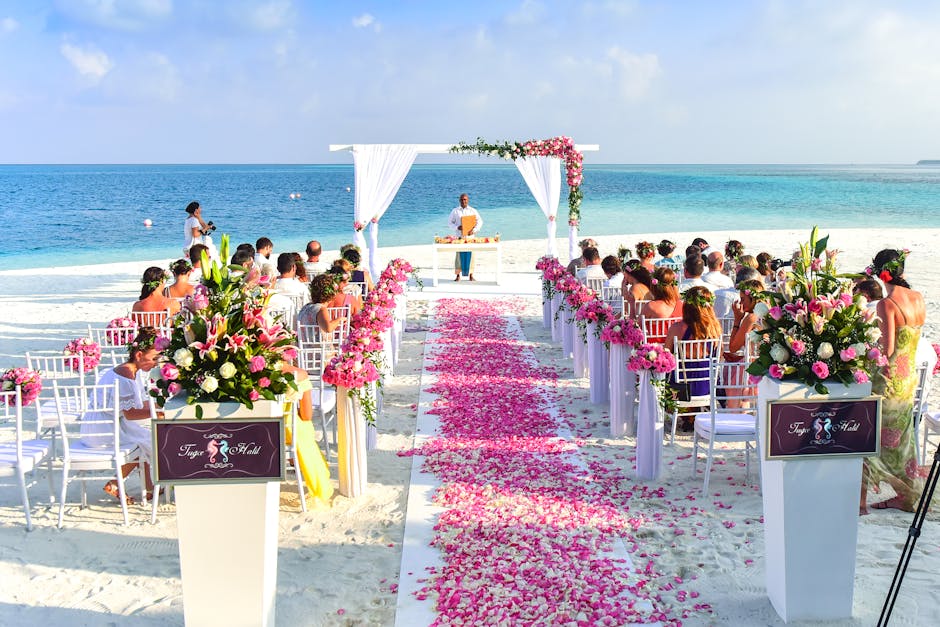
Why Your Wedding Guests Need Data
A destination wedding is not a vacation where everyone does their own thing. It's a coordinated group event across multiple days in a place your guests have never been. Data isn't a nice-to-have. It's the backbone of the entire trip working smoothly.
WhatsApp group coordination. This is the single most important tool for a destination wedding. Shuttle times change. The rehearsal dinner moves from 7 to 8. A restaurant cancels and you need to redirect 30 people. The couple sends a last-minute message about dress code for the welcome party. All of this goes through WhatsApp — and it only works if everyone in the group has data.
Google Maps to the venue. Destination weddings happen at remote villas, countryside estates, beach clubs, and cliffside terraces. These are not city hotels with a street address that any taxi driver recognizes. Your guests need turn-by-turn navigation to find a Tuscan hilltop estate, a jungle cenote in Tulum, or a vineyard in Provence. Without data, they're lost. Literally.
Uber and taxi apps. In most destination wedding locations, ride-hailing apps are the safest and most reliable transport option. Uber, Bolt, Free Now, or local equivalents all require a live data connection. Guests who can't open the app are stuck trying to negotiate with taxi drivers in a language they don't speak.
Photo-sharing apps. Wedding photo-sharing apps like Kululu, GuestPix, Wedibox, and The Guest all require data. These apps let guests upload photos in real time to a shared album that the couple can access after the wedding. They don't work over spotty venue Wi-Fi when 80 phones are fighting for bandwidth on the same router.
Instagram Stories. Your guests are going to post. You might not care about this, but they do. Half the value of a destination wedding for the guests is the content they get to share — the venue, the sunset, the group photos, the dance floor. They need upload speeds that venue Wi-Fi can't provide.
Translation apps. Guests eating at local restaurants in Italy, Mexico, Greece, or Thailand will need Google Translate or similar. Menus in the local language, communicating dietary restrictions, asking for directions — all require data.
Ferry and transport bookings. Many destination wedding locations involve inter-island ferries (Greece), regional trains (Italy), or bus connections (Mexico). Checking schedules, buying tickets, and navigating transfers all require a working phone with data.
The venue Wi-Fi problem. Nearly every destination wedding venue advertises Wi-Fi. What they don't mention is that it's a single consumer-grade router designed for the villa owner's family, not 80 guests all trying to upload Instagram Stories simultaneously. Countryside villas, beach venues, hilltop estates, and historic buildings all share this problem. The Wi-Fi technically exists. It just doesn't work when you need it to.
How Much Data Does a 3-5 Day Wedding Trip Actually Use?
This is the question everyone asks, and the answer depends on how your guests use their phones. Here's a realistic breakdown:
| Guest Type | Usage Pattern | Data for 5 Days |
|---|---|---|
| Light user | Messaging, maps, basic browsing | 1-2 GB |
| Average guest | Social media, photos, WhatsApp, maps | 3-5 GB |
| Heavy user | Instagram Stories, video calls, streaming | 5-8 GB |
Most wedding guests fall into the "average" category. They're not streaming Netflix, but they are scrolling Instagram, posting Stories, sending photos in WhatsApp groups, using Google Maps multiple times a day, and occasionally video-calling someone back home who couldn't make the trip.
Daily breakdown for an average guest:
- WhatsApp messaging and group chat: ~30 MB
- Google Maps navigation (per search): ~5 MB
- Instagram scrolling and posting: ~200 MB
- Photo-sharing apps (uploading to shared album): ~100 MB
- Uber/taxi ride-hailing: ~50 MB
- Restaurant search and browsing: ~50 MB
- One 20-minute video call home: ~300 MB
For an average guest using their phone normally across a 5-day wedding trip, 3-5 GB is the sweet spot. If you know your friends are heavy social media users, recommend 5 GB or more.
eSIM vs Roaming vs Local SIM: What to Tell Your Guests
Your guests have three options for getting data abroad. Here's what each one actually looks like in practice.
International roaming from their home carrier. This is what happens when guests do nothing — their phone connects to a local network abroad and their carrier charges them for it. American carriers charge a lot: AT&T International Day Pass is $12/day. Verizon TravelPass is $10/day. T-Mobile includes some international data but throttles speeds. For a 5-day wedding trip, US guests are looking at $50-60 in roaming charges. UK guests post-Brexit pay £2-6/day depending on their carrier, which adds up to £10-30 over a long weekend. Some guests will just turn off data entirely to avoid the charges — which means they're unreachable.
Buying a local SIM card on arrival. In theory, this works. In practice, it's a disaster for a wedding group. Local SIMs require passport registration in most European countries. Phone shops may not exist at the airport (Greek island airports, rural Italian airports). Staff might not speak English. Some guests' phones are carrier-locked. And you can't coordinate 60 guests arriving on 15 different flights to all visit the same phone shop. This is a solution for solo backpackers, not wedding groups.
An eSIM installed before flying. This is the option that actually works at scale. Each guest buys an eSIM online, scans a QR code, and installs it on their phone before they leave home. When they land abroad, they turn it on. Data works immediately. No shop visit, no passport, no language barrier. It takes about two minutes. And because they set it up while they're still at home on their own Wi-Fi, there's no stress.
The math is simple. An eSIM plan for Europe costs a fraction of what carriers charge for roaming. Your guests save money and get better, more reliable data. You get a wedding group that can actually communicate.
The Welcome Packet Idea: Include eSIM QR Codes
The best destination wedding planners are already doing this. Along with the welcome letter, the local map, the itinerary, and the hangover kit — include a card with an eSIM QR code and setup instructions.
Here's how it works:
- Order eSIMs in bulk before the wedding. You'll receive a QR code for each one.
- Print each QR code on a card with the guest's name and simple setup instructions (3-4 steps). Brand it to match your wedding stationery if you want.
- Include the card in the welcome packet that guests receive at the hotel or welcome party.
- Add a note suggesting they install it right away — it only takes two minutes and they'll have data for the rest of the trip.
Better yet: send the eSIM link or QR code by email two weeks before the wedding with a note like "Install this before you fly — it's data for your phone in [country]. Takes 2 minutes." Guests who install it at home on their Wi-Fi will land abroad already connected.
This is the one item in your welcome packet that guests will actually use every day of the trip. And it solves the biggest coordination headache before it starts.
By Destination: What Your Guests Need to Know
Every destination wedding location has its own connectivity quirks. Here's a quick overview of the most popular ones, with links to detailed guides.
Italy (Tuscany, Amalfi Coast, Lake Como)
The most popular destination wedding country in Europe — and one of the worst for venue Wi-Fi. Tuscan villas are surrounded by olive groves, not cell towers. Amalfi Coast venues perch on cliff edges where signal bounces off rock faces. Lake Como villas are 400-year-old buildings with stone walls two feet thick. Your guests need their own mobile data. Full stop. Read the complete Italy wedding connectivity guide, or browse Italy eSIM plans.
Greece (Santorini, Mykonos, Crete)
Island weddings in Greece are beautiful and logistically tricky. Santorini and Mykonos airports are tiny — no SIM card shops. Ferry schedules between islands need live data to check. Caldera venues in Santorini have spectacular views and unreliable Wi-Fi. 4G coverage across the main islands is solid, but guests need their own data plan to use it. See the Greece wedding connectivity guide or Greece eSIM plans.
Spain (Mallorca, Ibiza, Marbella)
Spain has strong 4G coverage across the mainland and islands. Finca venues in Mallorca's interior can be remote, and Ibiza's north-coast villas are deliberately off-grid. Guests from the US will face the same roaming charges as anywhere in Europe. Browse Spain eSIM plans.
France (Provence, Loire Valley, French Riviera)
Chateau weddings in the Loire Valley and vineyard venues in Provence are remote by design. French countryside 4G is good along main routes but thinner on back roads between villages. Guests need maps and data for navigation. See France eSIM plans.
Mexico (Cancun, Tulum, San Miguel de Allende)
Tulum beach venues are notorious for poor connectivity — the jungle and eco-resort ethos don't mix well with strong Wi-Fi. Cancun resort zones are better, but guests exploring outside the hotel zone need data for navigation and ride-hailing. San Miguel de Allende's colonial streets require Maps navigation. Browse Mexico eSIM plans.
Portugal (Algarve, Sintra, Lisbon area)
The Algarve coast is a growing destination wedding market. Cliff-top venues and rural quintas (estates) often have limited connectivity infrastructure. Lisbon-area weddings are better served but guests exploring Sintra's palaces and forests will want their own data. See Portugal eSIM plans.
Croatia (Dubrovnik, Hvar, Split)
Dubrovnik's Old Town is a UNESCO site with ancient stone walls — beautiful for a wedding, terrible for Wi-Fi signal penetration. Island venues on Hvar require ferry travel with data for schedules. Croatia has good 4G but venue-level Wi-Fi is consistently poor. Browse Croatia eSIM plans.
Thailand and Bali
Tropical destination weddings are surging. Thai island venues (Koh Samui, Phuket, Krabi) and Bali cliff-top villas both suffer from the same problem: beautiful locations with infrastructure that wasn't built for large events. Add monsoon-season power instability and you really don't want to depend on venue Wi-Fi. See Thailand eSIM plans or Indonesia eSIM plans.
For Wedding Planners: Bulk Solutions
If you're a wedding planner organizing destination weddings, guest connectivity is a service you can offer — and one that reduces your own coordination headaches significantly.
When every guest has data, your WhatsApp group works. Schedule changes reach everyone instantly. Shuttle coordination happens in real time. Guests can find the venue, the restaurant, the after-party. You spend less time on the phone directing lost guests and more time on the event itself.
How planners are using eSIMs:
- Bulk orders — order eSIMs for the full guest list and distribute QR codes via email or printed cards.
- Welcome packet inclusion — branded eSIM cards included alongside the itinerary, map, and other guest materials.
- Wedding website integration — add an eSIM purchase link to the travel information section of the wedding website.
- Add-on service — include connectivity as part of your planning package, or offer it as an optional upgrade.
If you coordinate with hotels as part of your planning services, ask about our hotel partner program — it's built for hospitality businesses that want to offer eSIM connectivity to their guests.
For group orders or questions about planner partnerships, reach out through our contact page.

FAQs — eSIM for Destination Weddings
How do I get eSIMs for all my wedding guests?
You have two options. You can send your guest list a link to purchase their own eSIM — just include it on your wedding website or in a group email. Or you can order eSIMs in bulk and distribute the QR codes yourself, either digitally or as printed cards in welcome packets. Most couples find that sending a link 2-3 weeks before the wedding with clear instructions gets the best results.
How much data do wedding guests need for a 5-day trip?
Most guests use 3-5 GB over a 5-day wedding trip. That covers WhatsApp messaging, Google Maps navigation, Instagram posting, photo sharing, and ride-hailing apps. Guests who plan to do a lot of video calling or Instagram Story posting should go for 5-8 GB. Light users who mostly text and use maps can get by on 1-2 GB.
Can my guests keep their home phone number?
Yes. An eSIM adds a second data line to their phone. Their home number stays active for calls and texts. They just use the eSIM for data abroad. On most phones, this means their iMessage, WhatsApp, and other messaging apps continue to work with their regular phone number while using the eSIM's data connection.
What if some guests don't have eSIM-compatible phones?
Most phones made after 2019 support eSIM — including iPhone XS and newer, Samsung Galaxy S20 and newer, and Google Pixel 3 and newer. For guests with older phones that don't support eSIM, the alternatives are international roaming through their home carrier or buying a local SIM card on arrival. You could include a note in your pre-wedding communication asking guests to check if their phone supports eSIM.
When should guests install the eSIM?
The best time is 1-3 days before flying, at home on their own Wi-Fi. Installation takes about two minutes — scan the QR code, follow the on-screen steps, done. The eSIM sits dormant until they arrive and turn it on. Some guests prefer to install it at the airport before boarding. Either way, the goal is to have it ready before landing so they have data the moment they arrive.
Do you offer group discounts for weddings?
For large groups, reach out through our contact page with the number of guests and destination. We work with wedding planners and couples organizing destination weddings to find the right plan and pricing for the group.
What happens if a guest uses all their data?
They can purchase a top-up or a new eSIM plan from their phone. As long as they have access to Wi-Fi (hotel lobby, restaurant, etc.) for the purchase and QR code scan, they can add more data in a few minutes. Another reason to recommend slightly more data than guests think they need.
Does the eSIM work in every country?
We cover 170+ countries. All of the popular destination wedding locations — Italy, Greece, Spain, France, Mexico, Thailand, Bali, Croatia, Portugal — are fully covered. Check the eSIM catalog for the specific country you're headed to.
Your wedding venue, your flowers, your menu — those are the things you'll spend months planning. Guest connectivity is the thing nobody plans for that makes everything else work. A group that can communicate is a group that shows up on time, finds the venue, coordinates rides, and shares photos you'll actually get to see.
Browse eSIM plans for your destination in the Worldcitisim catalog.
Related Reading
Last updated